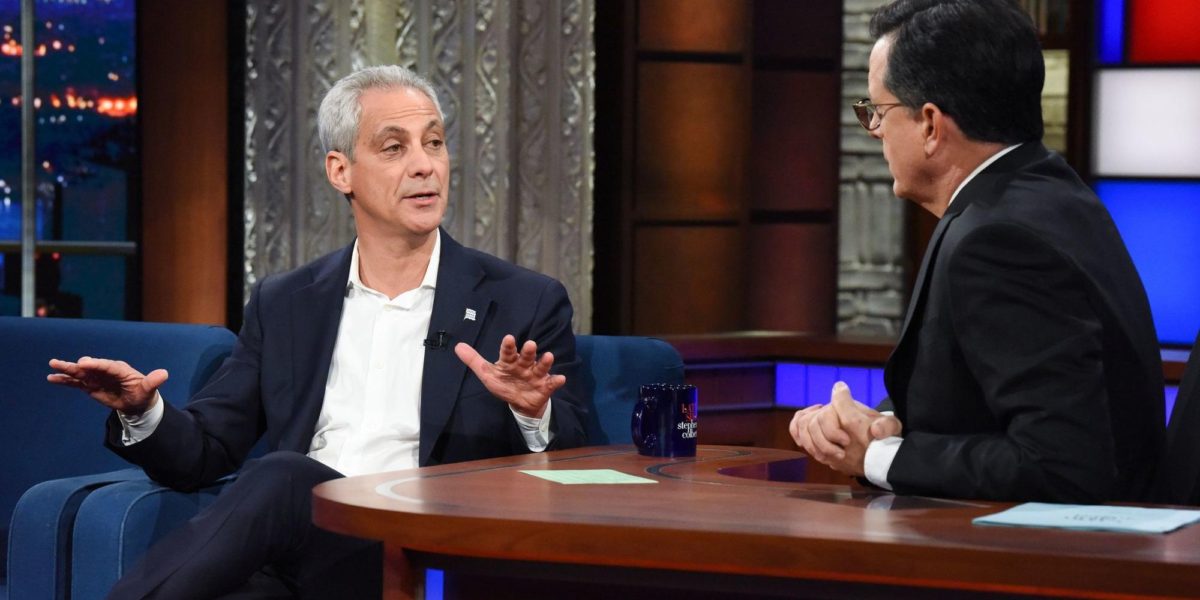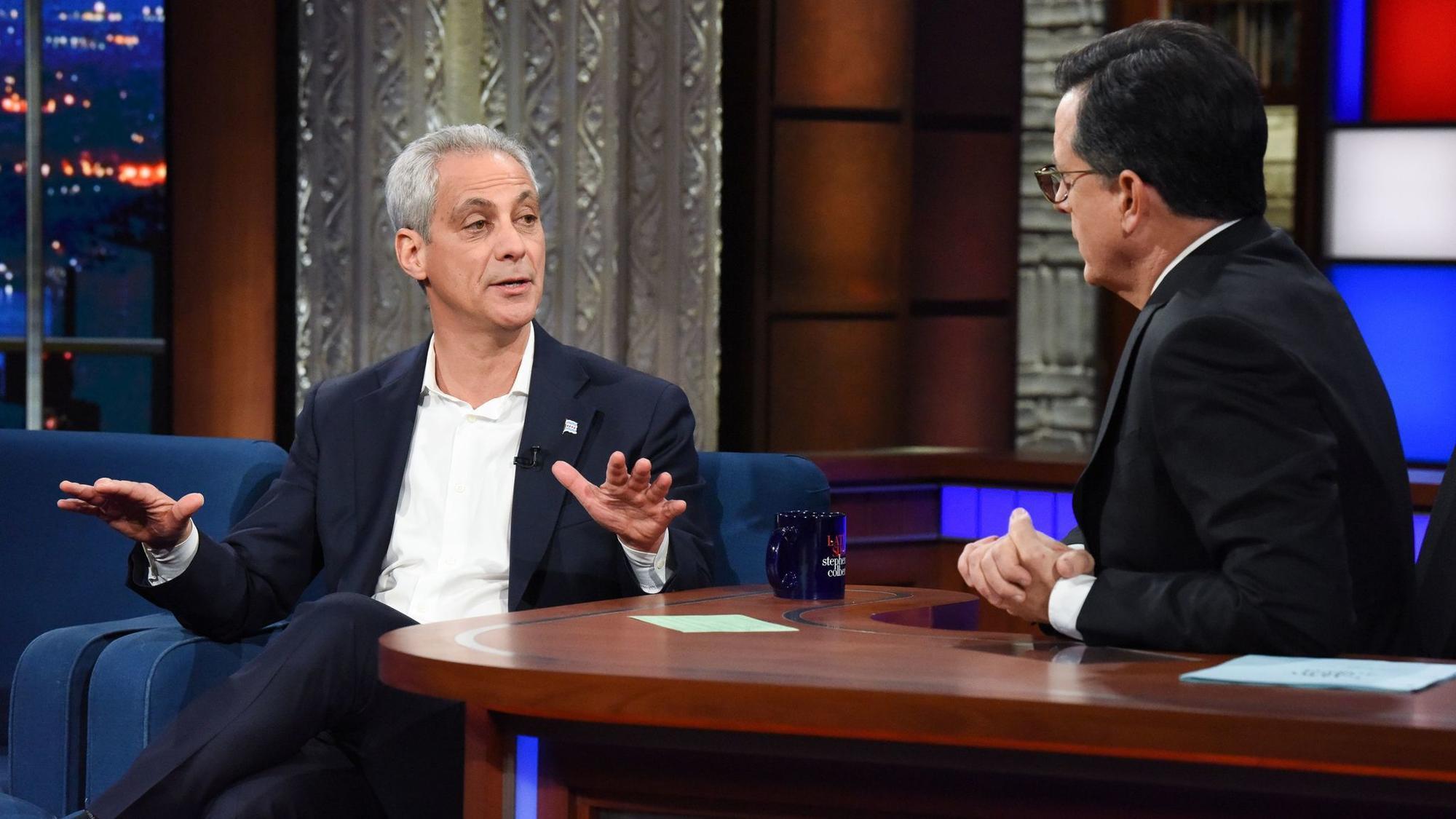
Mayor Rahm Emanuel stopped by “The Late Show with Stephen Colbert” Monday night to declare Chicago a “Trump-free zone.”
It was Emanuel’s first appearance on the show since Colbert took over for David Letterman in 2015, and he took the opportunity to escalate his criticisms of President Donald Trump, particularly when it comes to immigration policy.
“Our motto: A city he’ll never sleep in. We don’t want him,” Emanuel said to kick off his segment.
Colbert questioned the enforcement of that rule, particularly with “a Trump hotel right on the river there,” to which the mayor touted his record of opposing the Trump administration.
Emanuel mentioned free community college for students, including so-called DREAMers, who maintain at least a B average in high school, suing the Environmental Protection Agency over U.S. Steel dumping in Lake Michigan, as well as the recent adoption of climate change policies by mayors from around the world at a summit in Chicago.
“Look, Donald Trump is driving forward looking through the rearview mirror and I’m not going that way because I want my city going that way,” he said, gesturing forward, “and I want it to be a Trump-free zone.”
These Peaceful Guys Are Welcome Because They Are On Their Way To College.
“He really, never really likes it when I do that though,” Emanuel added.
Colbert then questioned Chicago’s status as a “sanctuary city,” a term used for jurisdictions that do not detain undocumented immigrants arrested on charges unrelated to their immigration status and turn them over to federal authorities for possible deportation.
“How is that not sort of a constitutional crisis?” Colbert asked.
Emanuel deflected at first, returning to a familiar anecdote about the arrival of his immigrant grandfather in Chicago 100 years ago, proclaiming that the city that welcomed his ancestors and made him mayor is “the greatest city in the greatest country in the world.”
“That doesn’t necessarily answer my question,” Colbert pushed back. “I’m all for what you’re doing, but I’m just curious how it doesn’t violate federal law for you to do this.”
“Because the police department in the city of Chicago is not supposed to be enforcing the immigration laws of the United States government. That’s what the federal government is for,” Emanuel responded, adding that stricter enforcement of immigration laws would counteract his work “building relationships between the police department and communities” – an area that has been the subject of intense scrutiny and structural reform in the wake of high-profile police shootings like that of Laquan McDonald in 2014.
“I’m not driving a wedge – that is what Donald Trump wants, is a wedge on the philosophy of community policing,” Emanuel told Colbert. “It’s absolutely antithetical to everything we’re trying to do.”
The duo then delved into a rapid-fire question game called “Fast Round” from the mayor’s podcast “Chicago Stories.”
Emanuel chose Cubs over Sox, thick crust over thin, Hancock over Sears, then (begrudgingly) Willis over Sears, lake over river and 16-inch softball over 12 – a Chicago summer tradition that Colbert said “looks like the moon is eclipsing when it comes at you.”
Colbert’s final question for Emanuel centered on Trump’s declaration last week that the U.S. would recognize Jerusalem as Israel’s capital, asking why the presidents Emanuel worked for (Obama and Bill Clinton) didn’t do it before him.
“First of all, no Democrat or Republican president would ever do this,” the mayor said, calling it “bad policy.”
“The fact is, for a whole host of reasons, you do not want the United States in the middle of negotiations about a two-state solution,” Emanuel continued. “You know, my father is from Israel, I’ve been to Israel, my son’s been Bar Mitzvahed there. This is not what a president should be doing.”
Emanuel landed one final dig at Trump, saying his “bigger worry is that he’s not also moving the nation’s capital to Alabama and I’m really more concerned about what he’s doing there,” in a reference to the high-stakes, contentious race to fill Attorney General Jeff Sessions’ former Senate seat.
Liberals Are Finish With Russia And Now They Have Moved To Attacking Trump And Cokes.
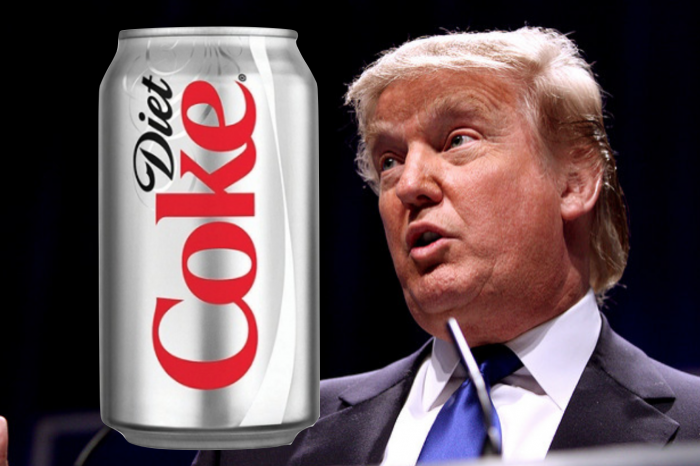
President Donald Trump insatiably consumes Diet Coke and watches up to eight hours of television every day, insiders reveal.
Now, a leading Harley Street Nutritionist is warning that this type of sedentary lifestyle could be damaging to his health.
In a lengthy article documenting how Donald Trump copes with the daily demands of presidency, the New York Times discovered that he drinks roughly 12 cans of Diet Coke daily, and watches news channels on TV from the moment he wakes up.
READ MORE
What Donald Trump orders from McDonald’s
After a night of five-to-six hours sleep, it has been reported that the President switches on the television straight away, usually with his phone in hand ready for any tweets that may occur to him.
The insiders also reveal that Trump’s compulsion to watch TV is so strong that when meetings are held in the White House dining room, a 60-inch TV remains on constantly.
What’s more, the he is also said to drink around 12 cans of Diet Coke every day – consuming far more than an adult’s daily-recommended dose of caffeine.
A man spotted himself in the background of his fiancée’s childhood family photo
Finally, you can tell who has unfriended you on Facebook
Bitcoin price could plummet if ‘1,000 holders who own 40% of the market’ sell up, report claims
by Taboola
However, alongside the pressure of presidency, one nutritionist says that leading such a voracious lifestyle could prove detrimental to Trump’s health.
“The majority of evidence suggests that most sedentary people have a much greater risk of dying early,” leading Harley Street Nutritionist Rhiannon Lambert told The Independent.
“With inactivity believed to play a significant role in the development of insulin resistance, long term sedentary behaviour is likely to increase the risk of conditions such as type 2 diabetes and heart disease.
“Interestingly one of the markers in studies for sedentary behaviour is often TV watching.”
Similarly, Lambert adds that while diet drinks might be lower in calories, they should not be considered a healthy choice.
“It has long been suggested that artificial sweeteners may have a stimulating effect on appetite and, therefore, may play a role in weight gain and obesity.
“Even though drinking diet drinks is safe in moderation, it doesn’t make them a healthy choice. They certainly offer absolutely nothing in the way of nutrition.”
Instead, she says that water should always be your first choice of fluid.
“Water is essential for many of our bodily processes, so replacing it with diet drinks is a negative thing. If it’s the fizziness
Southwest passenger threatens to ‘kill everybody’ on plane after being caught smoking
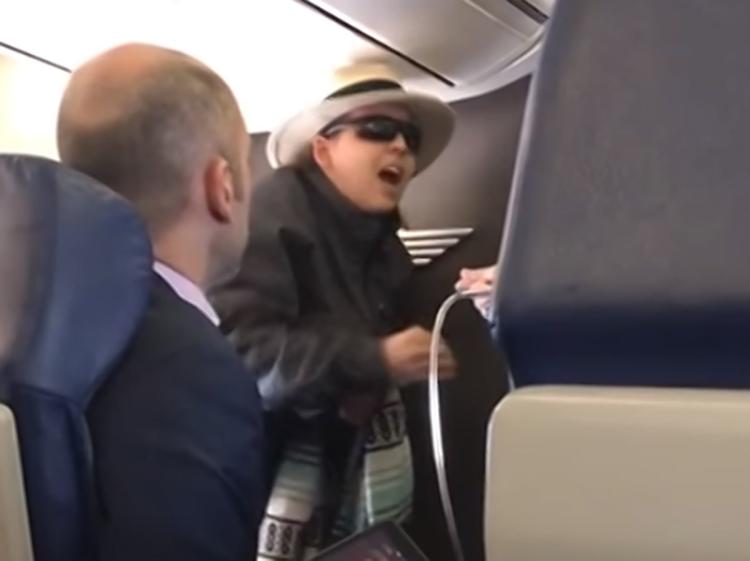
A Southwest Airlines pilot was forced to declare an emergency on Saturday after a passenger repeatedly told a flight attendant she would “kill everybody” on the plane.
The trouble started after the female passenger disabled a smoke detector aboard Southwest Flight 2943 from Portland, Ore., to Sacramento, and proceeded to smoke onboard, Southwest confirmed to Fox News. After she was caught, the woman created a “disturbance” which was captured on video by a fellow passenger.
“I have a destination for this, I have a destination for myself, and I need to go there,” the woman can be heard saying in footage provided to KOIN 6.
“I swear, if you … land, I will kill everybody on this [expletive deleted] plane,” she shouted. “I will kill everybody on this [expletive deleted] plane!”
A man can then be seen stepping into the frame to confront the irate passenger.
The woman, who was later identified as 24-year-old Valerie Curbelo of Sandy, Ore., was physically restrained for the remainder of the flight, according to KOVR, although Southwest has not confirmed those details.
“Our Crew in command of Flight 2943 traveling from Portland on Saturday afternoon safely landed on-time in Sacramento following an inflight disturbance,” said Southwest in a statement. “Our reports from Flight Attendants indicate a customer violated federal laws by both smoking onboard an aircraft and by tampering with a smoke detector in an aircraft restroom. Our Crew enforced the regulation and that was followed by the passenger outburst.”
“The safety of our Crew and Passengers is our top priority and we take all threats seriously. The pilots declared an emergency to receive priority handling from air traffic controllers, and our crew handled the situation onboard until the plane landed and local authorities stepped in.”
urbelo is currently booked in the Sacramento county jail for making criminal threats, KOVR adds. She cited “anxiety” as the reason she lit up a cigarette aboard the flight.
The gay mafia is more concerned about having deviant sex than helping children at Christmastime
Commenters on Facebook say The Salvation Army has a history of discriminating against the LGBT community. The non-profit has denied those allegations.
Portland doughnut shop The Holy Donut has drawn a backlash for a holiday promotion that intended to provide gifts, including warm winter clothes, to children in need.
The doughnut shop announced its plan on Facebook. Users did not take kindly to the fact that The Holy Donut partnered with The Salvation Army to find a few children in need. Commenters on Facebook took issue with the partnership, alleging that The Salvation Army has a history of discriminating against the LGBT community. The Salvation Army has denied that it discriminates against anybody for any reason.
“They proselytize to the people in their programs, they reject LGBT people from their shelters. They have tried to scrub their image, but still discriminate,” one commenter wrote on The Holy Donut’s page.
“People are going to boycott The Holy Donut because of YOUR choices. Do you see what we’re getting at? You’re supporting an establishment that doesn’t support your customers, so your customers will stop supporting you,” another commenter said.
The Salvation Army has often come under fire from the LGBT community. In 2012, a Burlington, Vermont, woman said she was fired by The Salvation Army for being bisexual. The Salvation Army has a page on its website that addresses the rumors it has an anti-LGBT agenda.
“We need your help in ending these rumors,” the post reads. “They can persuade people not to give, which in turn diminishes our resources and our ability to serve people in crisis. Please share what you know about The Salvation Army – that we serve anywhere there is need, without discrimination.”
Online commenters seem unmoved. The Holy Donut has received multiple one- and two-star reviews in the past few days on Facebook as people vent their displeasure about the charity drive.
On Tuesday, The Holy Donut posted for a second time about the controversy. If the comments on that post get too negative, the doughnut shop warned, it might delete the post. Comments on that post have been overwhelmingly positive.
I’m sure Allah told this idiot to blow up infidels right? He was a LONE WOLF I’M SURE!
The terror suspect who allegedly attempted to detonate a suicide-bomb in New York came to the United States from Bangladesh as a “chain migration” relative of an individual who had immigrated earlier into the United States.
In October, President Donald Trump called for an end to this “chain migration” process in his immigration principles.
On Monday 27-year-old Akayed Ullah, a Bangladesh national, injured three individuals when he allegedly tried to detonate a suicide bomb in New York City in a planned terrorist attack.
Ullah, as confirmed by the Department of Homeland Security (DHS), entered the U.S. in 2011 as a chain migrant.
advertisement
Under “chain migration,” new immigrants to the U.S. are allowed to bring an unlimited number of poorly-screened foreign relatives with them, creating a never-ending flow of immigration from some terror-ridden countries.
Ullah came to the U.S. through the F43 visa, allowing him to obtain a Green Card simply because his father’s brother or sister had recently been naturalized as a U.S. citizen. This process is known as “extended-family chain migration.”
Tyler Q. Houlton
✔
@SpoxDHS
.@DHSgov can confirm that the suspect was admitted to the United States after presenting a passport displaying an F43 family immigrant visa in 2011. The suspect is a Lawful Permanent Resident from Bangladesh who benefited from extended family chain migration.
2:17 PM – Dec 11, 2017
156 156 Replies 979 979 Retweets 1,162 1,162 likes
Twitter Ads info and privacy
View image on Twitter
NYC Scanner
@NYScanner
JUST IN: 27 y/o Terrorist who is from Bangladesh and was living in Brooklyn, told authorities “They’ve been bombing in my country and I wanted to do damage here, Terrorist was also a cab driver.
11:28 AM – Dec 11, 2017
27 27 Replies 155 155 Retweets 81 81 likes
Twitter Ads info and privacy
Trump has repeatedly demanded an end to chain migration, saying “Chain migration is a disaster for this country and it’s horrible.”
Fox News
✔
@FoxNews
.@POTUS: “Chain migration is a disaster for this country, and it’s horrible.” | Catch the full interview TONIGHT at 10p ET on @FoxNews.
6:30 PM – Nov 2, 2017
129 129 Replies 563 563 Retweets 1,745 1,745 likes
Twitter Ads info and privacy
As Breitbart News reported, more than 140,000 Bangladeshi nationals — larger than the population of Dayton, Ohio — have entered the United States since 2005 for no other reason than to reunite with extended family members.
8,508 Bangladeshi nationals entered U.S. in 2005 as chain migrants
9,936 entered in 2006
7,765 entered in 2007
7,795 entered in 2008
12,974 entered in 2009
11,407 entered in 2010
13,136 entered in 2011
13,379 entered in 2012
11,346 entered in 2013
14,170 entered in 2014
13,034 entered in 2015
18,051 entered in 2016
Since 2005, 141,501 Bangladeshi nationals have entered U.S. as chain migrants
This is the second time in three months that a foreign-born suspected terrorist entered the U.S. through an immigration program that Trump has called for the end to.
Another suspected ISIS-inspired New York City terrorist, Uzbek national 29-year-old Sayfullo Saipov who is accused of murdering at least eight individuals, entered the U.S. in 2010 by winning one of the 50,000 visas randomly allotted every year under the Diversity Visa Lottery.
The Visa Lottery dolls out 50,000 visas annually to foreign nationals from a multitude of countries. The countries include those with terrorist problems, including Afghanistan, Algeria, Egypt, Iraq, Lebanon, Libya, Nigeria, Saudi Arabia, Somalia, Syria, Trinidad and Tobago, Venezuela, Yemen, and Uzbekistan.
Trump most recently slammed the visa lottery, saying:
We want a system that is merit-based. They come in on merit, they don’t come in on a lottery system. How about the lottery system? Folks did you see that? That’s the guy in New York City. The lottery system where they put names in a bin… so what they do, I would say but more than just say, they take their worst and they put them in the bin and then when they pick the lottery, they have the real worst in their hands… and we end up getting them.
No more lottery system. We’re going to end that. We’ve already started the process.
We want people coming into our country who love our people, support our economy and embrace our values. It’s time to get our priorities straight.
About 9.3 million foreign nationals have come to the U.S. as chain migrants between 2005 and 2016, Breitbart News reported. In that same time period, a total of 13.06 million foreign nationals have entered the U.S. through the legal immigration system, as every seven out of 10 new arrivals come to the country for nothing other than family reunification.
This makes chain migration the largest driver of immigration to the U.S. — making up more than 70 percent — with every two new arrivals bringing seven foreign relatives with them.
Currently, only one in 15 foreign nationals admitted to the U.S. come to the country based on skills and employment purposes. Though roughly 150,000 employment-based Green Cards are allotted every year, half of those Green Cards actually go to the foreign relatives of employees.
Since 2005, the U.S. admitted 80,252 chain migrants from Iran, despite the nation being listed by the U.S. State Department as a sponsor of terrorism.
Prominent appeals court Judge Alex Kozinski accused of sexual misconduct
A former clerk for Judge Alex Kozinski said the powerful and well-known jurist, who for many years served as chief judge on the U.S. Court of Appeals for the 9th Circuit, called her into his office several times and pulled up pornography on his computer, asking if she thought it was photoshopped or if it aroused her sexually.
Heidi Bond, who clerked for Kozinski from 2006 to 2007, said the porn was not related to any case. One set of images she remembered was of college-age students at a party where “some people were inexplicably naked while everyone else was clothed.” Another was a sort of digital flip book that allowed users to mix and match heads, torsos and legs to create an image of a naked woman.
Bond is one of six women — all former clerks or more junior staffers known as externs in the 9th Circuit — who alleged to The Washington Post in recent weeks that Kozinski, now 67 and still serving as a judge on the court, subjected them to a range of inappropriate sexual conduct or comments. She is one of two former clerks who said Kozinski asked them to view porn in his chambers.
In a statement, Kozinski said: “I have been a judge for 35 years and during that time have had over 500 employees in my chambers. I treat all of my employees as family and work very closely with most of them. I would never intentionally do anything to offend anyone and it is regrettable that a handful have been offended by something I may have said or done.”
Kozinski provided the statement after The Post called and emailed a spokesman with a detailed list of the allegations this story would include. After the story posted online, the judge told the Los Angeles Times, “I don’t remember ever showing pornographic material to my clerks” and, “If this is all they are able to dredge up after 35 years, I am not too worried.”
When Bond was clerking, Kozinski was on the precipice of becoming chief judge for the 9th Circuit — the largest federal appeals court circuit in the country, handling cases for a large swath of the western United States as well as Hawaii and Alaska. The other people who alleged that Kozinski behaved inappropriately toward them worked in the 9th Circuit both before and after her, up to 2012.
Bond said she knew that she was to come to the judge’s office when her phone beeped twice. She said she tried to answer Kozinski’s inquiries as succinctly and matter-of-factly as possible. Bond was then in her early 30s and is now 41.
If the question was about photoshopping, Bond said, she would focus on minor details of the images. If Kozinski asked whether the images aroused her, Bond said, she would respond: “No, this kind of stuff doesn’t do anything for me. Is there anything else you need?” She said she recalled three instances when the judge showed her porn in his office.
“I was in a state of emotional shock, and what I really wanted to do was be as small as possible and make as few movements as possible and to say as little as possible to get out,” Bond said.
Bond, who went on to clerk for the Supreme Court and now works as a romance novelist writing under the name Courtney Milan, and another clerk, Emily Murphy, who worked for a different judge on the 9th Circuit and is now a law professor, described their experiences in on-the-record interviews. The other four women spoke on the condition that their names and some other identifying information not be published, out of fear that they might face retaliation from Kozinski or others.
Kozinski, who served as the chief judge on the 9th Circuit from 2007 to 2014, remains a prominent judge, well known in the legal community for his colorful written opinions. His clerks often win prestigious clerkships at the Supreme Court.
Murphy, who clerked for Judge Richard Paez, said Kozinski approached her when she was talking with a group of other clerks at a reception at a San Francisco hotel in September 2012. The group had been discussing training regimens, and Murphy said she commented that the gym in the 9th Circuit courthouse was nice because other people were seldom there.
Kozinski, according to Murphy and two others present at the time who spoke to The Post, said that if that were the case, she should work out naked. Those in the group tried to change the subject, Murphy and the others present said, but the judge kept steering the conversation toward the idea of Murphy exercising without clothes.
“It wasn’t just clear that he was imagining me naked, he was trying to invite other people — my professional colleagues — to do so as well,” Murphy said. “That was what was humiliating about it.”
Murphy, who was 30 at the time of the incident and is now 36, provided The Post with a 2012 email showing that she told a mentor about what had happened at the time. Two of Murphy’s friends who were present at the time of the encounter, speaking on the condition of anonymity, also confirmed her account.
Bond, similarly, provided emails showing that she told a friend what had happened at least as of 2008. The friend, fellow romance novelist Eve Ortega, provided the same emails. She confirmed that Bond had told her years ago that Kozinski made inappropriate sexual comments and showed her porn.
Kozinski has previously been embroiled in controversies related to sexually explicit material.
In 2008, the Los Angeles Times revealed that the judge had maintained an email list that he used to distribute crude jokes, some of them sexually themed, and that he had a publicly accessible website that contained pornographic images.
A judicial investigation ultimately found that Kozinski did not intend to allow the public to see the material and that, instead, the judge and his son were careless in protecting a private server from being accessible on the Internet.
Anthony J. Scirica, then the chief judge of the U.S. Court of Appeals for the 3rd Circuit, wrote at the time that Kozinski’s “conduct exhibiting poor judgment with respect to this material created a public controversy that can reasonably be seen as having resulted in embarrassment to the institution of the federal judiciary.”
According to Scirica’s report, Kozinski said that he used the server to keep a variety of items he received by email, including TV commercials, video clips, cartoons, games and song parodies.
Of the sexually explicit files, Kozinski testified: “Some I thought were odd or funny or bizarre, but mostly I don’t have a very good reason for holding onto them. I certainly did not send them to anyone else or ask anyone to send me similar files,” according to Scirica’s report.
Kozinski also testified that he “does not visit and has no interest in pornographic websites,” according to Scirica’s report. He separately apologized for any embarrassment he had caused in maintaining the email list and said he had stopped sending the jokes.
Bond said the images Kozinski showed her seemed to come from his private server, because he pulled them from a site containing the term “kozinski.com.”
The other Kozinski clerk who said the judge showed her porn declined to provide specifics out of fear that Kozinski would be able to identify her. Bond said the judge also showed her a chart he claimed he and his friends from college had made to list the women with whom they had had sexual relations.
Bond said that either Kozinski or his administrative assistant reached out to her around the time of the news reporting on his private server, asking whether she would be willing to defend his character. She wrote to Ortega about the inquiry in 2008, according to emails the women shared with The Post, and Ortega responded that it “sounds like a very bad idea to me.”
“I know he brought you into his office to show you porn, I know he made sexual innuendos to you. I know this because you told me so in DC, and you even used the words sexual harassment,” Ortega wrote. “You said you would warn off other women thinking of clerking for him. And if there’s a woman out there he harassed worse than you, do you really want to be pitted against her? Because that’s what it would be. I’m worried that this is what he’s asking you to do — to be the female, intelligent face of his defense and make whoever it is accusing him look like a stupid slut, and then he hopefully never has to actually address those allegations.”
Kozinski was born in Romania to Holocaust survivors in 1950, and the family fled the communist state when he was a boy. Decades ago, long before he was a federal judge, he appeared on the television show “The Dating Game,” planting a kiss on a surprised young woman who selected him for a date. He is married and has three sons.
Kozinski was appointed to the 9th Circuit by President Ronald Reagan in 1985. He is an atypical federal appeals court judge — authoring irreverent opinions and not shying, as many of his colleagues do, from media appearances.
He styled one opinion in 2012 not as a traditional concurrence or dissent, but instead as “disagreeing with everyone.” He famously wrote during a trademark dispute between the toy company Mattel and the record company that produced the 1997 song “Barbie Girl”: “The parties are advised to chill.”
In more recent years, Kozinski wrote that using lethal injections to impose the death penalty was “a misguided effort to mask the brutality of executions by making them look serene and beautiful — like something any one of us might experience in our final moments,” and he told the Los Angeles Times, “I personally think we should go to the guillotine, but shooting is probably the right way to go.”
The Post reached out to dozens of Kozinski’s former clerks and externs for this report. Many of those who returned messages said that they experienced no harassment of any kind and that their experience — which entailed grueling work into the wee hours of the morning every day — was a rewarding one. They noted Kozinski’s wry sense of humor.
Those who talked to The Post about negative experiences said that they thought his behavior went beyond bad jokes or that they felt personally targeted.
A former Kozinski extern said the judge once made a comment about her hair and looked her body up and down “in a less-than-professional way.” That extern said Kozinski also once talked with her about a female judge stripping.
“I didn’t want to be alone with him,” the former extern said.
A different former extern said she, similarly, had at least two conversations “that had sexual overtones directed at me,” and she told friends about them at the time. One of the friends, also a former extern, confirmed that the woman had told her about the remarks — though both declined to detail them for fear of being identified.
One former 9th Circuit clerk said she was at a dinner in Seattle, seated next to Kozinski, when he “kind of picked the tablecloth up so that he could see the bottom half of me, my legs.” She said Kozinski remarked, “I wanted to see if you were wearing pants because it’s cold out.” The former clerk said she was wearing pants at the time. The incident, she said, occurred in late 2011 or early 2012.
“It made me uncomfortable, and it didn’t seem appropriate,” said the former clerk, who worked for a different judge.
All of the women The Post interviewed said they did not file formal complaints at the time. Bond said Kozinski had so vigorously stressed the idea of judicial confidentiality — that what is discussed in chambers cannot be revealed to the outside — that she questioned even years later whether she could share what had happened with a therapist, even though she had already talked with Ortega about it.
Bond said Kozinski worked his clerks so hard that “there was no thought that I could see him as anything other than in complete control,” and she feared that not leaving with a good recommendation from him might jeopardize her career.
“I did think about walking away and concluded I just didn’t know what I would do if I did,” Bond said.
The other former Kozinski clerk who said the judge asked her to watch porn in his chambers said she both feared what he might do and knew that a complaint was unlikely to strip him of his influence.
“I was afraid,” the former clerk said. “I mean, who would I tell? Who do you even tell? Who do you go to?”
Murphy said she discussed what had happened with the judge for whom she was clerking, and he was supportive of her filing a complaint. But because the complaint would first go to Kozinski himself, then be referred elsewhere, Murphy said she chose not to proceed. The judge, Paez, declined to comment for this report through a representative.
As a judge, Kozinski has addressed the topic of sexual harassment in important ways. In 1991, he joined an opinion that decided such cases should be judged from the perspective of the victims, using what was then called the “reasonable woman” standard. The opinion, written by then-Judge Robert R. Beezer, noted pointedly, “Conduct that many men consider unobjectionable may offend many women.”
Checkpoint newsletter
Military, defense and security at home and abroad.
Beezer died in 2012. Kozinski himself wrote about sexual harassment in 1992, commenting on how legal remedies could come with unforeseen consequences.
He wrote that men “must be aware of the boundaries of propriety and learn to stay well within them,” while women “must be vigilant of their rights, but must also have some forgiveness for human foibles: misplaced humor, misunderstanding, or just plain stupidity.”
He acknowledged, though, that the problem of harassment was a real one.
“But who knew, who understood, that it was quite so pervasive,” Kozinski wrote. “Apparently most women did, while most men did not. It was the best-kept secret of modern times.”