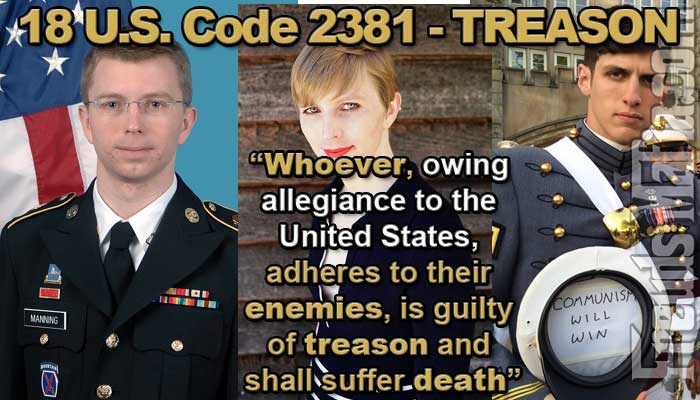

This Freak Should Be In Front Of A Firing Squad, But Obama Pardon This Dude.
Chelsea Manning Threatens Suicide on Twitter
HEHE DID NOT HAVE THE BALLS TO JUMP. LOL
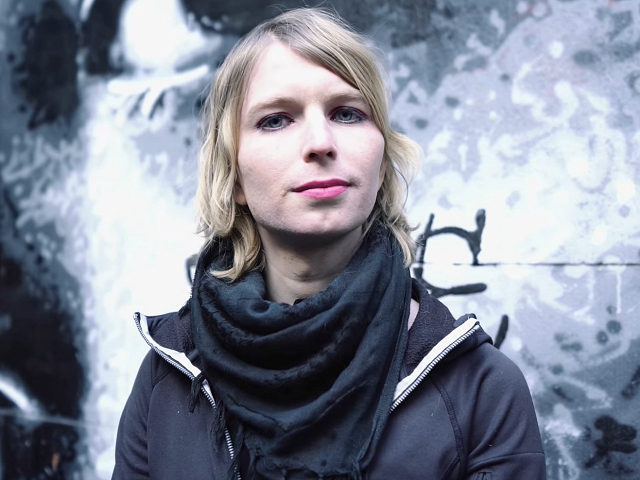
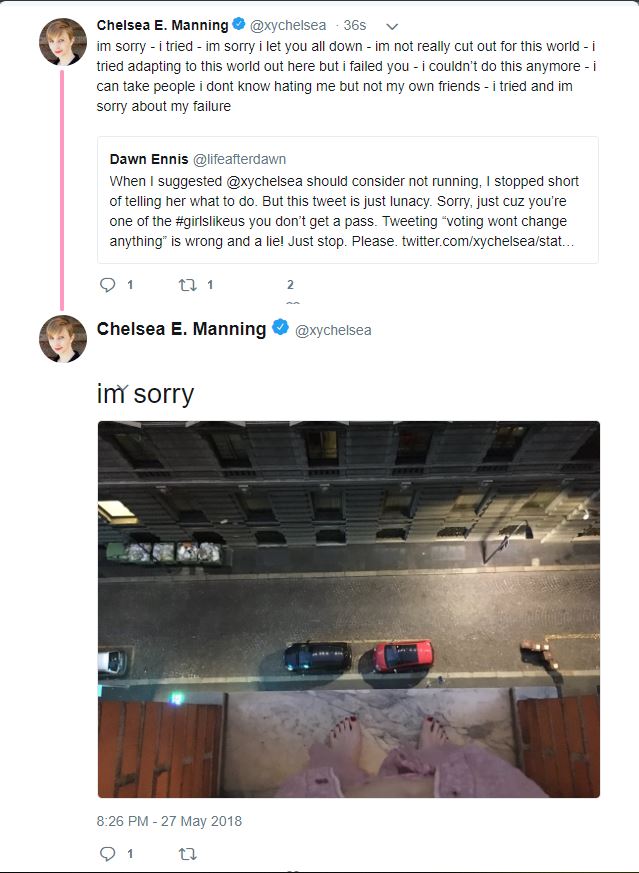
Far-left political commentator, convicted intelligence leaker, and senate candidate Chelsea Manning threatened to commit suicide on Sunday, posting a suicide note and a picture of a rooftop ledge, before being reported to be safe.
“Im sorry – i tried – im sorry i let you all down – im not really cut out for this world – i tried adapting to this world out here but i failed you,” declared Manning in one Twitter post. “I couldn’t do this anymore – i can take people i dont know hating me but not my own friends – i tried and im sorry about my failure.”
Manning then posted a picture of a rooftop ledge, along with the caption, “im sorry.”
Although the tweets have been deleted, archives are available.
Go Ahead And Jump Damit!
Twitter users immediately commented on the threat, attempting to stop Manning from taking further action.
John Hawkins
✔@johnhawkinsrwn
So, if anyone knows Chelsea Manning’s address, you should probably send the cops over to check on her welfare. She just posted that she was about to commit suicide and deleted it. @xychelsea
Following the concerned replies, the tweets were deleted, and another post was made on Manning’s account, reading, “chelsea is safe. she is on the phone with friends, thanks everyone for your concern and please give her some space.”
Chelsea E. Manning
✔@xychelsea
** chelsea is safe. she is on the phone with friends, thanks everyone for your concern and please give her some space
In 2013, Private Bradley Manning was sentenced to 35 years in prison after he was convicted of leaking military documents to WikiLeaks.
Manning subsequently came out as transgender and underwent sex-change surgery and a name change following a hunger strike, before President Obama commuted her sentence in January 2017.
Manning, who has made a number of controversial political statements including support for the abolition of prisons, police, borders, and tradition, is currently running for U.S. Senate.
In January, Manning was attacked by the left after she was photographed meeting with conservatives and libertarians at Mike Cernovich’s “Night for Freedom” party in New York City.
Manning’s former allies quickly took to Twitter to call the commentator a “Nazi,” and accuse her of “cozying up to white supremacists,” prompting Manning to turn on those she met at the party, including friends, calling them white supremacists.
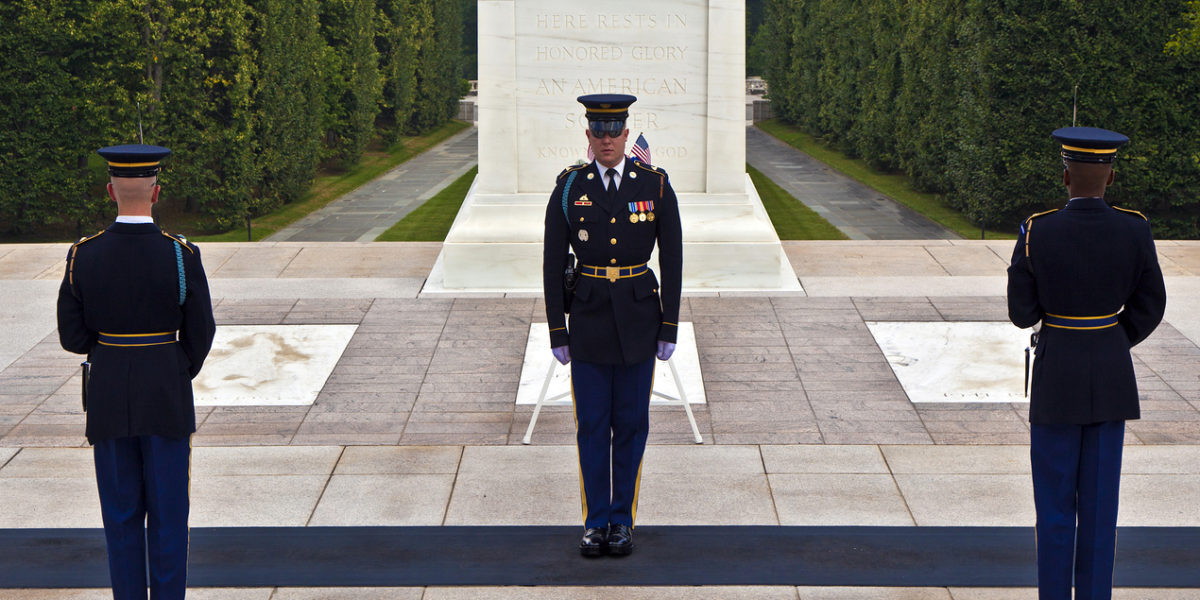
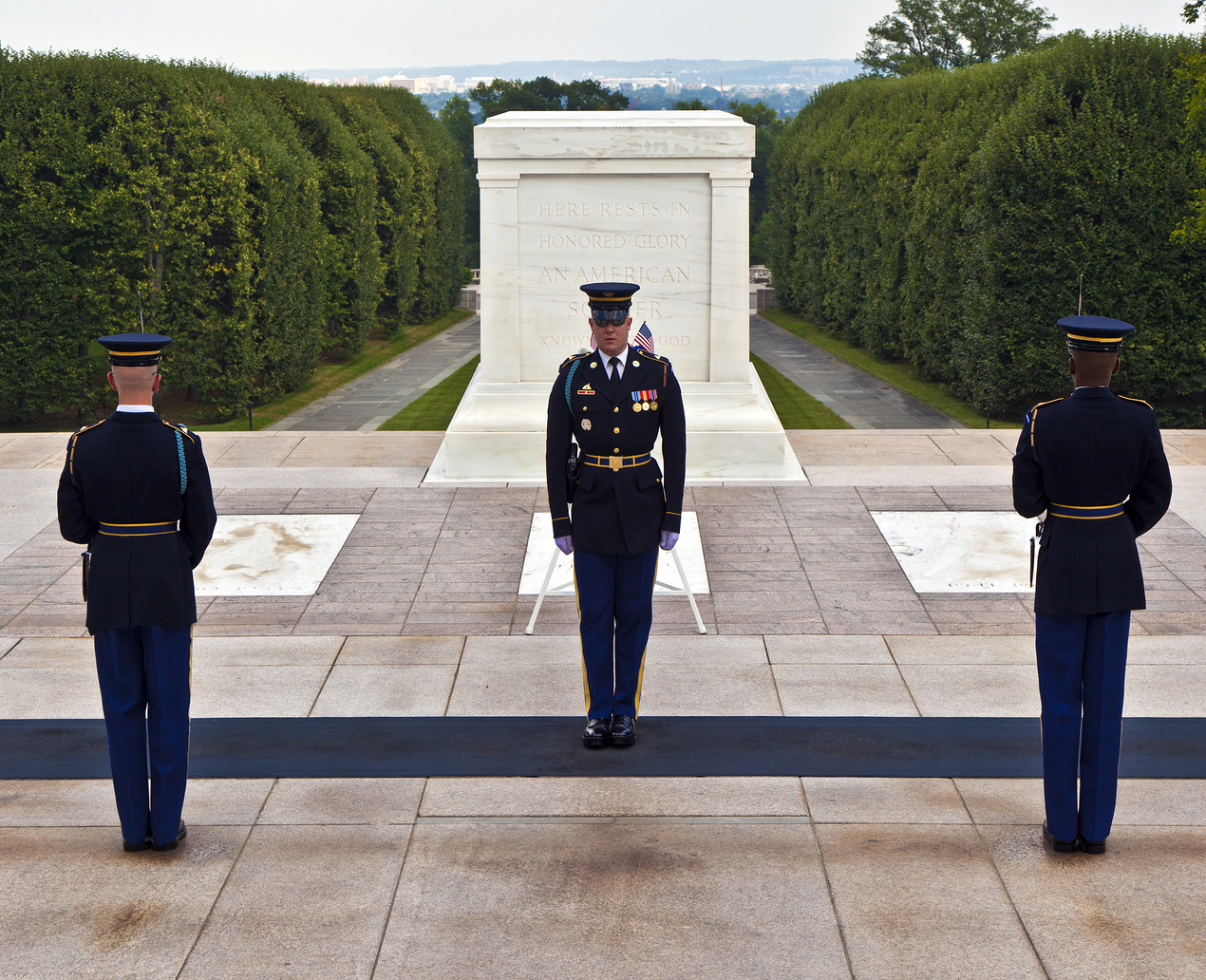
The Tomb of the Unknown Soldier or the Tomb of the Unknowns is a monument dedicated to U.S. service members who have died without their remains being identified. Having no officially designated name, it is located in Arlington National Cemetery in Virginia, United States of America. The World War I “Unknown” is a recipient of the Medal of Honor, the Victoria Cross, and several other foreign nations’ highest service awards. The U.S. Unknowns who were interred are also recipients of the Medal of Honor, presented by U.S. Presidents who presided over their funerals.
8 Things You May Not Know About Memorial Day
Take a look at the holiday marking the official beginning of summer and America’s most solemn occasion.
Members of the 3rd U.S. Infantry Regiment place American flags at the graves of U.S. soldiers buried in Section 60 at Arlington National Cemetery in preparation for Memorial Day May 24, 2012. (Credit: Win McNamee/Getty Images)
Memorial Day and its traditions may have ancient roots.
While the first commemorativeMemorial Dayevents weren’t held in the United States until the late 19th century, the practice of honoring those who have fallen in battle dates back thousands of years. The ancient Greeks and Romans held annual days of remembrance for loved ones (including soldiers) each year, festooning their graves with flowers and holding public festivals and feasts in their honor. In Athens, public funerals for fallen soldiers were held after each battle, with the remains of the dead on display for public mourning before a funeral procession took them to their internment in the Kerameikos, one of the city’s most prestigious cemeteries. One of the first known public tributes to war dead was in 431 B.C., when the Athenian general and statesman Pericles delivered a funeral oration praising the sacrifice and valor of those killed in the Peloponnesian War—a speech that some have compared in tone to Abraham Lincoln’s Gettysburg Address.
One of the earliest commemorations was organized by recently freed slaves.
As the Civil War neared its end, thousands of Union soldiers, held as prisoners of war, were herded into a series of hastily assembled camps in Charleston, South Carolina. Conditions at one camp, a former racetrack near the city’s Citadel, were so bad that more than 250 prisoners died from disease or exposure, and were buried in a mass grave behind the track’s grandstand. Three weeks after the Confederate surrender, an unusual procession entered the former camp: On May 1, 1865, more than 1,000 recently freed slaves, accompanied by regiments of the U.S. Colored Troops (including the Massachusetts 54th Infantry) and a handful of white Charlestonians, gathered in the camp to consecrate a new, proper burial site for the Union dead. The group sang hymns, gave readings and distributed flowers around the cemetery, which they dedicated to the “Martyrs of the Race Course.”
The holiday’s “founder” had a long and distinguished career.
In May 1868, General John A. Logan, the commander-in-chief of the Union veterans’ group known as the Grand Army of the Republic, issued a decree that May 30 should become a nationwide day of commemoration for the more than 620,000 soldiers killed in the recently ended Civil War. On Decoration Day, as Logan dubbed it, Americans should lay flowers and decorate the graves of the war dead “whose bodies now lie in almost every city, village and hamlet churchyard in the land.” According to legend, Logan chose May 30 because it was a rare day that didn’t fall on the anniversary of a Civil War battle, though some historians believe the date was selected to ensure that flowers across the country would be in full bloom. After the war Logan, who had served as a U.S. congressman before resigning to rejoin the army, returned to his political career, eventually serving in both the House and Senate and was the unsuccessful Republican candidate for vice president in 1884. When he died two years later, Logan’s body laid in state in the rotunda of the United States Capitol, making him one of just 33 people to have received the honor. Today, Washington, D.C.’s Logan Circle and several townships across the country are named in honor of this champion of veterans and those killed in battle.
Logan probably adapted the idea from earlier events in the South.
Even before the war ended, women’s groups across much of the South were gathering informally to decorate the graves of Confederate dead. In April 1886, the Ladies Memorial Association of Columbus, Georgia resolved to commemorate the fallen once a year—a decision that seems to have influenced John Logan to follow suit, according to his own wife. However, southern commemorations were rarely held on one standard day, with observations differing by state and spread out across much of the spring and early summer. It’s a tradition that continues today: Nine southern states officially recognize a Confederate Memorial Day, with events held on Confederate President Jefferson Davis’ birthday, the day on which General Thomas “Stonewall” Jackson was killed, or to commemorate other symbolic events.
It didn’t become a federal holiday until 1971.
American’s embraced the notion of “Decoration Day” immediately. That first year, more than 27 states held some sort of ceremony, with more than 5,000 people in attendance at a ceremony at Arlington National Cemetery. By 1890, every former state of the Union had adopted it as an official holiday. But for more than 50 years, the holiday was used to commemorate those killed just in the Civil War, not in any other American conflict. It wasn’t until America’s entry into World War I that the tradition was expanded to include those killed in all wars, and Memorial Day was not officially recognized nationwide until the 1970s, with America deeply embroiled in the Vietnam War.
It was a long road from Decoration Day to an official Memorial Day.
Although the term Memorial Day was used beginning in the 1880s, the holiday was officially known as Decoration Day for more than a century, when it was changed by federal law. Four years later, the Uniform Monday Holiday Act of 1968 finally went into effect, moving Memorial Day from its traditional observance on May 30 (regardless of the day of the week), to a set day—the last Monday in May. The move has not been without controversy, though. Veterans groups, concerned that more Americans associate the holiday with first long weekend of the summer and not its intended purpose to honor the nation’s war dead, continue to lobby for a return to the May 30 observances. For more than 20 years, their cause was championed by Hawaiian Senator—and decorated World War II veteran—Daniel Inouye, who until his 2012 death reintroduced legislation in support of the change at the start of every Congressional term.
More than 20 towns claim to be the holiday’s “birthplace”—but only one has federal recognition.
For almost as long as there’s been a holiday, there’s been a rivalry about who celebrated it first. Boalsburg, Pennsylvania, bases its claim on an 1864 gathering of women to mourn those recently killed at Gettysburg. In Carbondale, Illinois, they’re certain that they were first, thanks to an 1866 parade led, in part, by John Logan who two years later would lead the charge for an official holiday. There are even two dueling Columbus challengers (one in Mississippi, the other in Georgia) who have battled it out for Memorial Day supremacy for decades. Only one town, however, has received the official seal of approval from the U.S. government. In 1966, 100 years after the town of Waterloo, New York, shuttered its businesses and took to the streets for the first of many continuous, community-wide celebrations, President Lyndon Johnson signed legislation, recently passed by the U.S. Congress, declaring the tiny upstate village the “official” birthplace of Memorial Day.
Memorial Day traditions have evolved over the years.
Despite the increasing celebration of the holiday as a summer rite of passage, there are some formal rituals still on the books: The American flag should be hung at half-staff until noon on Memorial Day, then raised to the top of the staff. And since 2000, when the U.S. Congress passed legislation, all Americans are encouraged to pause for a National Moment of Remembrance at 3 p.m. local time. The federal government has also used the holiday to honor non-veterans—the Lincoln Memorial was dedicated on Memorial Day 1922. And, while its origins have little to do with fallen soldiers, the Indianapolis 500 has certainly become a Memorial Day tradition of its own–this year marks the 102nd time the race will be run to coincide with the holiday.
Why Can’t Anyone Bring Up That Obama Did This, And Indict That Village Idiot?
Sunday on CBS’s “Face the Nation,” House Freedom Caucus chairman Rep. Mark Meadows (R-NC) said he wanted to know who directed a confidential human source to collect information on the 2016 presidential campaign of Donald Trump.
Meadows said, “What we do know is that there was indeed a confidential human source, which is what the FBI would call it that, was actually giving intel. Not only to the FBI, but you have to ask the question when did it start? We do know that actually, those confidential human sources were engaging prior to the official FBI investigation.”
He continued, “So the question begs: at whose direction, you know, what were they collecting and who were they reporting to? Because that was happening before the FBI actually opened an investigation. And so as we know that—and we know that from nonclassified sources. There is no question that there was a spy that was collecting information, and the definition of that: somebody who does something in secret without the knowledge of another person.”
Barack Obama is speaking out about how he wants to use the film projects he develops with Netflix to heal the political divide and tell America’s stories.
Earlier this week, Netflix announced it is partnering with Barack and Michelle Obama to develop original content for the video streaming giant. Initially, no real details were released — including the actual price tag of the contract. But three days later Obama has filled in some of the blanks about his plans, Business Insider reported.
Speaking at a Las Vegas tech conference hosted by cybersecurity company Okta, Obama waxed poetic about the “stories” Americans have to tell and said he wants to use his multi-year contract with Netflix to help “train the next generation of leaders.”
Barack Obama said he relied on “stories” to fuel his political career. “Everyone has a story that is pretty sacred” about their life, Obama said. Listening to people’s stories is what helped him better serve, he explained.
“We want to tell stories. This [Netflix deal] becomes a platform. We are interested in lifting people up and identifying people doing amazing work,” Obama said, adding, “We did this in the White House.”
Obama related meetings to hear the stories of Hamilton creator and Broadway producer Lin-Manuel Miranda and rocker Bruce Springsteen, and he noted that identifying talent in a similar fashion is his intent with Netflix.
Obama said he wants to produce stories “we think are important, and lift up and identify talent, that can amplify the connections between all of us. I continue to believe that if we are hearing each other’s stories and recognizing ourselves in each other, then our democracy works.”
“We are all human. I know this sounds trite, and yet, right now globally, we have competing narratives,” Obama said.
The ex-president also warned against “tribalism,” saying that when people feel threatened, “We go tribal. We go ethnic. We pull in, we push away.”
He concluded saying he wants to use Netflix to help “set up institutions based on rule of law and a sense of principals and the dignity and worth of every individual.”
Finally, after noting there is still a “clash” in the country, Obama told the crowd what he hopes his new work will do.
“I’m putting my money on the latter way,” Obama said. “That’s what we hope to be a voice to, through Netflix and through my foundation, where we’re identifying and training the next generation of leaders here in the United States and around the world. So they can start sharing their stories and cooperating.”
Why Didn’t The So-Called Black Jesus Obama Do This .
President Donald Trump pardoned the first black heavyweight boxing champion Thursday.
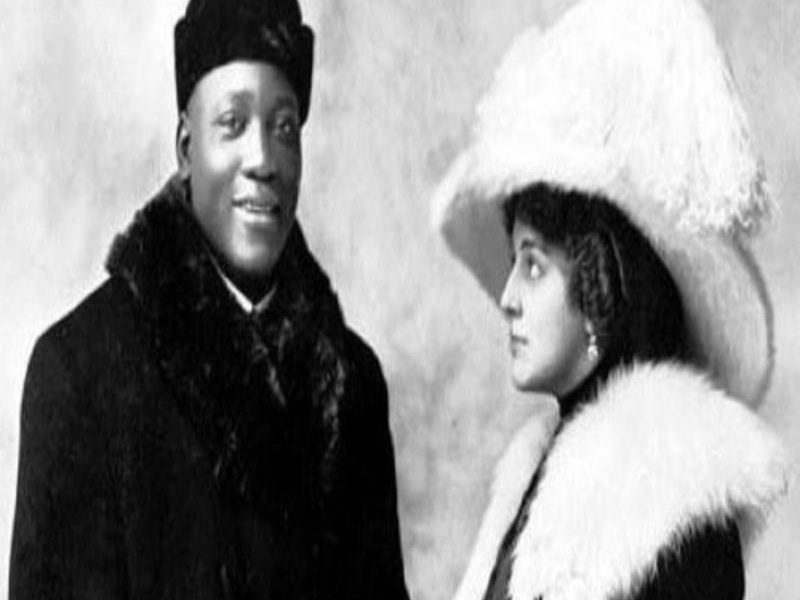
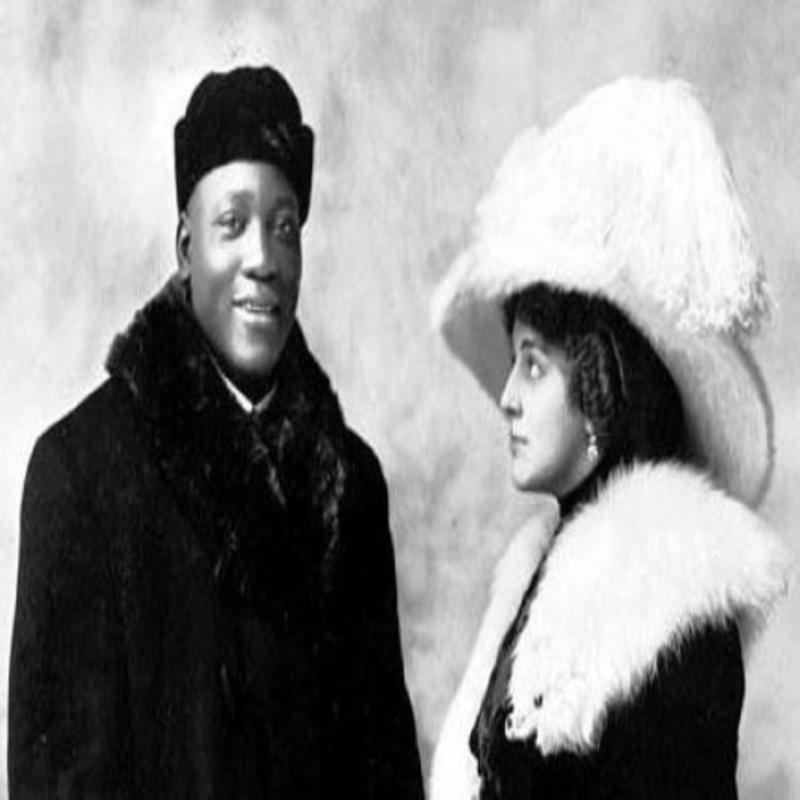
Jack Johnson was convicted by an all-white jury in 1913 of transporting a woman across state lines. Johnson was convicted for violating the Mann Act, which made it illegal to transport women across state lines for “immoral” purposes, and served close to one year in prison.
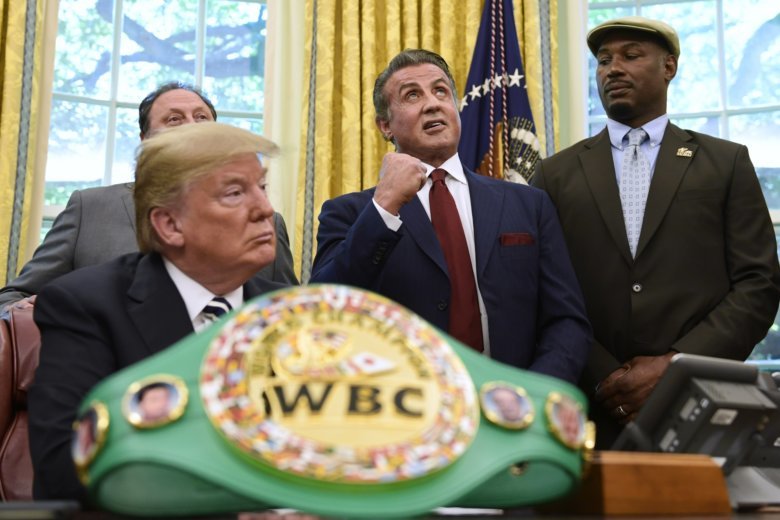
The pardon comes after Johnson’s great-great niece had been pushing for a posthumous pardon. Actor Sylvester Stallone was also a huge advocate for Johnson’s pardon and joined Trump in the Oval Office for the pardon announcement.
Johnson was charged due to racially motivated injustice, Trump said and hopes this pardon will help “to correct a wrong in our history,” ABC News reported.
“I am taking this very righteous step, I believe, to correct a wrong that occurred in our history, and to honor a truly legendary boxing champion, legendary athlete and a person that, when people got to know him, they really liked him and they really thought he was treated unfairly,” Trump said.
Trump Pardons Jack Johnson
“It’s my honor to do it. It’s about time,” Trump continued. “He represented something that was both very beautiful and very terrible at the same time.”
Trump also invited other heavyweight champions to the Oval Office for the announcement including, Lennox Lewis and Deontay Wilder.
Republican Sen. John McCain of Arizona has pushed for Johnson’s pardon for years, even introducing legislation requesting for a pardon for Johnson in 2004, which was struck down by former President Barrack Obama. (RELATED: Trump Pardons Navy Sailor Who Did ‘Nothing’ Compared To Hillary)
Johnson’s pardon was met with praise by many, including former heavyweight champion George Foreman.
The pardon comes one week after Trump was attacked as a “racist” for calling MS-13 gang members “animals” at a White House roundtable meeting.
The last posthumous pardon was done by former President George W. Bush who pardoned Boston-born businessman Charles Winters in 2008.
I Thought Gays Were Suppose To Be Smart! But Wait They Do Stick Things Up The Rear So I Guess Not.
Republican Sen. Lindsey Graham said Friday that he believes the FBI was using a “confidential informant” rather than a “spy” to keep tabs on the 2016 Trump campaign.
Graham admitted that he isn’t sure if the use of a confidential informant was appropriate, but would not call the informant a “spy.”
Both Are Democrats With R’s In front Of Their Names.
“A confidential informant is not a spy,” Graham said, according to a show transcript. “I don’t know if there’s a reason to have a confidential informant following a campaign.”
“There should be some rules about surveilling a major party nominee’s campaign,” he added. “And there probably is not any.”
Hewitt asked specifically if he thinks Trump was wrong to call the informant a spy, and Graham said, “I don’t think he’s a spy.”