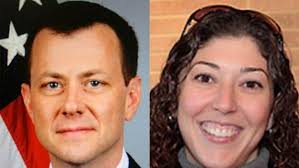
The FBI officials investigating Hillary Clinton’s email server wrote that House Speaker Paul Ryan is a “jerk,” that Senate Majority Leader Mitch McConnell looks like a turtle, that Oversight Committee chairman Trey Gowdy is a “dick,” and that newscaster Chris Wallace is a “turd.”
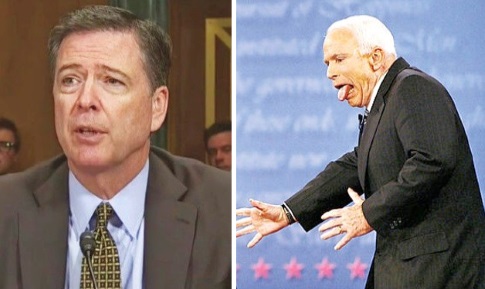
And as for former FBI Director James Comey: “Jim’s too blindly boyscoutish.”
Those comments come from 500 pages of texts released Wednesday by Senate investigators.
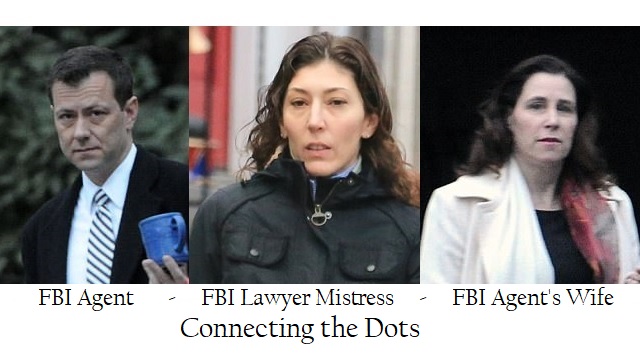
In the texts, agent Peter Strzok and his mistress, lawyer Lisa Page, also wrote that Congress is “contemptible.”
The Oversight Committee held a hearing Sept. 12 about “Classifications and Redactions in the FBI’s investigative file” on the Clinton case. Jason Herring, acting assistant director for Congressional Affairs of the FBI, was there to provide answers, while Page and Strzok watched.
Page appeared to fault the chairman of the oversight committee for asking “investigative questions” and indicated that Herring was supposed to have a simple “script” — of refusing to answer.
“Gowdy is being a total dick. All investigative questions. And Jason isn’t always stricking to the script on ‘I’m not answering that,’” she wrote. “Gowdy is really starting to piss me off,” she previously noted.
During the third presidential debate, Oct. 20, 2016, Strzok said, “I am riled up. Trump is a fucking idiot, is unable to provide a coherent answer… WHAT THE FUCK HAPPENED TO OUR COUNTRY, LIS?!?!?!”
“Chris Wallace is a turd,” he added.
“Trump is a disaster. I have no idea how destabilizing his presidency would be,” Page said.
“Mitch McConnell always reminds me of a turtle,” Page wrote July 20, 2016.
FLASHBACK: OBAMA INSISTS HE DOESN’T GET INVOLVED IN FBI INVESTIGATIONS
‘I guarantee that there is no political influence in any investigation conducted by the Justice Department or the FBI’
Feb 7, 2018
Today Fox News reported President Obama asked the FBI for updates on the Hillary Clinton email investigation.
“[Lisa] Page wrote to Strzok on Sept. 2, 2016, about prepping Comey because ‘potus wants to know everything we’re doing,'” Fox News reports. “According to a newly released Senate report, this text raises questions about Obama’s personal involvement in the Clinton email investigation.”
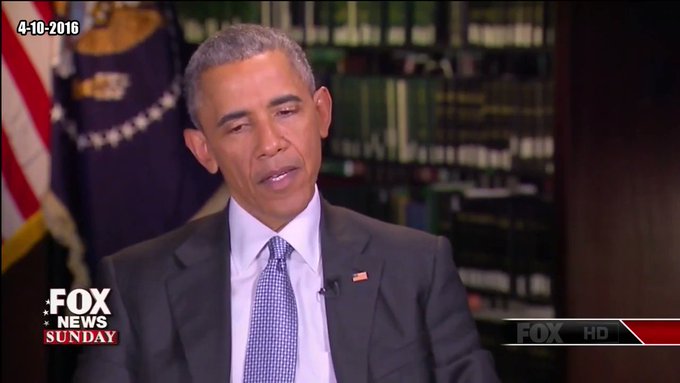
But in an April 2016 interview on Fox News Sunday, then-President Obama said he “guaranteed” he was staying out of the FBI probe.
“I do not talk to the Attorney General about pending investigations,” Obama told Chris Wallace. “I do not talk to FBI directors about pending investigations. We have a strict line and always have maintained it –”
Asked to assure the American people the FBI probe into Hillary Clinton would be treated no differently than anyone else, Obama was emphatic: “I guarantee it. I guarantee that there is no political influence in any investigation conducted by the Justice Department or the FBI, not just in this case but in any case. Full stop. Period.”
Here’s a transcript of the exchange:
WALLACE: “Mr. President, when you say what you just said — what Josh Earnest said as he did, your spokesman, in January — ‘the information from the Justice Department is that she’s not a target,’ some people, I think, are worried whether or not the decision, whether or not how to handle the case, will be decided on political grounds, not legal grounds. Can you guarantee to the American people, can you direct the Justice Department to say, ‘Hillary Clinton will be treated as the evidence goes, she will not in any way be protected.'”
OBAMA: “I can guarantee that. I can guarantee that not because I give Attorney General Lynch a directive, that is institutionally how we have always operated. I do not talk to the Attorney General about pending investigations. I do not talk to FBI directors about pending investigations. We have a strict line and always have maintained it –”
WALLACE: “–So, just to button this up –”
OBAMA: “I guarantee it. I guarantee that there is no political influence in any investigation conducted by the Justice Department or the FBI, not just in this case but in any case. Full stop Period.”
WALLACE: “– And she will be treated no differently?–”
OBAMA: “Guaranteed, full stop, period. Nobody gets treated differently when it comes to the Justice Department because nobody is above the law.”
WALLACE: “Even if she ends up as the Democratic nominee?”
OBAMA: “How many times do I have to say it, Chris? Guaranteed.
John McCain is a damn fraud and everyone with a brain knows it.
TEL AVIV — Last week’s release of a four-page House Intelligence Committee memo alleging abuse of surveillance authority provides details that raise new questions about Sen. John McCain’s role in delivering the infamous, largely discredited 35-page dossier on President Donald Trump and Russia to the U.S. intelligence community under Barack Obama’s administration.
The memo, crafted by House Republicans, reveals, among other things, that former FBI Director James Comey personally signed FISA court applications utilizing the dossier to obtain FISA court warrants to conduct surveillance on Carter Page, who briefly served as a volunteer foreign policy adviser to Trump’s 2016 presidential campaign.
Comey allegedly utilized the dossier, produced by the controversial Fusion GPS opposition research firm, to seek and receive the first warrant against Page on October 21, 2016. Federal agencies sought the renewal of the order every 90 days in accordance with court requirements. According to the memo, Comey “signed three FISA applications in question on behalf of the FBI, and Deputy Director Andrew McCabe signed one.”
Comey allegedly utilized the dossier to seek the initial warrant even though he would label the same dossier “salacious and unverified” eight months later during sworn testimony.
Comey also utilized the dossier, according to the memo, even though senior FBI officials were aware at the time that the document, authored by ex-British spy Christopher Steele, was produced by the controversial Fusion GPS firm and was funded by Hillary Clinton’s 2016 presidential campaign and the Democratic National Committee (DNC) via the Perkins Coie law firm.
The questions about McCain’s involvement follow an admission last month by the founders of Fusion GPS that they helped Steele share the document with the Arizona senator utilizing a surrogate after the November 2016 presidential election. McCain in turn reportedly provided the dossier to the FBI in December 2016.
The timeline revealed in the memo shows that by the time McCain delivered the dossier to the FBI leadership in December 2016, the agency had not only already launched an investigation into Trump’s campaign partially utilizing the dossier but Comey himself had two months earlier signed an application using the dossier to obtain a FISA warrant on Page.
It is therefore not clear why Fusion GPS would seek out McCain to deliver to the FBI a document already being utilized by the agency to launch a probe into Trump’s campaign and obtain a FISA warrant after Steele himself provided the dossier to the FBI in July 2016.
It is also not clear whether, at the time he delivered the dossier to the FBI, McCain was aware of the origins of the information, primarily that Fusion GPS compiled the charges and that they were paid to do so by Clinton’s campaign and the DNC.
McCain has not responded to multiple Breitbart News requests for comment.
Necessity of McCain delivering dossier
In August 22 testimony released last month, Fusion GPS Co-Founder Glenn R. Simpson stated that Steele’s outreach to the FBI was “something that Chris took on on his own.” Simpson stated that as far as he knew Fusion GPS did not fund Steele’s July 2016 trip to Rome to meet with the FBI. He said he believes that the trip expenses may have been reimbursed by the FBI.
In a New York Times oped last month, Simpson and fellow GPS Co-Founder Peter Fritch relate that they helped McCain share their anti-Trump dossier with the Obama-era intelligence community via an “emissary.”
“After the election, Mr. Steele decided to share his intelligence with Senator John McCain via an emissary,” the Fusion GPS founders related. “We helped him do that. The goal was to alert the United States national security community to an attack on our country by a hostile foreign power.”
It was not clear from their statement whether McCain knew Fusion GPS was behind the dossier.
While the Fusion GPS oped sheds some light on the manner in which McCain obtained the dossier, the Fusion founders did not name the “emissary” who delivered the document to McCain.
A January 11, 2017 statement from McCain attempted to explain why he provided the documents to the FBI but did not mention how he came to possess the dossier or whether he knew who funded it.
“Upon examination of the contents, and unable to make a judgment about their accuracy, I delivered the information to the director of the FBI,” McCain said at the time. “That has been the extent of my contact with the FBI or any other government agency regarding this issue.”
Sir Andrew Wood, a former British ambassador to Moscow, said McCain first consulted him about the claims inside the dossier at a security conference in Canada shortly after last November’s presidential election.
Wood stated that McCain had obtained the documents from the senator’s own sources. “I told him I was aware of what was in the report but I had not read it myself, that it might be true, it might be untrue. I had no means of judging really,” Wood further told BBC Radio 4 in January.
Last December, Wood related that he served as a “go-between” to inform McCain about the dossier contents. “My mission was essentially to be a go-between and a messenger, to tell the senator and assistants that such a dossier existed,” Wood told Fox News.
In March, Vanity Fair raised questions about the alleged involvement of longtime McCain associate David J. Kramer, a former State Department official, in helping to obtain the dossier directly from Steele. The issue was also raised in a lawsuit filed against Steele by one of the individuals named in the dossier.
Kramer was reportedly questioned by the House Intelligence Committee about his involvement in the dossier affair.
Newsweek reported on an alleged McCain-directed meeting between Kramer and Steele involving the dossier:
Kramer was reportedly directed to meet with Steele in London by McCain, who then received copies of the Trump-Russia dossier and delivered them to the Arizona senator upon returning home. McCain then gave the dossier to the FBI in December 2016.
Briefing to Trump leaked to media, contents of dossier publically disclosed
One issue that could be relevant in Fusion GPS’s admitted decision to turn to McCain is a revelation in the House memo that dossier author Steele was terminated as an FBI source “for what the FBI defines as the most serious of violations – an unauthorized disclosure to the media of his relationship with the FBI in an October 30, 2016 Mother Jones article by David Corn.”
Another issue here is the timing. McCain reportedly delivered the dossier to FBI leadership in December 2016. The memo relates that in early January 2017, prior to Trump’s inauguration, Comey briefed then President-Elect Trump and President Obama on the dossier.
As Breitbart News documented, Comey’s dossier briefing to Trump was subsequently leaked to the news media, setting in motion a flurry of news media attention on the dossier, including the release of the document to the public. The briefing also may have provided the veneer of respectability to a document circulated within the news media but widely considered too unverified to publicize.
On January 10, 2017, CNN was first to report the leaked information that the controversial contents of the dossier were presented during classified briefings on classified documents presented one week earlier to Obama and Trump.
The news network cited “multiple U.S. officials with direct knowledge of the briefings” – in other words, officials leaking information about classified briefings – revealing the dossier contents were included in a two-page synopsis that served as an addendum to a larger report on Russia’s alleged attempts to interfere in the 2016 presidential election.
Prior to CNN’s report leaking the Comey briefing to Trump, which was picked up by news agencies worldwide, the contents of the dossier had been circulating among news media outlets, but the sensational claims were largely considered too risky to publish.
All that changed when the dossier contents were presented to Obama and Trump during the classified briefings. In other words, Comey’s briefings themselves and the subsequent leak to CNN about those briefings by “multiple US officials with direct knowledge,” seem to have given the news media the opening to report on the dossier’s existence as well as allude to some of the document’s unproven claims.
Just after CNN’s January 10 report on Comey’s classified briefings about the dossier, BuzzFeed famously published the dossier’s full unverified contents. When it published the dossier text, BuzzFeed reported that the contents had circulated “for months” and were known to journalists.
The New York Times used CNN’s story on Comey’s briefing to report some contents of the dossier the same day as CNN’s January 10 report on the briefings.
After citing the CNN story, the Times reported:
The memos describe sex videos involving prostitutes with Mr. Trump in a 2013 visit to a Moscow hotel. The videos were supposedly prepared as “kompromat,” or compromising material, with the possible goal of blackmailing Mr. Trump in the future.
The memos also suggest that Russian officials proposed various lucrative deals, essentially as disguised bribes in order to win influence over Mr. Trump.
The memos describe several purported meetings during the 2016 presidential campaign between Trump representatives and Russian officials to discuss matters of mutual interest, including the Russian hacking of the Democratic National Committee and Mrs. Clinton’s campaign chairman, John D. Podesta.
It seems the news media utilized the leak about Comey’s dossier briefings to finally publicize the dossier’s existence and some of its contents even though many news media outlets reportedly possessed some of the dossier information for months.
Yet in his testimony, the FBI’s Comey claimed the opposite was the case. He stated that he and other U.S. officials briefed Obama and Trump about the dossier contents because they wanted to alert the president and president-elect that the news media were about to release the material. It is not the usual job of the U.S. intelligence community to brief top officials about pending news media coverage.
In his prepared remarks before the U.S. Senate Select Committee on Intelligence on June 8, 2017, Comey detailed why he claimed the Intelligence Community briefed Obama and Trump on the “salacious material” – a clear reference to the dossier.
Comey wrote:
The IC leadership thought it important, for a variety of reasons, to alert the incoming President to the existence of this material, even though it was salacious and unverified. Among those reasons were: (1) we knew the media was about to publicly report the material and we believed the IC should not keep knowledge of the material and its imminent release from the President-Elect; and (2) to the extent there was some effort to compromise an incoming President, we could blunt any such effort with a defensive briefing.
MSNBC’s Chris Matthews inexplicably referred to House Minority Leader Nancy Pelosi as an “ethnic sort of person” during a “Hardball” segment Monday night.
During his earlier speech in Ohio, President Donald Trump attacked Pelosi for calling $1000 bonuses for workers “crumbs,” asserting that Pelosi is the GOP’s “secret weapon” to winning elections.
On top of mocking Speaker Paul Ryan for tweeting about a school secretary receiving $1.50 more in her weekly paycheck — which the woman said would allow her to cover her yearly Costco membership — Matthews suggested that Trump attacks Pelosi because she is “ethnic” and “from the coasts.”
“Picking on somebody from the coasts, usually ethnic, and making them the poster person of the Democratic Party is old business for the Republicans,” Matthews claimed. “They did that for Tip O’Neil, they did it after Teddy, and now they do it after Nancy Pelosi.”
“They take an ethnic sort of person from one of the coasts and make them the banner person,” he concluded.
Pelosi is white and was born in the United States, so it is unclear what Matthews meant when he referred to her as “ethnic.”
Matthews also alleged that Republicans like to attack Pelosi because she “looks well-off, she’s well-dressed, she seems like somebody who comes from pretty good circumstances.”
Twice failed Democrat presidential candidate Hillary Clinton is finally admitting her campaign paid for the Russian dossier on Donald Trump, albeit by default, and is calling it typical “opposition research.”
During an interview with The Daily Show Wednesday night, Clinton argued the Trump campaign colluded with Russian officials to win the presidential election and denied any wrong doing in hiring Fusion GPS and a foreign spy.
Not surprisingly, Clinton misrepresented the original hiring of Fusion GPS by a Republican donor. That donor was Peter Singer, who hired the firm on behalf of the Washington Free Beacon to do research on all of the GOP candidates during the primary, including Trump. Fusion GPS did not employ Christopher Steele, a British spy, to do any of this work. When the Clinton campaign hired Fusion GPS after Trump won, Steele was hired and worked with Russian officials to come up the infamous and salacious dossier.
Keep in mind the Clinton campaign and DNC officials have denied paying for the dossier for nearly a year, but were forced into an admission after a subpoena from House Intelligence Chairman Devin Nunes revealed both entities had in fact employed Fusion GPS to create the dossier.
Today Fusion GPS confirmed $168,000 of the estimated $12 million total went directly from the Clinton campaign to Steele.
A Washington research firm paid a former British spy’s company $168,000 for work on a dossier outlining Russian financial and personal links to Donald Trump’s 2016 election campaign, the U.S. firm said in a statement on Wednesday.
Although it was public knowledge that Fusion GPS paid for the work, the amount had not been disclosed. Fusion GPS hired former MI6 officer Christopher Steele to collect information about Trump and his advisers.
Fusion GPS’ statement said it had told Congress about how $168,000 was paid last year to Orbis Business Intelligence, Steele’s company.
The money paid to Orbis was taken from $1.02 million it received in fees and expenses from the Perkins Coie law firm, the statement said. The law firm represented the Democratic National Committee and Hillary Clinton’s presidential campaign, although initial research by Fusion into Trump and other Republican primary candidates was commissioned by a conservative website.
It’s just opposition research…that Team Clinton denied existed as a result of their actions.
It is sad that so many nurses are dying from opioid overdose.
Tami Cleveland was terrified as she drove to her parents’ house in Veradale on a September evening in 2012.
Her stepmother, Beth, who suffered from debilitating migraines, hadn’t answered her call that morning. Cleveland hurried over after work to check on her, her anxiety growing when no one answered the door.
She let herself in and found Beth upstairs.
“She was sitting in her chair and her head was leaning against the headrest, and her mouth was open, and her eyes were open,” Cleveland said. “I went and shook her. She was cold to the touch.”
In her bathroom, Cleveland found a bottle labeled with a prescription for 300 hydrocodone pills, filled the day before. It was empty.
It’s a story that’s all too common across the United States, where more than 50,000 Americans died from opioid overdoses in 2016.
But Beth was different from most of the deceased. She was a registered nurse. A 53-year-old equipped with knowledge about the dangers of the powerful painkillers she was taking. And she was far from alone.
A Spokesman-Review analysis of Washington death records, health care provider licenses and Department of Health disciplinary records found at least 33 medical professionals in the state have died from opioid overdoses from 2010 to 2015, the most recent year that overdose death data is available.
Most of the deceased are not physicians. They’re nurses, pharmacy technicians and, in some cases, chemical dependency counselors.
None were disciplined by the Department of Health for suspected drug or alcohol abuse or diversion before their deaths, records show, though a Cowlitz County nurse died in 2014 before a pending investigation into his drug use could be completed. His death certificate listed nine drugs, more than any other professional on the list.
Two others were reported, but both had their cases closed. A Port Townsend nurse practitioner had a complaint of drug and alcohol abuse, falsifying records and mental disorder dismissed in 2010 due to insufficient evidence. She fatally overdosed in 2015 with fentanyl, morphine and hydrocodone found in her system.
A Longview chemical dependency counselor accused of drug or alcohol abuse in 2011 also had his case closed with no recorded discipline. He died of a heroin overdose in September 2013.
Most overdose deaths are quiet
Some of the deaths made headlines. A Tacoma doctor, Nick Uraga, had been charged with kidnapping and harassing his ex-wife shortly before he was found dead in his Gig Harbor home of what was described at the time as an apparent suicide. The medical examiner later ruled it an accidental drug poisoning with oxycodone, according to his death certificate.
But most, like Beth Cleveland’s, went unnoticed outside of the family, friends and coworkers struggling to make sense of a sudden death.
The deceased include a Wenatchee-area hospital pharmacist who died at 58 with six prescription drugs, including methadone and hydromorphone, in her system. A Mukilteo pharmacy technician, devoted Irish-Catholic and diabetes advocate, died at 34 from a hydrocodone overdose.
Almost none used heroin or other illegal drugs, a marked contrast to the 4,020 Washingtonians who died of opioid overdoses during the same time period.
Heroin is by far the most common drug on death certificates, and methamphetamine is in the top five statewide. But medical professionals tend to use prescription painkillers. Oxycodone, hydrocodone and fentanyl top the list.
Without exception, the obituaries do not mention a cause of death. They speak only of people who “passed away suddenly,” often leaving behind surviving parents, siblings, spouses and children.
Violet Smith, a nursing assistant from Colfax, is among the few who were commemorated. Smith, 33, died January 6, 2015, with an unprescribed fentanyl patch on her back and morphine in her system. Fentanyl is a powerful painkiller about 80 times stronger than morphine.
Smith had worked at Paul’s Place, an assisted living facility, before her death. Her supervisor, nurse Chanda Jones, said Smith was a dedicated worker.
“She loved her people, took good care of them,” Jones said. The residents affectionately named her “Duckie” because of the way Smith waddled around when she was pregnant.
The Moscow-Pullman Daily News featured her in a series about Whitman County residents younger than 50 who had died.
Smith’s twin sister, Valerie, told the Daily News her sister was struggling with painful acid reflux and had sustained an injury while trying to help a patient who’d fallen.
Jones said staff suspected she might have been struggling. Smith was open about the fact she’d abused drugs in the past and had been calling in sick to work more and more during the last year Jones worked with her.
But her death still came as a shock. Jones said nobody was sure where she got the fentanyl.
“We didn’t have anybody at our facility who used those, so who knows where she got them,” she said.
Smith left behind two young sons after her death.
Easier access to prescription drugs
Cleveland said her mother’s nursing license made it easier for her to get hydrocodone prescriptions, even as doctors were cracking down on the availability of powerful pain medication.
“She knew what to say and how to say it,” Cleveland said. “Knowing that she was a nurse, they didn’t question her at all.”
Beth’s prescribing nurse practitioner, Susan Bowen-Small, had her license suspended by the Department of Health in February 2014, almost a year and a half after Cleveland’s death. Three of her patients had died after taking painkillers she prescribed, according to the Department of Health, between January and March of 2013, after Beth was already dead.
The medical profession has long struggled with how best to handle providers struggling with drug addiction.
Though doctors, nurses and pharmacists are among the people best-equipped to see the consequences of drug addiction, they’re also susceptible to drug abuse thanks to an intersection of factors: high-stress jobs, odd hours and a belief that they know how to stay in control of the drugs they prescribe or administer routinely.
Doctors with an addiction problem tend to abuse alcohol most frequently, said Chris Bundy, the director of the Washington Physician’s Health Program, which helps doctors get treatment for addiction and mental illness.
Nurses are far more likely to abuse opioids or other prescription drugs. Most seeking treatment in Washington through the Department of Health have either an opioid addiction or an addiction to multiple substances, including opioids.
“A lot of that is because they have direct hands-on access to those medications,” said John Furman, director of Washington Health Professional Services, a group within the Department of Health that treats nurses for drug addiction.
Cleveland’s father married Beth when Cleveland was about 9, when the family lived in Southern California.
Though Cleveland mostly lived with her mother, she saw Beth regularly and grew closer to her as the years passed.
Cleveland believes Beth’s addiction started shortly after her marriage, when her migraines began getting worse. She would be in so much pain that she’d have to sit in the dark in bed all day, unable to look at lights or a screen.
“They tried everything. They went to multiple neurologists and doctors. They tried acupuncture, they tried naturopaths,” Cleveland said.
Cleveland believes it’s possible another option could have worked in the long term, if Beth had stuck with it. But pain pills provided immediate relief, and she had doctors willing to write her prescriptions.
“Those are extremely addictive and she already had an addictive personality,” Cleveland said.
She believes Beth’s childhood contributed to her addiction, causing her pain she never fully dealt with.
Her dad died when she was young, and her sister also struggled with drug and alcohol addiction. Her mother liked to play favorites, which made her childhood difficult, Cleveland said.
Art and fantasy helped her. She loved “Lord of the Rings,” “Harry Potter” and other books that let her escape into new worlds. But sometimes, that wasn’t enough of an escape.
In retrospect, Cleveland said Beth’s addiction was worse than her family wanted to believe.
“We knew she had a problem when we were fairly young,” Cleveland said. As a child, she remembered being told Beth wasn’t feeling well or had a headache for days when she’d be sick in bed.
In 2011, Beth had a grand mal seizure at work while she was in California and lost her driver’s license for six months as a result. She told Cleveland it was from her pain medication: she’d taken three or four pills when she was only supposed to have one at a time.
“That should have been another red flag,” Cleveland said.
Beth went to rehab once in Napa, California, and had periods where she’d try to get better or kick her addiction.
When she moved to the Spokane area, she lived with Cleveland in Rosalia while searching for her own place. A few days into her stay, she hadn’t come upstairs all day. Cleveland went to check on her and found her in bed, watching Netflix and saying she had a migraine.
Cleveland had leftover pills from a hydrocodone prescription when she’d gotten knee surgery in 2012.
“She found out I had them and came up and said, ‘Hey, do you think I could have a couple pills?’ ” Cleveland remembered. She gave her stepmother two.
“A couple of hours later, she was asking for more,” Cleveland said. Eventually, she had to lie and tell Beth she’d run out.
Carrot and stick approach
State law requires medical providers – anyone with a Department of Health license – and health care employers to report license holders who are unable to work “with reasonable skill and safety due to a mental or physical condition,” including drug or alcohol addiction. Providers are also supposed to self-report.
A total of 558 health care providers were sanctioned by the health department from 2010 to 2016 for drug or alcohol violations, and the department took 1,023 reports of suspected drug and alcohol violations involving 843 individual providers during the same period, according to data obtained through a public records request.
Washington Health Professional Services takes a carrot and stick approach to suspected substance abuse among nurses, including nurse practitioners.
WHPS, a part of the Department of Health, handles referrals from family, colleagues and nurses themselves who may be struggling with drug addiction.
If the program finds a nurse is abusing drugs, they’ll be put on a monitoring agreement and be expected to comply with a treatment program. If they comply with counseling, group therapy and pass drug tests, they’ll be able to keep their license and continue practicing once it’s deemed safe.
“If they’re successful in the program, the nursing commission will never know that they participated and that’s an incentive,” Furman said.
That’s the carrot. The stick? Screw up, and the program can report nurses to the nursing commission for non-compliance, and they could lose their licenses and jobs.
A similar program exists for doctors: the Washington Physician’s Health Program. Unlike WHPS, it’s completely independent from the Department of Health, and deals with any issue making it difficult for a doctor to practice safely, including mental or cognitive illnesses.
“We want to encourage early intervention and treatment without creating a safe harbor for people who are potentially putting patients at risk,” Bundy, the program director, said.
The physician’s program has a higher success rate than the nurse’s, but providers in both fare better than the general public in addiction treatment.
During the 30 years the doctors’ program has existed, 81 percent of graduates have stayed clean after five years, based on random drug tests, Bundy said.
Among nurses who graduate, an average of 79 percent were employed in 2017, according to the program’s annual report. Fewer than 1 percent of nurses who graduate return to monitoring later for new violations.
Typically, 40 to 60 percent of people treated for drug addiction will relapse, according to the National Institute on Drug Abuse, the federal government’s main funder of addiction research. They define relapse as “recurrence of symptoms that requires additional medical care.”
Still, many health care providers already fear reporting colleagues out of concern that they’re “tattling” or going to get someone in trouble.
And reaching out for help remains difficult, even when nurses and other professionals are aware of resources.
Anne Mason, director of Washington State University’s doctoral program in nursing, said nurses are aware of WHPS and are taught that anyone, from any background, can become addicted to narcotics.
But that’s not always enough to make people willing to seek help.
“There’s so much stigma around addiction whether you’re a health care professional or any other professional,” Mason said. “There’s oftentimes a message that addiction is about people making a choice, a bad choice, and people could choose not to be addicted if they wanted to but they don’t want to.”
Jones said in her career as a long-term care nurse, Smith is far from the first professional she’s seen struggle with addiction.
Nursing is stressful across the board, regardless of the type of nursing someone is doing, she said. For long-term care nurses like her, it’s hard becoming close to patients and watching them have bad days or go downhill.
“They become family so when they’re not doing well, we’re not doing well,” Jones said.
The idea that nurses should know better keeps them from seeking help.
“As a nurse you have a certain amount of pride and responsibility, and to go to someone to tell them you’re having a problem or in the weeds a bit, it’s just not done,” Jones said.
Those concerns may be heightened because the nurse’s program is part of the Department of Health, not an independent group.
“I think that there’s fear and that fear is heightened when there appears to be less of a separation of church and state,” Bundy said.
Most reports of drug abuse to both the physicians’ health program and the Department of Health don’t result in discipline or monitoring.
“We often hear after the fact that there were others who knew that individual, often several others, who knew that individual and had a concern and failed to act,” Bundy said.
In 2016, Bundy said they had 216 people referred to them and had 70 end up in monitoring agreements. In 2017, they had 189 referrals and 80 monitoring agreements. Most doctors are able to return to work.
WPHS, the program for nurses, had 371 nurses participating in the program for some part of 2017, and 83 new nurses sign monitoring agreements.
Searching for the right intervention
Cleveland tried to help her stepmother, Beth, more times than she can count. Though she’s a phlebotomist and works in the medical field, she said she didn’t know there was a program that treated nurses, or anywhere she could have called for help.
Beth often lied to her husband, Cleveland’s father, about her drug use. She would say she wasn’t taking pills anymore and went to different doctors to get prescriptions, not telling them what she was getting elsewhere.
“She was trying to hide it from my dad, she was trying to hide it from everyone,” Cleveland said.
On the day she died, Cleveland believes Beth had a migraine and just kept taking pills.
“She probably took the initial medication and it didn’t work, and you’re loopy anyway so you just keep taking it,” Cleveland said.
Her death certificate would list three drugs: hydrocodone, Xanax and benadryl, as contributing to her death.
After her stepmother overdosed, Cleveland said she didn’t sleep for about a week. She couldn’t forget seeing the body of someone she loved looking so empty.
Cleveland still keeps Beth’s paintings at home, and remembers how much Beth loved to decorate for holidays.
“She had decorations for every holiday under the sun. She has dish towels, I mean. Everything,” Cleveland said.
At times, it’s hard for Cleveland not to see Beth’s death as a betrayal of her father and the rest of her family.
Sometimes, she thinks nothing could have saved Beth. But maybe the right intervention – from the nursing commission, or a co-worker, or someone – could have helped.
Sometimes, she blames herself for not doing more.
And sometimes, she’s left with the thought that she knows doesn’t capture the full picture, the thought that has made addiction such a taboo topic in the medical field.