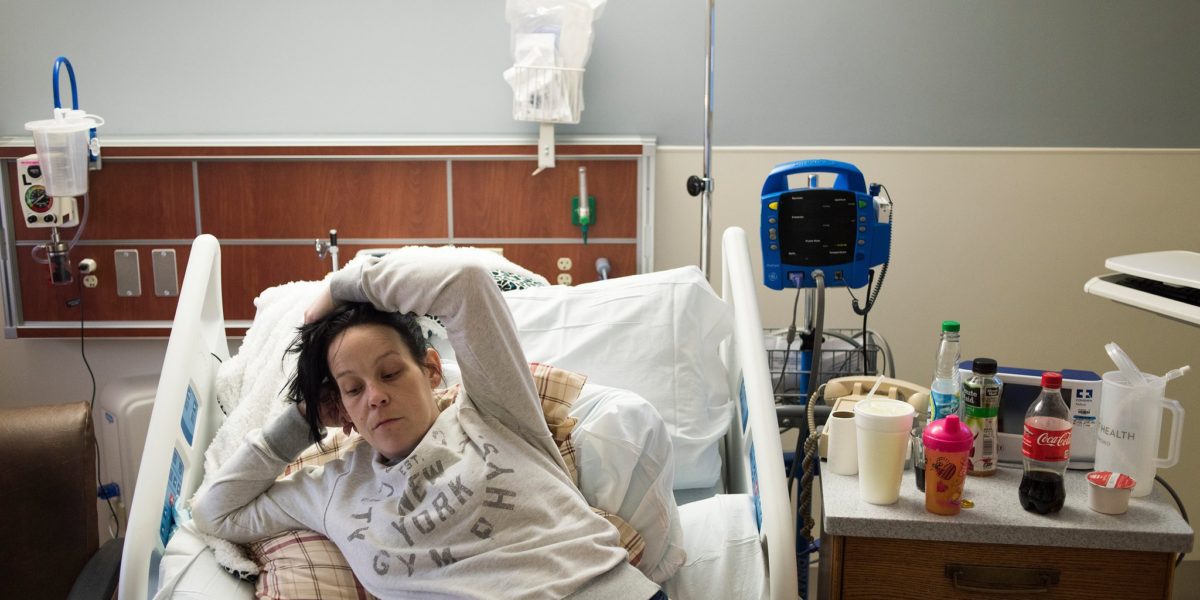
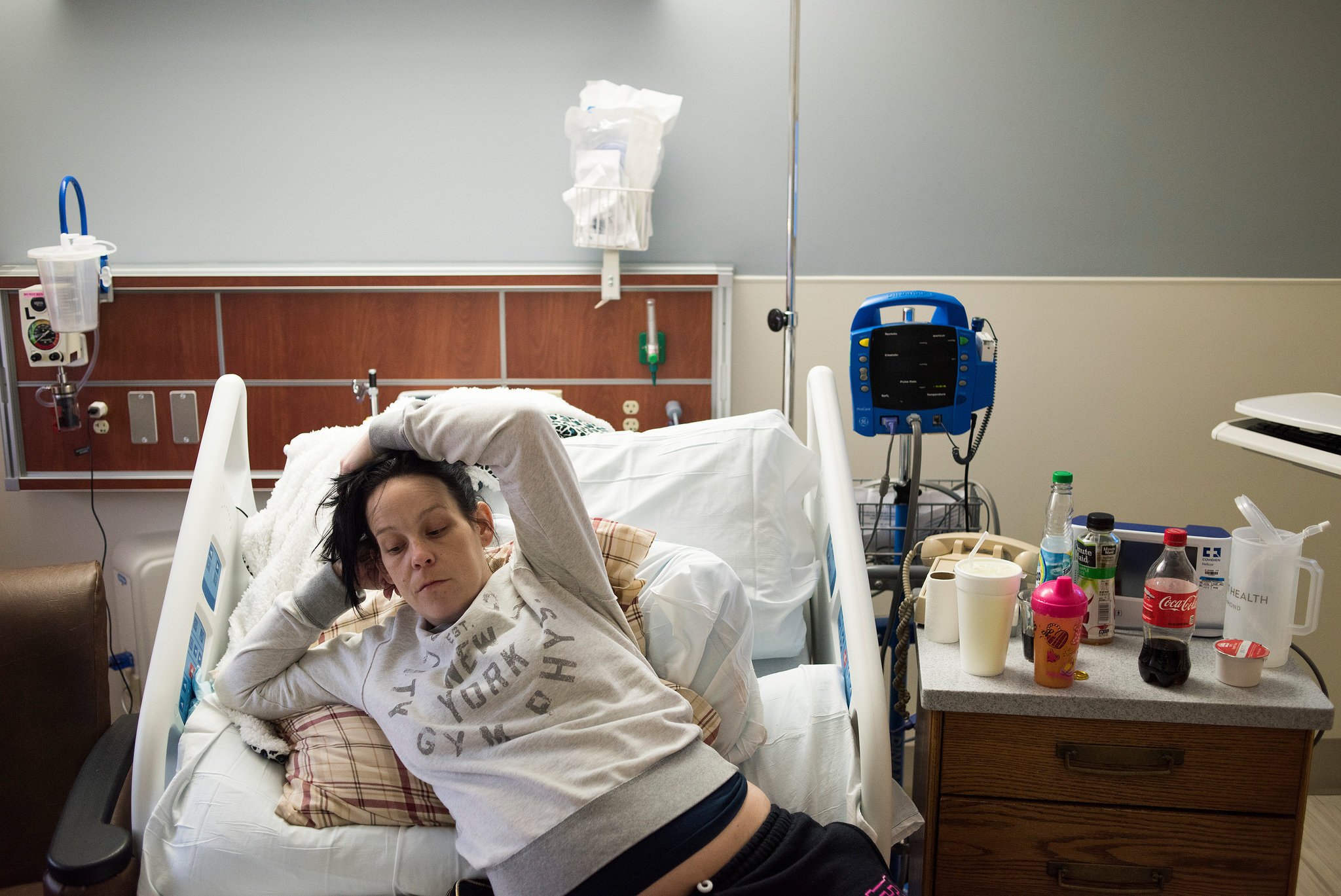
I’m not addicted to opioids, I can stop anytime I want to but I just don’t want to.
The Senate Homeland Security Committee released a report in mid-January that received surprisingly little media attention despite its provocative assertion that Obamacare, and particularly its enormous expansion of Medicaid, is a driving force behind the opioid epidemic.
The case laid out by the report is straightforward, logical, and politically unspeakable. It’s an argument generally made in hushed tones until now, and it’s easy to see why. Even the Senate Homeland Security report was swiftly denounced as a “partisan fantasy” peddled by chairman Ron Johnson (R-WI) in what little mainstream media coverage it received. Thou shalt not speak ill of Medicaid.
Older people are becoming addicted to opioids also.
And yet, the critics could find no way to refute the actual data in the report. They denounced it with thunderous virtue-signaling outrage, attacked those involved in preparing it, criticized arguments it did not make – such as pretending the report claims the opioid epidemic was caused by Medicaid expansion, rather than exacerbated by it – or simply assumed that all critiques of Medicaid and Obamacare must be partisan hit jobs, Q.E.D.
This validates one of the core concerns about politicizing medicine, or any other scientific field, by putting Big Government in charge of it. Rational discussion becomes impossible. Every analysis quickly devolves into a partisan brawl.
The report postulates Medicaid expansion is a contributing factor to the epidemic of opioid abuse – not the sole or original cause, as the report itself and Sen. Johnson took pains to point out, despite mischaracterizations by critics. Much of the opioid crisis involves prescription drugs, which can become addictive even when legitimately prescribed, and are often stolen through fraud and resold on the street. Medicaid expansion greatly increased access to prescription drugs. Medicaid also includes programs to fight drug abuse, but some of those programs involve pharmaceutical treatments that can themselves become addictive, especially when they fall into the hands of street pushers.
It requires no great leap of logic to see the connection between a dramatic increase in access to drugs and a problem driven by easy access to drugs, and yet it is evidently heretical to state that relationship out loud. That’s even more remarkable when the increased use and abuse of painkillers is universally acknowledged as a major element of the opioid crisis.
No one seems to have trouble acknowledging that fact when blaming pharmaceutical companies for creating and pushing drugs, doctors for over-prescribing them, or Americans for reporting remarkably high levels of pain and demanding truckloads of pills to deal with it. The Senate report itself states at the very beginning that the opioid epidemic is complicated, and “most agree that development, marketing, and medical training regarding drug usage – and the resulting over-prescription of opioids – have played a key role.”
Ask if a massive government program that makes it much easier for over one-fifth of the population to get drugs could be part of the problem, however, and you’re a hyper-partisan monster who really just wants to kill poor people by taking away their Obamacare. The Senate committee demonstrated its understanding of just how hot this political potato is by filling the early pages of the report with lavish praise for Medicaid and its good intentions, and repeatedly stating that government spending on drugs is but one factor in a complex crisis that deserves careful analysis.
The report studied hundreds of cases in which Medicaid was abused and defrauded to obtain opioids that were often resold on the streets. The report quotes Sam Quinones’ award-winning book Dreamland: The True Tale of America’s Opiate Epidemic to explain why this outcome was entirely predictable: “We can talk morality all day long, but if you’re drawing five hundred dollars a month and you have a Medicaid card that allows you to get a monthly supply of pills worth several thousand dollars, you’re going to sell your pills.”
Some of the fraud cases detailed in the report go far beyond individual beneficiaries making the sort of calculation Quinones described. Some of them were organized conspiracies involving large numbers of Medicaid beneficiaries recruited to provide inventory to drug dealers. The largest scheme chronicled in the report saw over a billion dollars change hands.
A police officer quoted in the report observed that pharmacists are more likely to fill dubious prescriptions when Medicaid is involved. The Justice Department launched a program over the summer to study the role played real and fraudulent prescriptions for opioids in the drug crisis.
The Senate Homeland Security report further notes that Medicaid fraud is rampant and has not been handled effectively by the government, a fact known to any serious student of the waste, fraud, and abuse that politicians of both parties vow to crack down upon during every election.
Other fraud-susceptible programs such as Medicare, the VA, and the food stamp program are duly cited by the report as sources of opioids.
(Yes, the food stamp program. Among other things, it is well-known to investigators that some SNAP card holders engage in “trafficking” of their benefits, and often purchase drugs with the money they receive. This has been specifically cited as a contributing factor to the opioid crisis. Also, shop owners have been prosecuted for allowing customers to use SNAP benefits to pay directly for forbidden items. One such case documented in the Senate report involved a small grocery store with a back-room stash of “Medicaid-funded OxyContin pills.”)
“The research suggests, however, that Medicaid is the federal program most prone to abuse, and the primary government funding source for the epidemic,” the authors point out.
“There appears to be no limit to the types of schemes used to scam the Medicaid program, from large drug rings that employ beneficiaries as ‘runners’ to fill oxycodone prescriptions, to nurses working the night shift who steal hydrocodone pills from patients. Illicit painkillers obtained with Medicaid cards are being resold at handsome profits nationwide, in places ranging from the streets of Milwaukee to a Native American reservation in upstate New York,” says the report.
Another problem is the illicit use of drugs intended to treat drug addiction, notably suboxone. The attorney general of Kentucky is quoted declaring that “wrongful prescribing of suboxone is flooding our communities with yet another drug that is killing our children.”
It’s not just illicit street purchases increasing in tandem with Medicaid expansion. National Review points to Centers for Disease Control data that “opioid prescribing rates among Medicaid enrollees are at least twofold higher than rates for persons with private insurance.” In Washington State, the CDC found that Medicaid beneficiaries were 5.7 times more likely to die of opioid-related causes.
The most provocative section of the report introduces facts and figures to buttress the argument that opioid abuse has grown worse in states that expanded Medicaid under Obamacare.
“More than 80 percent of the 298 separate Medicaid-opioids cases identified were filed in Medicaid expansion states, led by New York, Michigan, Louisiana, New Jersey, and Ohio,” the report states. “The number of criminal cases increased 55 percent in the first four years after the Medicaid expansion, from 2014 to 2017, compared to the four-year period before expansion.”
It is further noted that drug overdose deaths are increasing almost twice as fast in expansion states, hospital stays for opioid-related issues “massively spiked” after expansion, and Medicaid spending for drug abuse treatment is rising faster in expansion states.
Conversely, as Investors Business Daily notes, eight of the 15 states with the lowest overdose rates did not expand Medicaid. All of these observations should be considered with the usual caveat that correlation does not necessarily indicate causation – there are almost certainly other factors common to expansion states that help to explain their rising addiction rates, although the dramatic increase immediately after the expansion is not easily dismissed.
These assertions are based on official figures that most analysts agree are significantly under-stating the depths of the opioid crisis. One specialist quoted in the Senate report said the opioid epidemic is “deadlier than the AIDS epidemic at its peak.”
Reviewing the Senate Homeland Security report for Forbes, Sally Pipes notes that state Medicaid expansion had the perverse effect of “enrolling able-bodied, childless adults in their Medicaid programs than it does for children and the destitute elderly.” Able-bodied childless adults are also the group experiencing an anomalous increase in mortality rates, which in turn is believed to be strongly influenced by opioid addiction.
“About 80 percent of heroin and fentanyl users spiraled into their addictions after first getting hooked on prescription painkillers. The Medicaid expansion made those painkillers widely and cheaply available,” Pipes notes, succinctly stating the point nobody is supposed to make.
She also tackles the bizarre argument that Medicaid is a net plus because it treats more drug addicts than it creates, which is the sort of argument that only makes sense to people whose capacity for reason has been eroded by decades of worshipping Big Government. (Try this argument for comparison purposes: “Tobacco companies are a net plus for public health because they provide so much funding to treat smoking-related illnesses.”)
Pipes suggests addressing the crisis by rolling back the Medicaid expansion and block-granting funds to states, which could help to drain the bureaucratic swamp that hides so much Medicaid corruption and strongly incentivize states to watch their health-care dollars more carefully.
Such suggestions run strongly against the current political tides, with Democrats pushing hard for even more centralized political control of medicine and ever-larger bureaucracies, with an eye toward midwifing the birth of the doomsday bureaucratic monstrosity known as single-payer socialized medicine. Imagine how bad the opioid crisis will get if everyone gets Medicaid.
But of course, you’re not supposed to imagine that, much less conduct hard research into any aspect of the absolutely forbidden notion that government makes problems worse by subsidizing them.
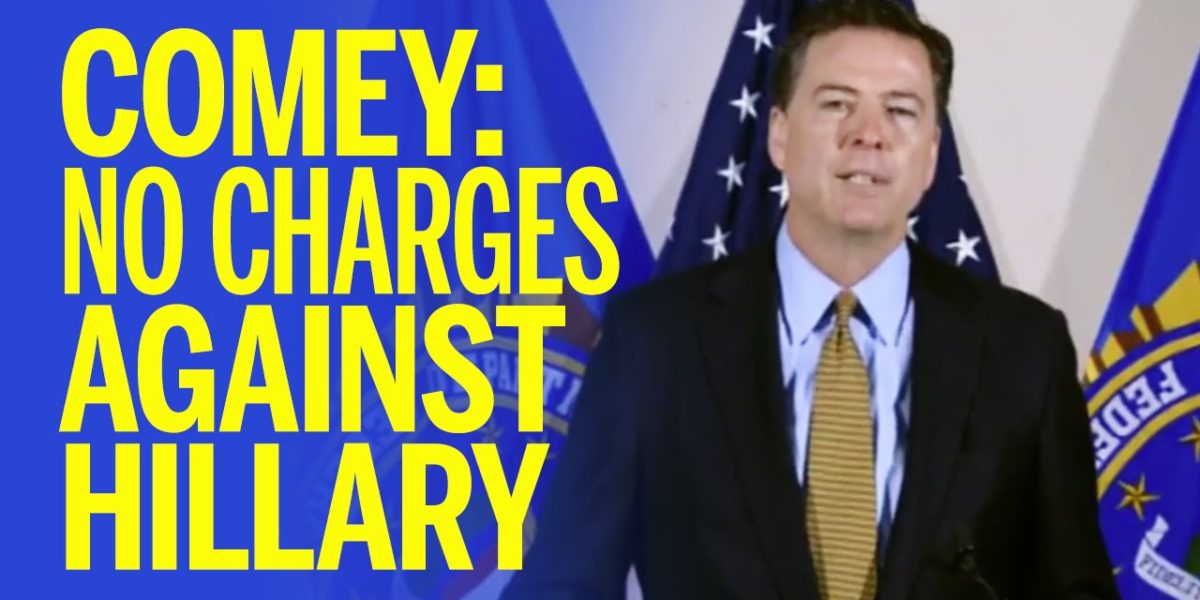
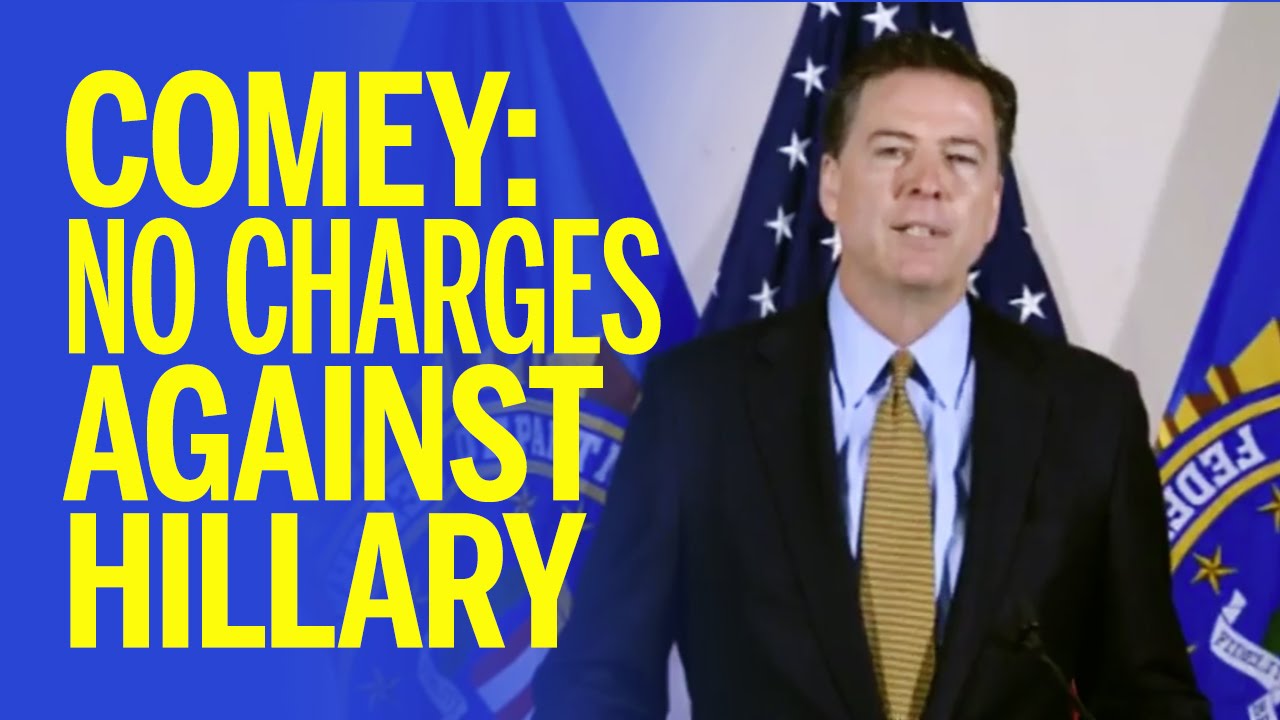
James The Corrupt Comey and Peter S. Needs to be investigated NOW.
The FBI didn’t flag that some emails from Hillary Clinton’s private email server were marked classified with a “(C)” when they were sent — something that seemingly would have been one of the first and most obvious checks in an investigation, and one that FBI agents instantly recognized put the facts at odds with Clinton’s public statements.
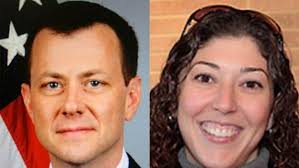
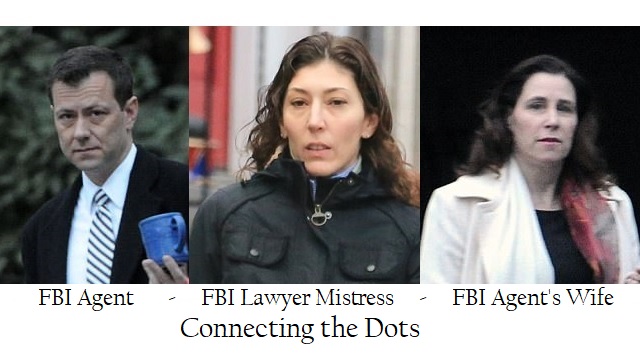
The Intelligence Community Inspector General noticed it after the FBI missed it, texts between FBI agent Peter Strzok and his mistress, FBI lawyer Lisa Page, reveal. “Holy cow,” Strzok wrote, “if the FBI missed this, what else was missed?”
“Remind me to tell you to flag for Andy [redacted] emails we (actually ICIG) found that have portion marks (C) on a couple of paras. DoJ was Very Concerned about this,” he wrote.
“Found on the 30k [emails] provided to State originally. No one noticed. It cuts against ‘I never sent or received anything marked classified,’” he wrote, referring to statements by Clinton downplaying the danger of her email practices.
Much of the more in-depth investigation considered whether Clinton and her aides emailed materials that were classified but were not marked as such, a harder determination to make.
The exchange occurred on June 12, 2016. FBI Director Jim Comey disclosed the findings of marked-classified emails to the House on July 7.
On May 10, 2016, Strzok had suggested that in his mind, the investigation was closer to being finished than to just getting started — suggesting that if it weren’t for the inspector general, it might have closed down and cleared her despite missing the most obvious first step.
“I cannot overstate to you the sense of urgency about wanting to logically and effectively conclude this investigation,” he said.
The ommission allowed Clinton to repeatedly and prominently state that she had “never received nor sent any material that was marked classified” on her private email server while secretary of state.
She even said so at major debates, and because the FBI hadn’t caught the letter (C), and therefore never stated its findings, PolitiFact rated the claim “Half True.”
When the FBI belatedly noticed and relayed the truth, the fact-checking site said “Now we know it’s just plain wrong.”
Clinton decided to print out 55,000 pages instead of providing the State Department with her emails in their digital format, a technique sometimes used by lawyers to make searches harder for their opponents. A CTRL-F search for “(C)” could have missed the markings because State had to re-digitize the forms with Optical Character Recognition, which can get tripped up on symbols, perhaps interpreting it as something like “[C]” or a copyright symbol. Nonetheless, the classified marker always appears at the beginning of a paragraph and is visually distinct.
The comments come from 500 pages of texts released Wednesday by Senate investigators.
Markings denoting the different levels of classified information include (C) for confidential, (S) for secret, and (TS) for top secret.
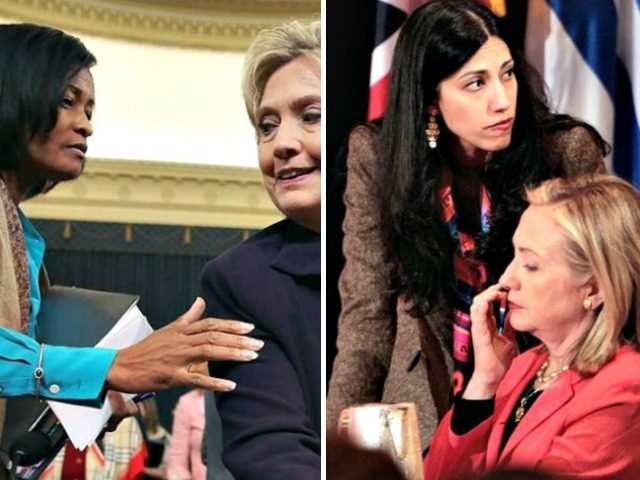
Congressional investigators are puzzling over a December 2016 text message that suggests the Justice Department sought to grant immunity to Hillary Clinton aide Huma Abedin.
In a Dec. 13, 2016 text exchange, FBI counterintelligence official Peter Strzok sent his mistress, FBI lawyer Lisa Page, a text message referring to a conversation he had with the Justice Department discussing immunity and potential grand jury testimony.
The Senate Homeland Security and Governmental Affairs Committee released the text message along with 384 pages of additional records on Wednesday.
“Talked with DoJ about HA interview,” Strzok wrote to Page.
“Told them we had to interview, no immunity. They said they thought that would get counsel to the point of saying she’s either taking the 5th in the Gj or you need to give her immunity. I said that’s fine, please have discussions to get the decision to that point and I would run it up the chain.”
Peter Strzok text message to Lisa Page, Dec. 13, 2016.
The initials “HA,” the gender reference and other text messages that Strzok sent in that time frame strongly suggest that he was referring to Abedin.
A day before the text about immunity, Strzok said that a top FBI official had offered to meet with Clinton’s lawyer, David Kendall.
Peter Strzok text message to Lisa Page, Dec. 12, 2016.
Kendall did not represent Abedin in the email case so it is unclear why the FBI sought to meet with him. A lawyer who represented Abedin on the email matter did not respond to a request for comment.
It is unclear what case Strzok was investigating at the time, and there have been no reports that Abedin was granted immunity or that she pleaded the Fifth.
The Hillary Clinton email investigation was closed for good on Nov. 6, 2016, just two days before the election. The FBI re-opened its investigation in late Oct. 2016 after Clinton emails were discovered on a laptop shared by Abedin and her husband, Anthony Weiner.
The FBI was still investigating Weiner for sending lewd messages to an underage girl.
The FBI officials investigating Hillary Clinton’s email server wrote that House Speaker Paul Ryan is a “jerk,” that Senate Majority Leader Mitch McConnell looks like a turtle, that Oversight Committee chairman Trey Gowdy is a “dick,” and that newscaster Chris Wallace is a “turd.”
And as for former FBI Director James Comey: “Jim’s too blindly boyscoutish.”
Those comments come from 500 pages of texts released Wednesday by Senate investigators.
In the texts, agent Peter Strzok and his mistress, lawyer Lisa Page, also wrote that Congress is “contemptible.”
The Oversight Committee held a hearing Sept. 12 about “Classifications and Redactions in the FBI’s investigative file” on the Clinton case. Jason Herring, acting assistant director for Congressional Affairs of the FBI, was there to provide answers, while Page and Strzok watched.
Page appeared to fault the chairman of the oversight committee for asking “investigative questions” and indicated that Herring was supposed to have a simple “script” — of refusing to answer.
“Gowdy is being a total dick. All investigative questions. And Jason isn’t always stricking to the script on ‘I’m not answering that,’” she wrote. “Gowdy is really starting to piss me off,” she previously noted.
During the third presidential debate, Oct. 20, 2016, Strzok said, “I am riled up. Trump is a fucking idiot, is unable to provide a coherent answer… WHAT THE FUCK HAPPENED TO OUR COUNTRY, LIS?!?!?!”
“Chris Wallace is a turd,” he added.
“Trump is a disaster. I have no idea how destabilizing his presidency would be,” Page said.
“Mitch McConnell always reminds me of a turtle,” Page wrote July 20, 2016.
FLASHBACK: OBAMA INSISTS HE DOESN’T GET INVOLVED IN FBI INVESTIGATIONS
‘I guarantee that there is no political influence in any investigation conducted by the Justice Department or the FBI’
Feb 7, 2018
Today Fox News reported President Obama asked the FBI for updates on the Hillary Clinton email investigation.
“[Lisa] Page wrote to Strzok on Sept. 2, 2016, about prepping Comey because ‘potus wants to know everything we’re doing,'” Fox News reports. “According to a newly released Senate report, this text raises questions about Obama’s personal involvement in the Clinton email investigation.”
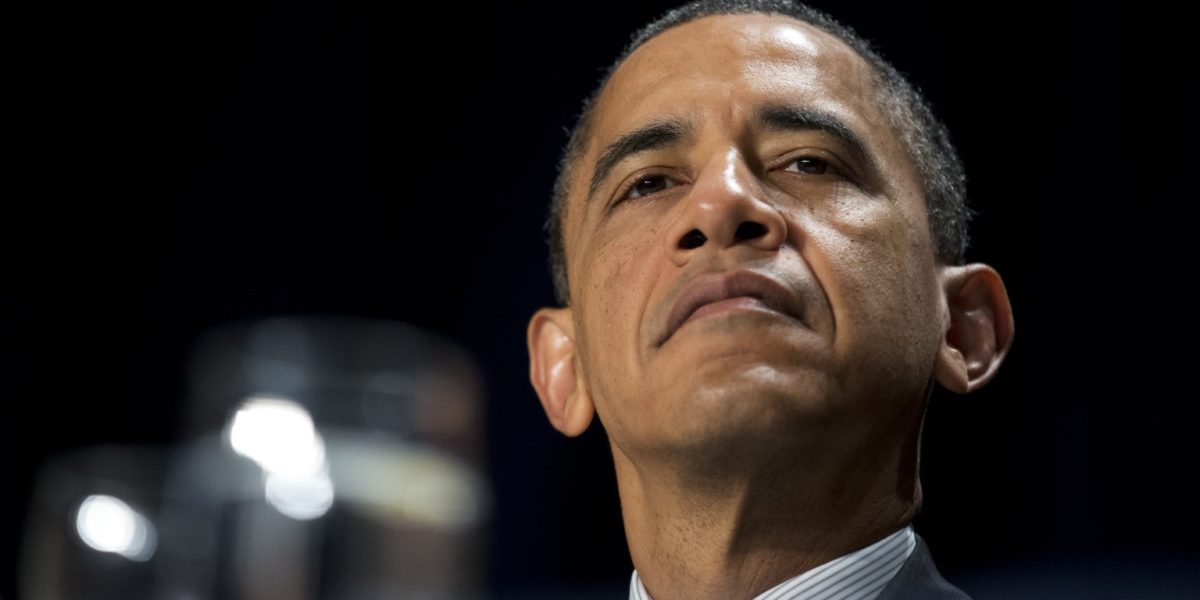
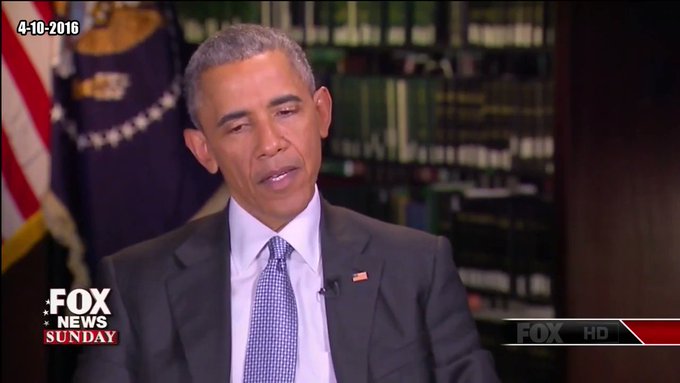
But in an April 2016 interview on Fox News Sunday, then-President Obama said he “guaranteed” he was staying out of the FBI probe.
“I do not talk to the Attorney General about pending investigations,” Obama told Chris Wallace. “I do not talk to FBI directors about pending investigations. We have a strict line and always have maintained it –”
Asked to assure the American people the FBI probe into Hillary Clinton would be treated no differently than anyone else, Obama was emphatic: “I guarantee it. I guarantee that there is no political influence in any investigation conducted by the Justice Department or the FBI, not just in this case but in any case. Full stop. Period.”
Here’s a transcript of the exchange:
WALLACE: “Mr. President, when you say what you just said — what Josh Earnest said as he did, your spokesman, in January — ‘the information from the Justice Department is that she’s not a target,’ some people, I think, are worried whether or not the decision, whether or not how to handle the case, will be decided on political grounds, not legal grounds. Can you guarantee to the American people, can you direct the Justice Department to say, ‘Hillary Clinton will be treated as the evidence goes, she will not in any way be protected.'”
OBAMA: “I can guarantee that. I can guarantee that not because I give Attorney General Lynch a directive, that is institutionally how we have always operated. I do not talk to the Attorney General about pending investigations. I do not talk to FBI directors about pending investigations. We have a strict line and always have maintained it –”
WALLACE: “–So, just to button this up –”
OBAMA: “I guarantee it. I guarantee that there is no political influence in any investigation conducted by the Justice Department or the FBI, not just in this case but in any case. Full stop Period.”
WALLACE: “– And she will be treated no differently?–”
OBAMA: “Guaranteed, full stop, period. Nobody gets treated differently when it comes to the Justice Department because nobody is above the law.”
WALLACE: “Even if she ends up as the Democratic nominee?”
OBAMA: “How many times do I have to say it, Chris? Guaranteed.
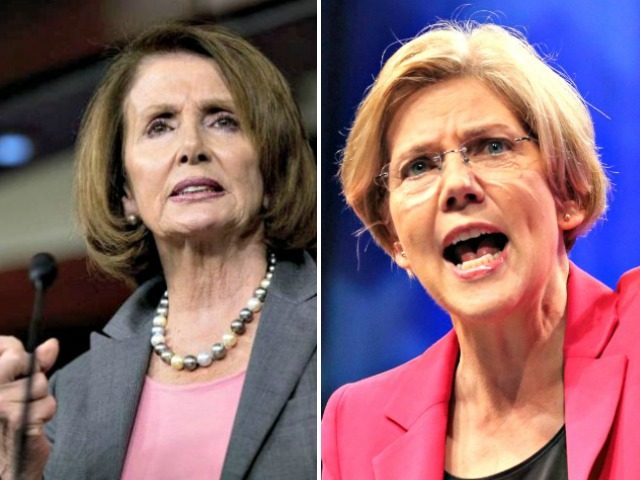
MSNBC’s Chris Matthews inexplicably referred to House Minority Leader Nancy Pelosi as an “ethnic sort of person” during a “Hardball” segment Monday night.
During his earlier speech in Ohio, President Donald Trump attacked Pelosi for calling $1000 bonuses for workers “crumbs,” asserting that Pelosi is the GOP’s “secret weapon” to winning elections.
On top of mocking Speaker Paul Ryan for tweeting about a school secretary receiving $1.50 more in her weekly paycheck — which the woman said would allow her to cover her yearly Costco membership — Matthews suggested that Trump attacks Pelosi because she is “ethnic” and “from the coasts.”
“Picking on somebody from the coasts, usually ethnic, and making them the poster person of the Democratic Party is old business for the Republicans,” Matthews claimed. “They did that for Tip O’Neil, they did it after Teddy, and now they do it after Nancy Pelosi.”
“They take an ethnic sort of person from one of the coasts and make them the banner person,” he concluded.
Pelosi is white and was born in the United States, so it is unclear what Matthews meant when he referred to her as “ethnic.”
Matthews also alleged that Republicans like to attack Pelosi because she “looks well-off, she’s well-dressed, she seems like somebody who comes from pretty good circumstances.”