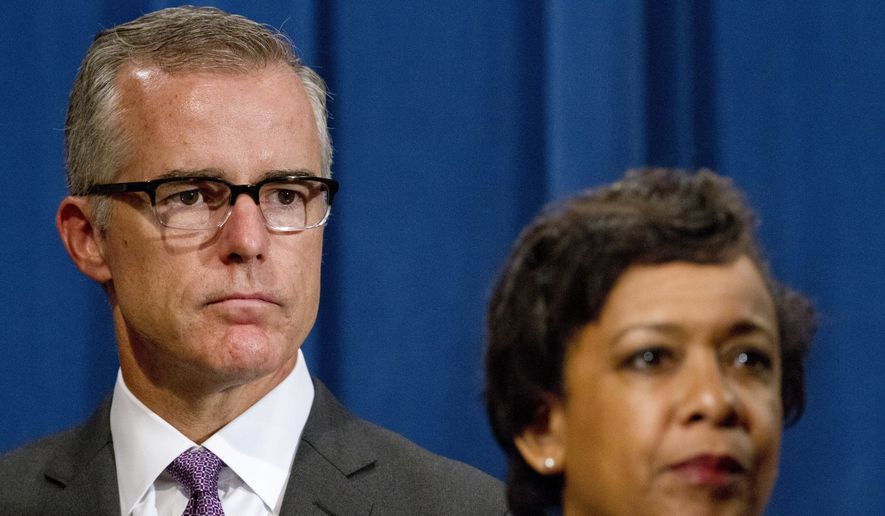
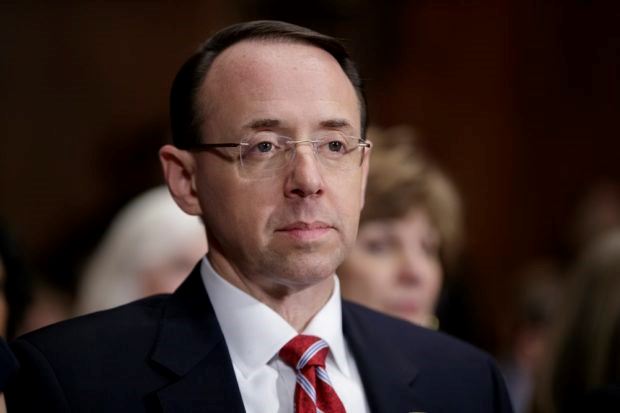
DOJ’s internal watchdog to criticize former FBI Deputy Director Andrew McCabe
McCabe authorized leaks to the media, according to new reports
The former deputy director also reportedly misled watchdog investigators about the media disclosures
McCabe stepped down from his position in January
The Department of Justice’s internal watchdog will criticize former FBI Deputy Director Andrew McCabe for authorizing leaks to the media and giving misleading statements to investigators about doing so, according to two new reports.
McCabe, 49, authorized FBI officials to speak to the media for articles prior to the 2016 election, including one about an ongoing investigation into the Clinton Foundation, according to a report being prepared by Justice Department Inspector General Michael Horowitz.
The FBI No. 2 also misled watchdog investigators when they initially asked about the media disclosures, according to The Washington Post.
THE WASHINGTON POST STORY:
“Report said to fault FBI’s former No. 2 for approving improper media disclosure, misleading inspector general
The Justice Department inspector general is preparing a damaging report on former FBI deputy director Andrew McCabe, alleging he was responsible for approving an improper media disclosure, two people familiar with the matter said. One of the people said McCabe will also be accused of misleading investigators about his actions.
The report is a part of Inspector General Michael Horowitz’s broad review of the FBI and Justice Department’s handling of the investigation into Hillary Clinton’s use of a private email server while she was secretary of state.
During that work, inspector general’s investigators found that McCabe had authorized the disclosure of information to the Wall Street Journal for an October 2016 story that examined feuding inside the FBI and Justice Department around the handling of a separate investigation into Clinton’s family foundation, two people familiar with the case said.
Those probing the matter believe that McCabe, who stepped down in January, misled them when they initially inquired about the subject, though one person familiar with the forthcoming report said McCabe disputes that he intentionally misled investigators.
It is unclear how McCabe is said to have misled investigators. The inspector general’s findings on the media disclosure were first reported by the New York Times.
Through a representative, McCabe declined to comment. A spokesman for the inspector general also declined to comment.
Horowitz’s report is almost certain to be used by President Trump, who has railed against leaks and made McCabe a particular target of his ire in recent months. McCabe, 49, briefly served as acting FBI director after President Trump fired James B. Comey from the job, and much like the man he succeeded, McCabe soon became a lightning rod in the political battles over the FBI, Clinton and special counsel Robert S. Mueller III’s investigation into whether the Trump campaign coordinated with Russia to influence the 2016 election.
The 2016 Wall Street Journal report came just as the FBI had reopened the Clinton email investigation on the eve of the presidential election — a matter that was separate from the Clinton Foundation case but had parallels in the way it was fraught with politics.
The Journal’s story was notable for the level of detail it contained about internal law enforcement debates, and its revelation of specific information about an ongoing criminal case was considered by the inspector general to be particularly problematic. It presents McCabe as a complicated figure — one who at times is seen by those lower in the bureau as standing in the way of the Clinton Foundation investigation, though he also seems to stand up to Justice Department leaders.
The Journal reported that McCabe retorted to a Justice Department official upset to learn of steps the FBI had taken in the Clinton Foundation investigation, “Are you telling me that I need to shut down a validly predicated investigation?” That would contradict any attempt by Trump or the GOP to claim that he was favoring the Democratic presidential candidate.
The Journal’s story was written by Devlin Barrett, now a reporter at The Washington Post. Spokesmen for the Journal did not return an email message. Recently released text messages from an FBI agent and FBI lawyer involved in the Clinton email case show that two days before the story was published, the lawyer, Lisa Page, and the FBI’s top spokesman, Michael Kortan, were on the phone with Barrett for an extended conversation.
Page worked in the FBI general counsel’s office and with McCabe, and she was briefly detailed to Mueller’s investigation into whether the Trump campaign coordinated with Russia to influence the 2016 election. An FBI spokeswoman declined to comment, and Page’s lawyer did not respond to messages Thursday night.
Kortan, who has since left the FBI, could not immediately be reached for comment.
Background briefings with high-level government officials are common in Washington, particularly when reporters already have information and agencies hope to fill in the gaps on limited, and potentially misleading, facts. But law enforcement officials are generally instructed not to reveal ongoing criminal investigations.
While the inspector general uncovered allegations specific to McCabe during his broader look at the Clinton email case, his report on the FBI official is not likely to be the only one the work produces. Horowitz is also examining broad allegations of misconduct involving Comey, the public statement he made recommending that the case be closed without charges and his decision on the eve of the election to reveal to Congress that the FBI had resumed its work.
Horowitz has said publicly he is going to release that report in March or April.
It was not immediately clear whether Comey knew about McCabe’s alleged authorization to disclose information to the media. Asked in May 2017 at a congressional hearing whether he had “ever been an anonymous source in news reports about matters relating to the Trump investigation or the Clinton investigation” or if he had “ever authorized someone else at the FBI to be an anonymous source in news reports about the Trump investigation or the Clinton investigation,” Comey replied, “Never” and “No.”
Late last month, Comey defended the man he picked to be his top deputy, writing on Twitter that McCabe, “stood tall over the last 8 months, when small people were trying to tear down an institution we all depend on. He served with distinction for two decades.”
In May, after Comey’s firing, Trump asked McCabe in an Oval Office meeting whom he had voted for in the 2016 election, and vented over donations McCabe’s wife, who ran as a Democrat for a seat in the Virginia legislature, had received from the political action committee of Terry McAuliffe.
McAuliffe, then the governor of Virginia, is an ally of Clinton, and McCabe, after his wife’s loss in the race, would go on to supervise the probe into Clinton’s use of a private email server.
In the months that followed that conversation, Trump repeatedly took aim at McCabe in private and on Twitter, asking why his attorney general had not removed him from his post and remarking in Decemberthat the then-No. 2 official was “racing the clock to retire with full benefits.”
McCabe had long planned to retire March 18, when he became eligible to receive his benefits, but in late January, he surprised the bureau when he abruptly stepped down. The move came after a private meeting in which FBI Director Christopher A. Wray expressed concern to McCabe about what the inspector general had found.
“My conviction to adhering to process is similarly matched by my conviction to holding people accountable,’’ Wray wrote later in a message to staff that thanked McCabe for his “years of dedicated, selfless and brave service to the FBI and the American people.”
McCabe is still expected to formally retire in March. It was not immediately clear whether the inspector general’s report would affect that.”
The New York Times also reported details of Horowitz’s report, which is expected to be released in March or April.
NEW YORK TIMES STORY:
“Andrew McCabe, Ex-Deputy Director of F.B.I., Will Be Faulted for Leaks
WASHINGTON — A Justice Department review is expected to criticize the former F.B.I. deputy director, Andrew G. McCabe, for authorizing the disclosure of information about a continuing investigation to journalists, according to four people familiar with the inquiry.
Such a damning report would give President Trump new ammunition to criticize Mr. McCabe, who is at the center of Mr. Trump’s theory that “deep state” actors inside the F.B.I. have been working to sabotage his presidency. But Mr. McCabe’s disclosures to the news media do not fit neatly into that assumption: They contributed to a negative articleabout Hillary Clinton and the Obama administration’s Justice Department — not Mr. Trump.
The department’s inspector general, Michael E. Horowitz, has zeroed in on disclosures to The Wall Street Journal as part of a wide-ranging investigation into, among other things, how the F.B.I. approached the 2016 inquiry into Mrs. Clinton’s handling of classified information. Mr. Horowitz has said he expects to release a report this month or next.
Mr. McCabe, under pressure from the F.B.I. director, Christopher A. Wray, stepped down as the deputy director in late January amid concerns over the coming report.
The findings have potentially serious ramifications for the F.B.I., which is in the middle of a special counsel investigation into the Trump campaign’s ties to Russia. Though the report is not expected to focus on that, some of the same agents — including Mr. McCabe — handled both the Russia case and the Clinton inquiry. A report that questions the judgment of those agents would give fodder for Mr. Trump and his supporters to step up their attacks on the F.B.I.
A spokesman for Mr. Horowitz declined to comment. Mr. McCabe also declined to comment. He and his allies have steadfastly maintained that he did nothing improper and cooperated fully with the inspector general.
In October 2016, The Wall Street Journal revealed a dispute between F.B.I. and Justice Department officials over how to proceed in an investigation into the financial dealings of the Clinton family’s foundation. The article revealed a closed-door meeting during which senior Justice Department officials were dismissive of the evidence and declined to authorize subpoenas or grand jury activity. Some F.B.I. agents, the article said, believed that Mr. McCabe had put the brakes on the investigation.
Others rejected that notion. The Journal, citing sources including “one person close to Mr. McCabe,” revealed a tense conversation with a senior Justice Department official in which Mr. McCabe insisted that the F.B.I. had the authority to press ahead with the investigation into the Clinton Foundation.
The inspector general has concluded that Mr. McCabe authorized F.B.I. officials to provide information for that article, according to the four people, who spoke on the condition of anonymity because they were not authorized to discuss the report before it is published. The public affairs office had arranged a phone call to discuss the case, the people said. Mr. McCabe, as deputy director, had the authority to engage the news media.
What you need to know to start your day, delivered to your inbox Monday through Friday.
Such calls are common practice across the federal government when officials believe that journalists have only part of the story. Rather than let incomplete or inaccurate coverage circulate, officials often try to fill out the picture or provide a defense. But Justice Department rules prohibit the dissemination of confidential information, and the inspector general’s report is expected to criticize Mr. McCabe for disclosing the existence of a continuing investigation to The Journal.
When an inquiry uncovers evidence that an agent has violated Justice Department regulations, the inspector general typically refers the matter to the F.B.I.’s Office of Professional Responsibility, which handles questions of punishment.
It is unclear whether the inspector general will identify others who spoke about the Clinton investigation. But Mr. McCabe is by far the most prominent subject. Mr. Trump has taunted him on Twitter, writing in December that he “is racing the clock to retire with full benefits. 90 days to go?!!!” Mr. McCabe is eligible to retire March 18.
Mr. Trump has animosity toward Mr. McCabe for several reasons, including his close ties to the former F.B.I. director James B. Comey, whom Mr. Trump fired last year. But the president is particularly bothered by the fact that Mr. McCabe’s wife, Jill, ran as a Democrat in a failed campaign for a State Senate seat in Virginia. Her campaign received hundreds of thousands of dollars in donations from a political committee run by Terry McAuliffe, the Virginia governor at the time and a longtime ally of the Clintons.
Later, after Mrs. McCabe lost the race, Mr. McCabe was promoted to deputy director and oversaw the Clinton investigation. Though Mr. McCabe sought ethics and legal advice about whether to recuse himself, some in the F.B.I. considered his involvement a conflict of interest. Ultimately, amid scrutiny from the news media, Mr. Comey pressured Mr. McCabe to recuse himself. The inspector general is examining whether Mr. McCabe should have done so earlier.
Mr. Trump has seized on that issue in repeatedly criticizing Mr. McCabe, a lifelong Republican who did not vote in the 2016 election. In face-to-face meetings with Mr. McCabe, the president questioned how he had voted and needled him about his wife. In one instance, he called Mrs. McCabe “a loser,” according to people familiar with the conversation, which was first reported by NBC News.
Mr. McCabe’s allies at the F.B.I. say that Mr. Trump is also eager to discredit Mr. McCabe because he can corroborate Mr. Comey’s accounts of meetings with Mr. Trump.
Mr. McCabe rose quickly through the F.B.I. ranks and was seen as a new model for the second-in-command when he was promoted in 2016. The F.B.I. had transformed from a law-and-order agency to an integral part of the nation’s intelligence apparatus, and Mr. McCabe, who graduated from Duke and Washington University School of Law in St. Louis, was picked not based on a career of street work but based on his intellect and decision-making.
That won him equal parts praise and disdain inside the F.B.I., with longtime agents accusing him of having ascended too quickly.
Mr. McCabe is on leave while he awaits retirement. He was succeeded by David L. Bowdich, the acting F.B.I. deputy director.
McCabe stepped down as deputy director in January after FBI Director Christopher Wray was briefed on Horowitz’s findings. An Obama appointee, Horowitz has been investigating the FBI’s handling of the Clinton email investigation since Jan. 2017.
Among the leaks authorized by McCabe was one to The Wall Street Journal for an Oct. 30, 2016 article detailing an internal FBI and Justice Department battle over the Clinton Foundation investigation.
Some sources for the article suggested that McCabe issued a “stand down” order on the investigation. Other pro-McCabe sources portrayed him in a more positive light.
One source described an August 2016 conversation that McCabe had with a Justice Department official who thought the Clinton Foundation probe was a dead end.
“Are you telling me that I need to shut down a validly predicated investigation?” McCabe asked the official, according to the source.
The sources for the article have not been identified, but one McCabe subordinate was in contact with Devlin Barrett, the reporter who wrote the article for TheWSJ.
Lisa Page, an FBI attorney, sent text messages to FBI agent Peter Strzok discussing her conversations with Barrett. Horowitz discovered Strzok and Page’s text messages as part of his investigation. The discovery led to Strzok’s removal from special counsel Robert Mueller’s Russia investigation.
While McCabe’s position allowed him to speak with the media, Horowitz seemingly deemed it problematic that he authorized surrogates to discuss an ongoing investigation.
As for misleading statements about the leaks, The Post reports that McCabe claims that he did not intentionally mislead investigators.
President Donald Trump will likely be pleased with the report, given his public spats with McCabe. Trump has criticized McCabe over campaign contributions that his wife, Jill McCabe, received for a Virginia state Senate race in 2015 from then-Virginia Gov. Terry McAuliffe.
McAuliffe, a staunch ally of the Clintons, directed hundreds of thousands of dollars in donations to McCabe’s unsuccessful campaign. The donations drew attention, in part, because McAuliffe was under FBI investigation over campaign contributions he received from a Chinese billionaire.
McCabe recused himself from that investigation. He also recused himself from the Clinton probe shortly before the 2016 election, after TheWSJ reported the McAuliffe donations. McCabe became involved in the Clinton investigation in February 2016, after his wife’s campaign had ended.
NEW YORK — Democrats on the House Intelligence Committee on Saturday released a purported rebuttal to a four-page House Republican memo from earlier this month that alleges abuse of surveillance authority on the part of Obama-era federal agencies.
The Democratic rebuttal contains misleading claims, omits key details, and, perhaps unintentionally, actually proves the FBI and Department of Justice utilized the infamous, largely discredited 35-page anti-Trump dossier to obtain a FISA court warrant to monitor an individual formerly associated with Donald Trump’s 2016 presidential campaign.
Here are seven key problems with the claims made inside the Democrats’ rebuttal memo.
1 – The House Democratic rebuttal opens with a seemingly deceptive statement that Steele’s dossier “did not inform” the FBI’s decision to start its investigation into Trump’s campaign in late July.
This is the first contention in the rebuttal, which relates it is trying to “correct the record.” However, the Republican memo did not assert that the dossier informed the FBI’s decision to launch its investigation in late July or anytime. Instead, the GOP memo documented that Steele’s dossier formed an “essential part” of the FISA court applications submitted by Obama-era federal agencies to monitor the communications of Carter Page, who briefly served as a volunteer foreign policy adviser to Donald Trump’s presidential campaign.
Meanwhile, even though House Democrats seem to be rebutting a contention that was not made in the Republican memo, there are possible issues with the rebuttal’s claim that the FBI’s investigative team only received Steele’s “reporting” in mid-September, ostensibly referring to the written dossier. The Democrats entirely ignore that last July, Steele reportedly traveled to Rome, where he met with an FBI contact to supply the agency with alleged information he found during the course of his anti-Trump work. The Washington Post reported that Steele met with the FBI on July 5, 2016. The Democratic memo reveals that the DOJ “accurately informed the court that that the FBI initiated its counterintelligence investigation on July 31, 2016.” That is 26 days after Steele met with the FBI in Rome.
2 – While perhaps not intending to, the Democratic memo actually confirms that the Obama Justice Department did use Steele’s largely discredited dossier for FISA court applications to monitor Page.
The memo contains a sentence stating that “as DOJ informed the court in subsequent renewals”; but the rest of that sentence is redacted. The next sentence states that “Steele’s reporting about Page’s Moscow meeting,” with the remainder of that sentence also redacted. The next sentence states that “DOJ’s applications did not otherwise rely on Steele’s reporting, including any ‘salacious’ allegations about Trump…” The word “otherwise” indicates that, according to the Democratic memo, DOJ did indeed rely on Steele’s dossier for something.
As a side note, interestingly, the Democrats only use the term “salacious” regarding the dossier, not fully quoting from former FBI Director James Comey’s famous remarks in which he testified that the anti-Trump dossier contained “salacious and unverified” material.
Meanwhile, the Democratic rebuttal goes on to cite specific instances of the FISA applications utilizing Steele’s dossier, with the applications citing Steele’s alleged sources reporting that Page took meetings in Russia.
In a clear attempt to minimize the importance of the dossier, the Democratic memo refers to a 2013 case in which Russian agents allegedly targeted Page for recruitment. In that case, Page was identified in court documents made public as “Male-1” in reference to a case involving three Russian men identified as Russian intelligence agents. The spy ring was accused of seeking information on U.S. sanctions as well as methods of developing alternate sources of energy. The FBI court filings describe “the attempted use of Male-1 as an intelligence source for Russia,” but Page was not accused of having been successfully recruited or spying. The court documents cite no evidence that “Male-1” knew he was talking with alleged Russian agents. That the Obama-era federal agencies needed to still use the dossier in light of that 2013 case may show that the 2013 episode was not enough to obtain a FISA warrant on Page. Steele’s dossier contains claims of updated meetings between Page and Russians that went into the year 2016.
The House Republican memo and a subsequent criminal referral authored by Sens. Chuck Grassley (R-IA) and Lindsey Graham (R-SC) both state that the FISA applications relied heavily on the dossier. Grassley and Graham both reviewed the original FISA applications.
The Grassley-Graham memo relates (emphasis added):
On March 17, 2017, the Chairman and Ranking Member were provided copies of the two relevant FISA applications, which requested authority to conduct surveillance on Carter Page. Both relied heavily on Mr. Steele’s dossier claims, and both applications were granted by the Foreign Intelligence Surveillance Court (FISC). In December of 2017, the Chairman, Ranking Member and Subcommittee Chairman Graham were allowed to review a total of four FISA applications relying on the dossier to seek surveillance of Mr. Carter Page, as well as numerous other documents relating to Mr. Steele.
3 – The rebuttal leaves out key information that may dispute the Democratic document’s claim that the FISA warrant was “not used to spy on Trump or his campaign.”
The rebuttal claims this is the case because Page “ended his affiliation with the campaign months before DOJ applied for a warrant.” This is misleading. The FISA warrant gives access to phone calls, email, web browsing history and other electronic records, meaning agents can retrieve any emails or recorded communications from the period Page was affiliated with the campaign and would be able to access any recorded communications with the campaign from that period. Also, according to reports, the FBI monitored Page while he spoke to then-Trump adviser Steve Bannon about Russia in January 2017.
4 – The rebuttal tries to give legitimacy to the possibly illicit surveillance of Page by noting that two of the presiding federal judges were appointed by President George W. Bush and one by President Ronald Reagan.
However, the Republicans’ issue has never been claims of partisanship on behalf of the judges, but rather the charge that key information was withheld from the judges, primarily the origins of the dossier, which was produced by the controversial Fusion GPS and paid for by Hillary Clinton’s 2016 presidential campaign and the Democratic National Committee. Republicans also charge that the FISA court was not told about credibility issues related to Steele.
5 – The Democratic memo raises immediate questions about the possible use of a second dossier authored by Cody Shearer, a shadowy former tabloid journalist who has long been closely associated with various Clinton scandals.
The rebuttal states that the DOJ provided the FISA court with “additional information obtained through multiple independent sources that corroborate Steele’s reporting.” The rebuttal does not mention the names of the other “independent sources.”
Shearer reemerged in the news cycle last month when the Guardian newspaper reported that the FBI has been utilizing a second dossier authored by Shearer as part of its probe into Trump and alleged Russian collusion.
The Guardian reported the so-called Shearer memo was given to the FBI by Steele in October 2016 to back up some of his claims.
According to the Guardian report, the FBI is still assessing portions of the Shearer memo. The newspaper reported that, like Steele’s dossier, Shearer’s memo cites an “unnamed source within Russia’s FSB” alleging that Trump was compromised by Russian intelligence during a 2013 trip to Moscow in which the future president purportedly engaged in “lewd acts in a five-star hotel.”
Shearer’s name was reportedly associated with the Grassley-Graham criminal referral of Steele, which contains redacted information that Steele received information from someone in the State Department, who in turn had been in contact with a “foreign sub-source” who was in touch with a redacted name described as a “friend of the Clintons.”
Numerous media reports have since stated that the second dossier author mentioned in the Grassley-Graham memo was Shearer, an associate of longtime Clinton friend Sidney Blumenthal.
According to sources who spoke to CNN, Shearer’s information was passed from Blumenthal to Jonathan Winer, who at the time was a special State Department envoy for Libya working under then-Secretary of State John Kerry.
Citing the same source, CNN reported that Shearer’s dossier is “actually a set of notes based on conversations with reporters and other sources.” CNN reported that Shearer had “circulated those notes to assorted journalists, as well as to Blumenthal.”
National Review previously dubbed Shearer a “Creepy Clinton Confidante” and “The Strangest Character in Hillary’s Vast Left-Wing Conspiracy.”
6 – While trying to argue otherwise, the Democratic rebuttal actually confirms the key contention in the Republican memo that the FBI and DOJ failed to inform the FISA court that Steele’s dossier was funded by Hillary Clinton’s 2016 presidential campaign and the Democratic National Committee (DNC) via the Perkins Coie law firm.
In an attempt to rebut the Republican argument that the FISA court was not informed about the dossier’s specific origins, the Democratic memo quotes from an explanation to the court that Steele:
was approached by an identified U.S. person who indicated to Source #1 [Steele] that a U.S.-based law firm had hired the identified U.S. person to conduct research regarding Candidate #1’s ties to Russia. (The identified U.S. person and Source #1 have a long-standing business relationship.) The identified U.S. person hired Source #1 to conduct this research. The identified U.S. person never advised Source #1 as to the motivation behind the research into candidate #1’s ties to Russia. The FBI speculates that the identified U.S. person was likely looking for information that could be used to discredit Candidate #1’s campaign.
Contrary to the rebuttal’s characterization, this paragraph is a far cry from informing the court that the dossier utilized in the FISA warrant was paid for by Trump’s primary political opponents, namely Clinton and the DNC. Also, the general mention of “a U.S.-based law firm” does not identify to the FISA court the actual firm, Perkins Coie, which is known for its representation of Clinton and the DNC. Further, informing the FISA court about “an identified U.S. person” who hired Steele fails to actually identify that U.S. person as Glenn Simpson, founder of the controversial Fusion GPS.
The Democrats claim that the above-referenced paragraph proves the Obama-era agencies informed the FISA court about the “political” origins of the dossier. However, the Republican memo specifically and apparently correctly charged that “neither the initial application in October 2016, nor any of the renewals, disclose or reference the role of the DNC, Clinton campaign, or any party/campaign in funding Steele’s efforts.” The Democratic memo fails to dispute that charge.
7 – The Democratic rebuttal omitted key details about the FBI’s internal assessments of Steele and his reporting.
The Democratic memo claims that the Obama-era agencies “repeatedly affirmed to the Committee the reliability and credibility of Steele’s reporting, an assessment also reflected in the FBI’s underlying source documents.”
Actually, the House Republican memo documents that a “source validation report conducted by an independent unit within FBI assessed Steele’s reporting as only minimally corroborated.”
Call Hollywood And Tell Them Teens Are Dying From Texting And Driving.
Shocking Statistics That Will Make You Think Twice About Grabbing Your Phone
The numbers illustrating the dangers of cell phone use while driving are downright startling. In fact, at any given time throughout the day, approximately 660,000 drivers are attempting to use their phones while behind the wheel of an automobile.
Smartphones have made it easy for us to stay connected at all times. But that can pose serious safety risks if someone decides to check his or her text messages, emails, phone calls, or any other mobile applications while driving.
Cell phone distraction rates are alarmingly high. We hope with a little information, you’ll make the right decision when you’re on the road.
General Cell Phone Statistics
Note: These are the most recent statistics available
The National Safety Council reports that cell phone use while driving leads to 1.6 million crashes each year.
Nearly 330,000 injuries occur each year from accidents caused by texting while driving.
1 out of every 4 car accidents in the United States is caused by texting and driving.
Texting while driving is 6x more likely to cause an accident than driving drunk.
Answering a text takes away your attention for about five seconds. Traveling at 55 mph, that’s enough time to travel the length of a football field.
Texting while driving causes a 400% increase in time spent with eyes off the road.
Of all cell phone related tasks, texting is by far the most dangerous activity.
94% of drivers support a ban on texting while driving.
74% of drivers support a ban on hand-held cell phone use.
Teen Driver Cell Phone Statistics
11 teens die every day as a result of texting while driving.
According to a AAA poll, 94% of teen drivers acknowledge the dangers of texting and driving, but 35% admitted to doing it anyway.
21% of teen drivers involved in fatal accidents were distracted by their cell phones.
Teen drivers are 4x more likely than adults to get into car crashes or near-crashes when talking or texting on a cell phone.
A teen driver with only one additional passenger doubles the risk of getting into a fatal car accident. With two or more passengers, they are 5x as likely.
2013 U.S. Cell Phone and Driving Statistics
In 2013, 3,154 people were killed in distraction-related crashes.
About 424,000 people were injured in crashes involving a distracted driver.
In 2013, 10% of all drivers ages 15 to 19 involved in fatal accidents were reported to be distracted at the time of the crash.
2012 U.S. Cell Phone and Driving Statistics
In 2012, 3,328 people were killed in distraction-related crashes.
About 421,000 people were injured in crashes involving a distracted driver.
In 2012, 11% of drivers under age 20 involved in fatal accidents were reported to be distracted at the time of the crash.
One-fourth of teenagers respond to at least one text message every time they drive and 20% of teens and 10% of parents report having multi-text message conversations while driving.
2012 National Survey on Distracted Driving Attitudes and Behaviors
Nearly half (48%) of drivers admit to answering their cell phones while driving.
Of those who answered their phones while driving, 58% of drivers continued to drive while talking on the phone.
In the survey, 24% of drivers reported that they are willing to make a phone call while driving.
One in 10 drivers surveyed said that, at least sometimes, they send text messages or emails while driving.
Of the drivers surveyed, 14% said they read text messages or emails while driving.
A majority of respondents supported laws that banned talking on cell phones, texting, or emailing while driving.
2012 Texting Pedestrian Study
Researchers from the University of Washington monitored 20 of Seattle’s busiest intersections and observed the following:
Pedestrians who text are 4x less likely to look before crossing the street, cross in crosswalks, or obey traffic signals.
They also found that texting pedestrians take an average of two seconds longer to cross the street.
For statistics from 2011 and before, check out our Past Cell Phone and Driving Statistics.
Injured By a Texting Driver? Contact Us Today
As cell phone use and driving becomes a national problem, the chances of being involved in a car accident with a distracted driver increase. If you’re ever injured by the carelessness of another driver, contact our law firm for a free consultation.
There’s never a fee to call and speak with us, and you’re never obligated to hire our law firm after you call. Get the answers you need.
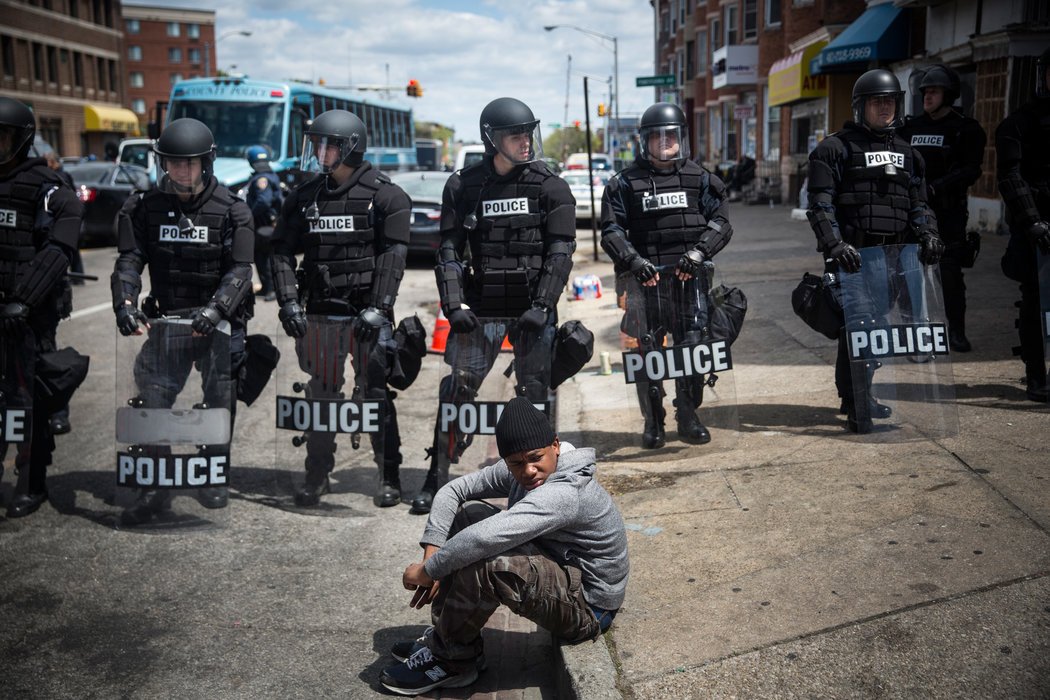
Where Is Black Lives Matter Now? Keep Blaming the police.
A new report names Baltimore, Md., as the most dangerous city in America after the city had the highest per capita murder rate in the country for 2017.
USA Today analyzed 2017 law enforcement crime data from the 50 biggest cities in the nation and found that Baltimore had a higher per capita murder rate than cities like New Orleans and Detroit.
Baltimore came in first with about 56 people murdered per 100,000 in 2017, seeing about 343 homicides throughout the course of the year. New Orleans, on the other hand, saw 40 per 100,000 killed and Detroit saw 39 per 100,000.
The city also saw more total homicides than big cities like Los Angeles, Dallas and New York City. The USA Today analysis left out St. Louis, a smaller city, that would have beaten Baltimore’s per capita homicide rate.
Baltimore struggled to fight the gun violence plaguing the city in 2017, with activists hosting “ceasefire weekends” in an attempt to urge people to stop murdering each other.
Things seems to have taken a turn for the better in the city since the new year started. The mayor fired the former police commissioner and enacted a new one to get better results on stopping the violence and killings that have gone down since the year began.
Not all residents agree with the USA Today analysis of their city, saying they haven’t felt any danger while living in the city.
“It’s a shame when people who don’t come in the city and don’t experience the city, don’t have relationships here want to make comments about it,” Rachel Cybor told CBS Baltimore.
FBI Director James Comey held a secret Oval Office meeting with President Barack Obama two weeks before Trump’s inauguration and may have deliberately misled Congress about it, according to an email sent by National Security Advisor Susan Rice that GOP Sens. Chuck Grassley and Lindsey Graham partially unclassified.
The meeting — which Comey never previously disclosed to Congress — occurred in the White House on Jan. 5, 2017. It included Obama, Vice President Joe Biden, Rice deputy Attorney General Sally Yates, and Comey. The topic of the meeting was potential Russian interference in the 2016 presidential election.
By failing to inform the Senate Select Committee on Intelligence about the meeting in his June 8, 2017, testimony, Comey may have deliberately and intentionally misled Congress about his interactions with the former president, especially a meeting so close to Trump entering the White House.
“President Obama had a brief follow-on conversation with FBI Director Comey and Deputy Attorney General Sally Yates in the Oval Office,” Rice wrote in an email written the day before the inauguration.
The National Archives gave Grassley and Graham “classified and unclassified emails” about the meeting.
Previously, Comey contended he only met with the Obama twice, once in 2015 and another “to say goodbye in late 2016,” according the former FBI director’s June 8, 2017, testimony before the Senate Select Committee on Intelligence.
“I spoke alone with President Obama twice in person (and never on the phone) – once in 2015 to discuss law enforcement policy issues and a second time, briefly, for him to say goodbye in late 2016,” Comey’s opening statement read.
Grassley and Graham stated on their websites they “were struck by the context and timing of this email, and sent a follow up letter to Ambassador Rice.”
“It strikes us as odd that, among your activities in the final moments on the final day of the Obama administration, you would feel the need to send yourself such an unusual email purporting to document a conversation involving President Obama and his interactions with the FBI regarding the Trump/Russia investigation,” the two senators told Rice.
“In addition, despite your claim that President Obama repeatedly told Mr. Comey to proceed ‘by the book,’ substantial questions have arisen about whether officials at the FBI, as well as at the Justice Department and the State Department, actually did proceed ‘by the book,’” they continued.
Rice is scheduled to testify before the Senate Committee on the Judiciary on Feb. 22.
Grassley co-authored the letter to Rice as chairman of the Senate Committee on the Judiciary and Graham as chairman of the Subcommittee on Crime and Terrorism.
For months and months, our fake news media have been freaking out over a meeting Donald Trump Jr. took with a Russian lawyer in the hopes of getting some dirt on Hillary Clinton. Again and again, we have been told that this is the smoking gun of collusion between the Trump campaign and the Russian government. Of course, that is nonsense. Moreover, Don Jr. and the others in attendance caught on to the scheme within a few minutes, and as far as we now know, that was the end of that.
Unfortunately, the same cannot be said of others, who actually have colluded with the Russians as a means to dig up dirt on Trump.
Here are seven American politicians and institutions who have or are at least suspected of colluding with the Russians as a means to destroy President Trump.
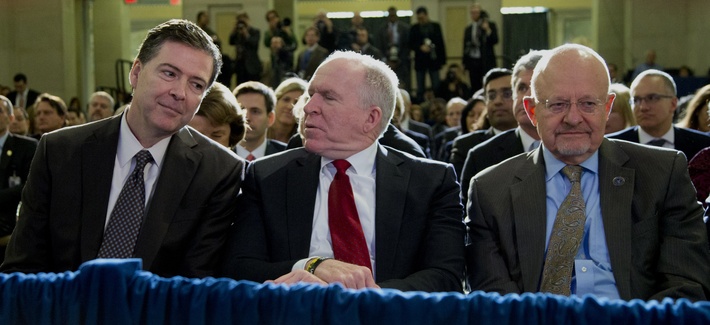
The CIA
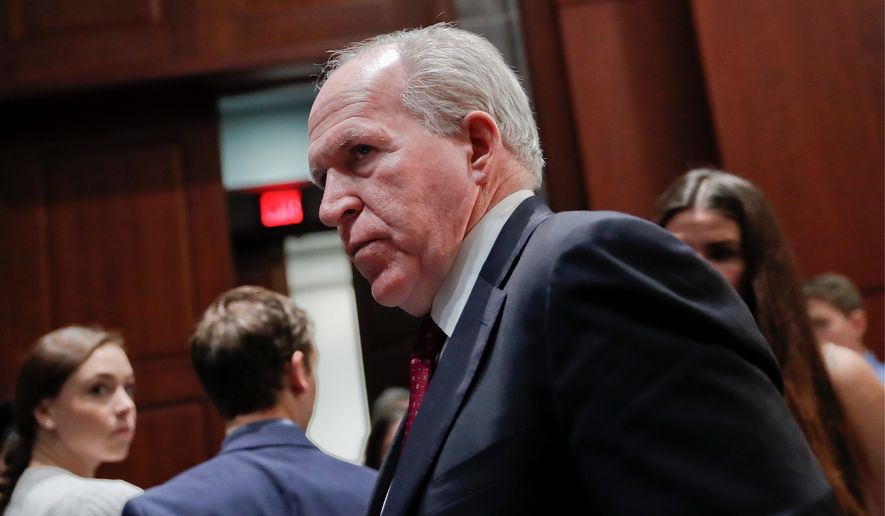
This former CIA Director lied under oath about unmasking.
Although the far-left New York Times is desperately hoping to control the explosion of this bombshell by shrouding it in a laughable story about the CIA trying to retrieve stolen National Security Agency cyber-weapons, the anti-Trump outlet is still forced to report that after “months of secret negotiations, a shadowy Russian bilked American spies out of $100,000 last year, promising to deliver stolen National Security Agency cyberweapons in a deal that he insisted would also include compromising material on President Trump, according to American and European intelligence officials.”
And that $100,000 was only supposed to be the first down payment towards a cool million.
The CIA was hoping for images of Trump urinating on hookers in Moscow hotel rooms. All they got was a 15-second clip of some guy in a hotel room talking to some women.
The payoff happened in September of last year.
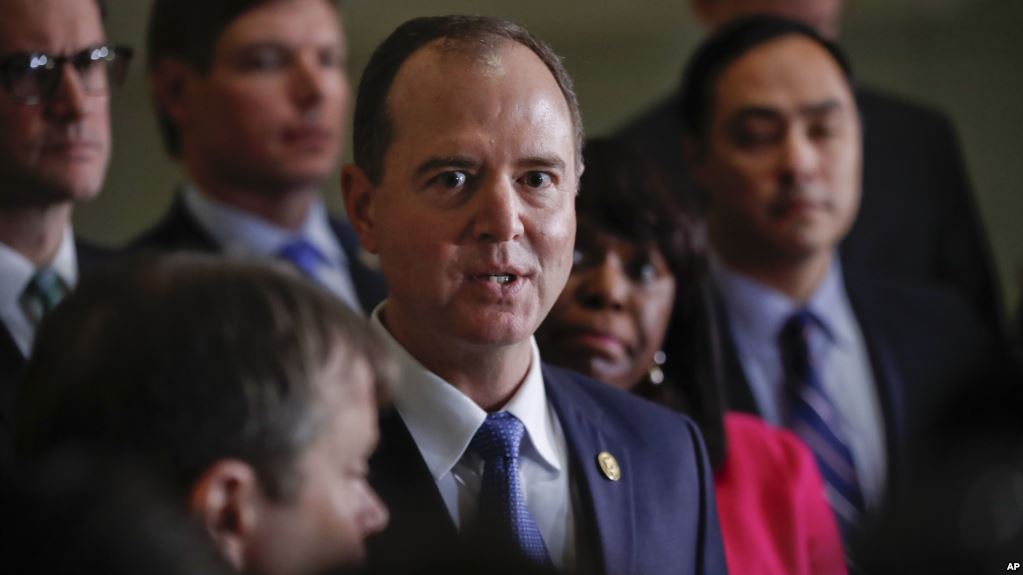
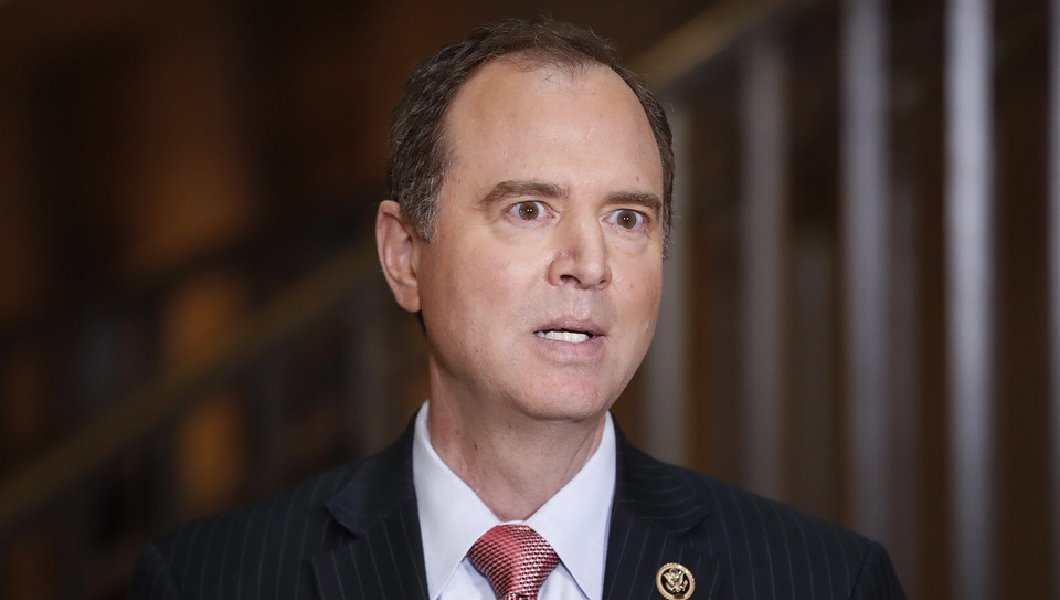
Rep. Adam Schiff (D-CA)
Tell me that this pervert and liar should not be investigated.
In early 2017, Democrat Adam Schiff, the ranking member of House Permanent Select Committee on Intelligence (so you would think he would know better), thought he was colluding with Ukrainian officials to get compromising materials against Trump. The Ukrainian officials ended up being Russian pranksters. The best you can say about Schiff is that he colluded with Russians to make a horse’s ass of himself.
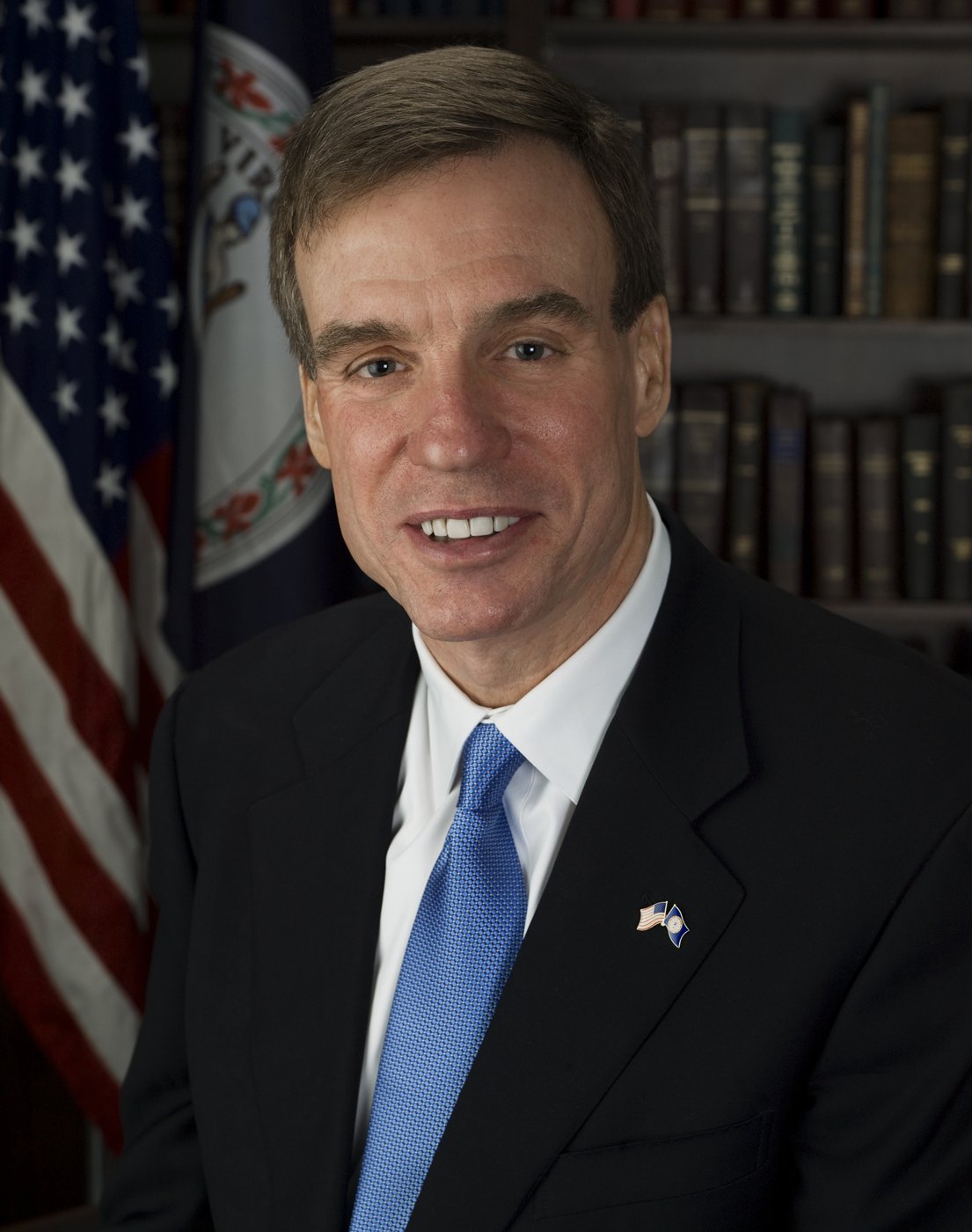
Sen. Mark Warner (D-VA)
The horse man was working with the Russians to bring Trump down. Look at those damn horse teeth.
In March of last year, Mark Warner, the top Democrat on the Senate Intelligence committee, colluded with a lobbyist for a Russian oligarch to dig up dirt on Trump.
Naturally, because he has no spine, Sen. Marco Rubio (R-FL) immediately ran to Warner’s defense. “Sen. Warner fully disclosed this to the committee four months ago,” the jellyfish tweeted. There is just one problem… If you look at the timeline, that “full disclosure” came a full seven months after the collusion occurred.
Rubio fired off another non-sequitur in Warner’s defense. “Has had zero impact on our work,” Rubio wrote, as though that means anything when it comes to the fact that Warner colluded with Russians to harm a sitting president and hid that information from the committee for more than a half-year.
Fusion GPS and Christopher Steele
Steele is the former British spy hired by the D.C.-based Fusion GPS to put together the phony Russian dossier that even disgraced former-FBI Director James Comey declared “salacious and unverified.”
To compile these lies, Steele reportedly worked directly with Kremlin officials:
How good were these sources? Consider what Steele would write in the memos he filed with Simpson: Source A—to use the careful nomenclature of his dossier—was “a senior Russian Foreign Ministry figure.” Source B was “a former top level intelligence officer still active in the Kremlin.” And both of these insiders, after “speaking to a trusted compatriot,” would claim that the Kremlin had spent years getting its hooks into Donald Trump.
In other words, Steele and Fusion GPS colluded with the Russians to manufacture lies about Trump. Steele then leaked those lies to a complicit media in the hopes of manipulating the outcome of the 2016 presidential election.
Fusion GPS also “spearheaded the campaign to undo the Magnitsky Act, American legislation imposing sanctions on Russian officials and other figures close to Vladimir Putin. Their work featured a smear campaign against the driving force behind the Magnitsky Act, financier William Browder.”
If successful, this Fusion GPS campaign would have been of great benefit to the Russian government and countless oligarchs who want the Magnitsky Act’s sanctions lifted.
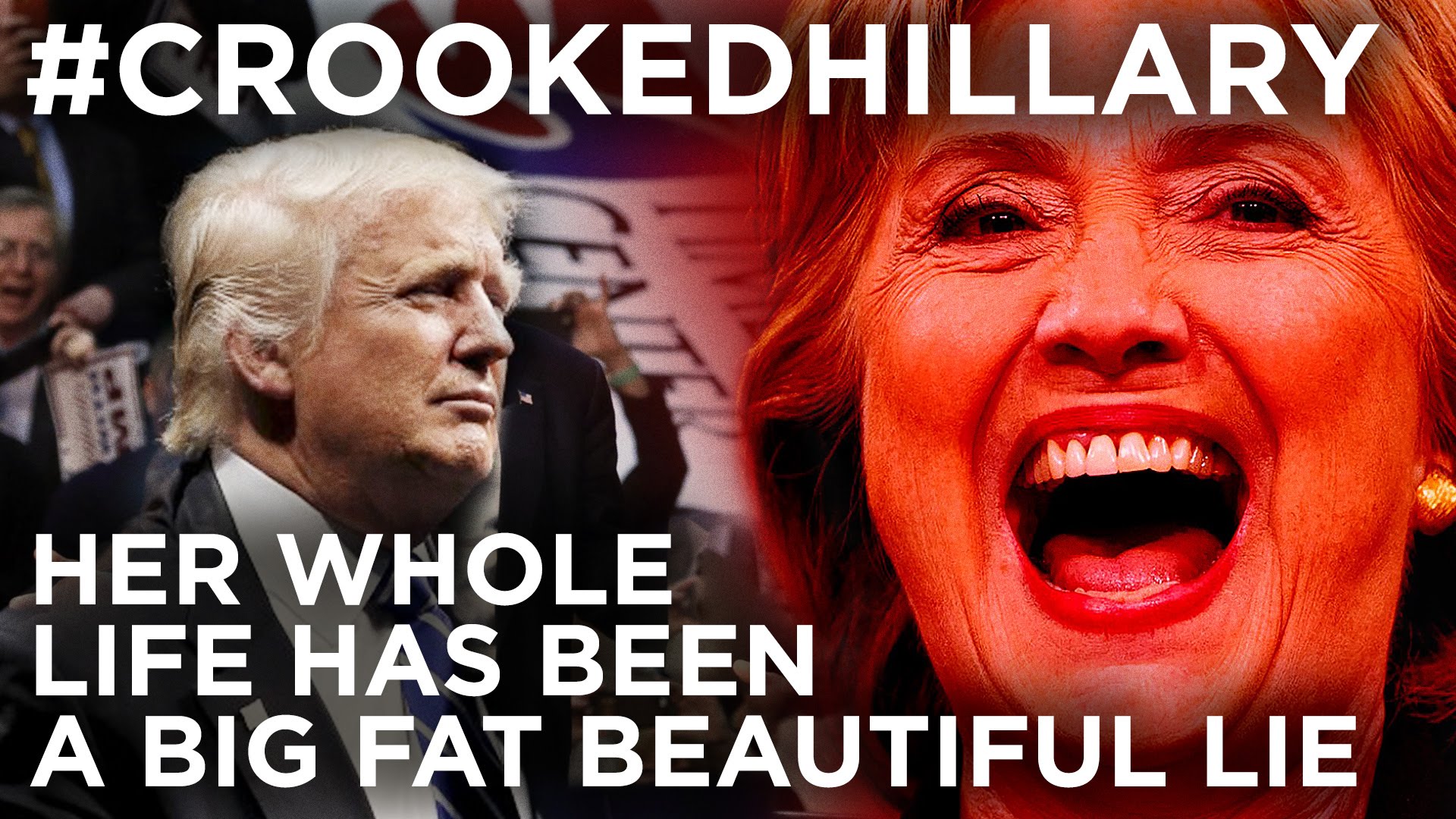
The Hillary Clinton Campaign
This woman should me handed after being shot.
Hillary’s 2016 presidential campaign hired Fusion GPS to put that dossier together. In other words, the Clinton campaign’s paid agents colluded with Kremlin officials to manufacture lies about Trump that would then be leaked to a complicit media in the hopes of manipulating the outcome of the 2016 presidential election.
The Democrat National Committee (DNC)
Why is Little Debbie and Simpson not been indicted?
The DNC hired the D.C.-based Fusion GPS to put that dossier together. In other words, the DNC’s paid agents colluded with Kremlin officials to manufacture lies about Trump that would then be leaked to a complicit media in the hopes of manipulating the outcome of the 2016 presidential election.
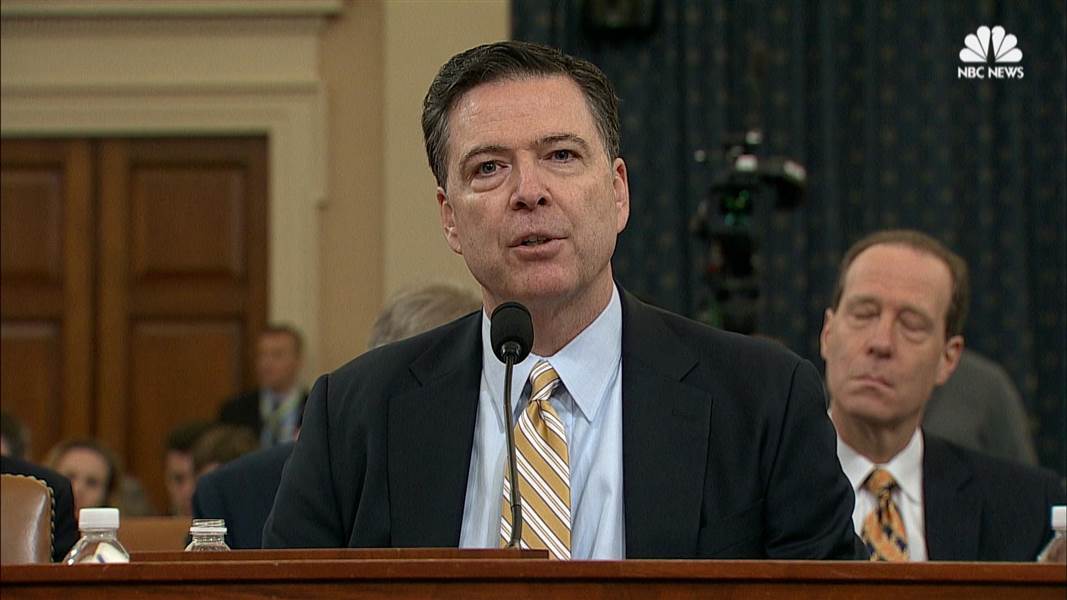
The FBI
You can trust the honest sex symbol James Comey right?
Our own FBI not only put Steele on the payroll, a guy who colluded with the Russians to manufacture lies about Trump, the FBI used lies and the dossier — including Kremlin lies — to obtain FISA warrants to spy on Trump campaign affiliates.
DOJ’s Rosenstein OK’d Surveillance of Ex-Trump Adviser
This corrupt looking child molester.
A controversial and classified memo shows that Deputy Attorney General Rod Rosenstein okayed an application shortly after taking office last year to monitor a former Trump campaign associate, according to a report.
The Department of Justice under President Trump extended surveillance on Carter Page, believing that he was acting as a Russian agent, the New York Times reported late Sunday, citing people familiar with the memo’s contents.
The document faulted the FBI and the DOJ for failing to completely explain to the intelligence court judge in seeking the warrant that they were relying on information supplied by Christopher Steele, who compiled the disputed dossier that contains unsubstantiated claims about Trump’s ties to Russia, the newspaper said.
Research for the dossier had been paid for by Hillary Clinton’s presidential campaign and the Democratic National Committee.
A number of top DOJ officials can approve such surveillance but the responsibility usually falls to the deputy attorney general, the newspaper said.
The report also said the FBI and the DOJ did nothing improper in seeking the surveillance warrant against Page, who was part of the campaign until September 2016.
A White House spokesman said Trump wants “transparency throughout this process.”
“Based on numerous news reports, top officials at the F.B.I. have engaged in conduct that shows bias against President Trump and bias for Hillary Clinton,” Hogan Gidley told the Times.
“While President Trump has the utmost respect and support for the rank-and-file members of the F.B.I., the anti-Trump bias at the top levels that appear to have existed is troubling.”
The FBI had been keeping an eye on Page for years and an investigation in 2013 showed that a Russian spy tried to recruit him.
But a visit to Russia in July 2016 when he was working with the Trump campaign renewed the bureau’s interest and they began monitoring him again that fall, the Times said.
That surveillance led the FBI and DOJ to seek to renew the application in the spring of 2017, shortly after Rosenstein was confirmed in April, the newspaper said.
Trump has had Rosenstein in his crosshairs, venting to staff his frustration with the DOJ’s No. 2 and mulling whether he should fire him, according to reports.
Rosenstein appointed Robert Mueller to investigate Russian meddling in May 2017 after Trump fired former FBI Director James Comey, who had been heading up the probe.
Trump wanted to fire Mueller last June, but backed off after White House counsel Don McGahn threatened to resign, the Times reported last Friday.
The White House and some Republican lawmakers are calling for the memo to be declassified and released to the public to show how the agencies are biased against the president.
But Democrats who have seen the four-page memo — written by House Republicans — say they carefully selected information that is intended to discredit the investigation into Russian involvement in the election and any collusion on the part of the Trump campaign.
The DOJ called efforts to release the memo “reckless” without the department and the FBI first being able to review the document to see if it harms national security.
So-Called Conservative Free Beacon Paid Fusion GPS For Anti-Trump Research
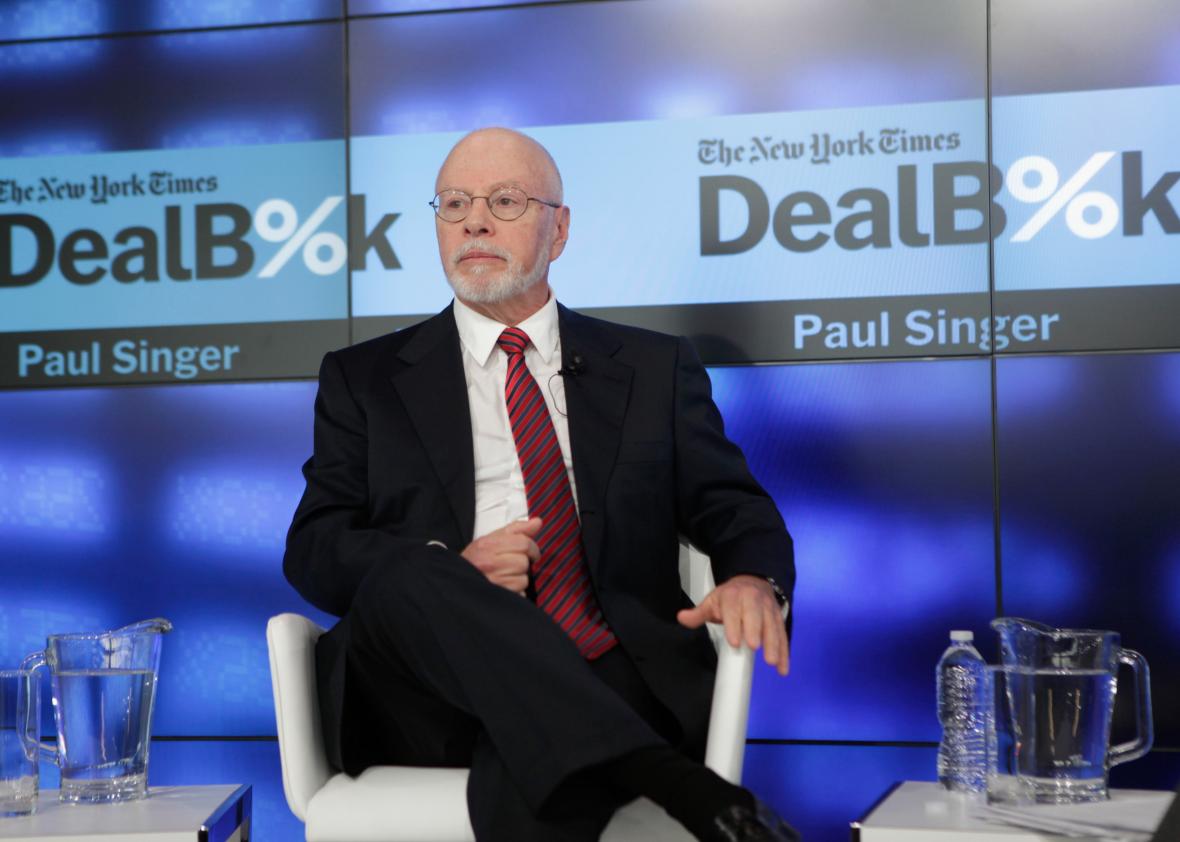
Fake republican and Anti-Trump fraud Paul Singer of Free Beacon.
The conservative website the Washington Free Beacon triggered the research into then-candidate Donald Trump by Fusion GPS that eventually led to the now-infamous Trump “dossier,” the publication’s editor-in-chief and chairman acknowledged in a statement Friday night.
The research effort was known to have been supported by Republican allies before the Democratic National Committee and Hillary Clinton’s campaign picked up the tab for the research, but the original funder of the research was unknown until now. The resulting dossier was compiled by former British spy Michael Steele and contained unsubstantiated allegations about then-candidate Trump’s connections to Russia. Mr. Trump has denied the allegations.
The Free Beacon’s connection to the dossier was first reported by the Washington Examiner’s Byron York Friday night.
The site began as a non-profit entity before becoming a for-profit enterprise several years ago. It has never disclosed its owners or financial backers, but the New York Times reports hedge fund billionaire Paul Singer provides a large amount of its funding. The site covers national security issues, politics, culture and media criticism, among other topics.
The Free Beacon says Steele was not involved in the research at the time of its involvement, and “none of the work product that the Free Beacon received appears in the Steele dossier.” The Free Beacon also said it had no knowledge of the relationship between Fusion GPS and the DNC or Clinton campaign. The Free Beacon has retained third-party firms since its launch in 2012, the statement says.
In the statement, editor-in-chief Matthew Continetti and chairman Michael Goldfarb said that the publication retained Fusion GPS “to provide research on multiple candidates in the Republican presidential primary, just as we retained other firms to assist in our research into Hillary Clinton.” The statement said representatives of his publication approached the House Intelligence Committee Friday and offered to answer questions.
“But to be clear: We stand by our reporting, and we do not apologize for our methods,” Continetti and Goldfarb wrote.
Here is the full statement from the Free Beacon:
Since its launch in February of 2012, the Washington Free Beacon has retained third party firms to conduct research on many individuals and institutions of interest to us and our readers. In that capacity, during the 2016 election cycle we retained Fusion GPS to provide research on multiple candidates in the Republican presidential primary, just as we retained other firms to assist in our research into Hillary Clinton. All of the work that Fusion GPS provided to the Free Beacon was based on public sources, and none of the work product that the Free Beacon received appears in the Steele dossier. The Free Beacon had no knowledge of or connection to the Steele dossier, did not pay for the dossier, and never had contact with, knowledge of, or provided payment for any work performed by Christopher Steele. Nor did we have any knowledge of the relationship between Fusion GPS and the Democratic National Committee, Perkins Coie, and the Clinton campaign.
Representatives of the Free Beacon approached the House Intelligence Committee today and offered to answer what questions we can in their ongoing probe of Fusion GPS and the Steele dossier. But to be clear: We stand by our reporting, and we do not apologize for our methods. We consider it our duty to report verifiable information, not falsehoods or slander, and we believe that commitment has been well demonstrated by the quality of the journalism that we produce. The First Amendment guarantees our right to engage in news-gathering as we see fit, and we intend to continue doing just that as we have since the day we launched this project.
Network corrected exclusive story involving Trump and hacked documents
Trump: ‘Their slogan should be CNN – the least trusted name in news’
Donald Trump, in his first tweet on Saturday, said: “Watch to see if CNN fires those responsible, or was it just gross incompetence?” Photograph: Saul Loeb/AFP/Getty Images
Donald Trump on Saturday fired more shots in his offensive against CNN, after the network was forced to correct an exclusive report that had seemed to implicate his administration in a scandal involving the release of leaked documents.
“Fake News CNN made a vicious and purposeful mistake yesterday,” the president tweeted. “They were caught red handed.”
He added: “CNN’S slogan is CNN, THE MOST TRUSTED NAME IN NEWS. Everyone knows this is not true, that this could, in fact, be a fraud on the American Public. There are many outlets that are far more trusted than Fake News CNN. Their slogan should be CNN, THE LEAST TRUSTED NAME IN NEWS!”
The CNN report said Trump’s son, Donald Trump Jr, received an email offering him access to hacked Democratic party emails from WikiLeaks before the documents had been made publicly available.
But in fact, the email was sent on 14 September 2016, after the material was made publicly available – and not 4 September as CNN first reported.
In a statement, CNN said its “initial reporting of the date on an email sent to members of the Trump campaign about WikiLeaks documents, which was confirmed by two sources to CNN, was incorrect. We have updated our story to include the correct date, and present the proper context for the timing of email.”
It was the second major correction in a CNN story involving Trump and Russia. Russia is believed to have been behind the original hacking of the documents.
In June, three CNN journalists resigned after the network retracted a report on alleged ties between Trump officials and a Russian investment fund. “What about all the other phony stories they do? FAKE NEWS,” Trump tweeted then. The network said the three journalists who reported that story failed to follow editorial procedures.
In his first tweet on Saturday, Trump added: “Watch to see if CNN fires those responsible, or was it just gross incompetence?”
CNN said it would not fire the reportersbehind the Friday story, as editorial procedures had been followed.
The president also attacked “fake news” on Friday night in Florida, at a rally endorsing Alabama Republican Senate candidate Roy Moore. In particular, Trump zeroed in on an error made last week by ABC News correspondent Brian Ross, over the prosecution of Mike Flynn in the special counsel’s investigation into Russian meddling in the US election.
ABC suspended Ross but did not fire him. The president suggested that attendees at his rally should sue the news outlet for the stock market losses that resulted from the original story.
“Did you see all the corrections the media’s been making?” Trump said. “They’ve been apologizing left and right.”
Trump also said CNN had “apologised” for its corrected story. It has not.
Play Video
0:47
‘We want Roy Moore’: Trump endorses controversial candidate at rally – video
Also on Friday, White House press secretary Sarah Sanders used Twitter to highlight CNN’s use of a picture of the wrong Raj Shah in a report on her deputy. “CNN this is definitely not @RajShah45 but it is #FakeNews,” she wrote.
Donald Jr added his thoughts in a tweet Saturday morning, writing: “Strange that the #fakenews media never gets stories wrong in favor of Trump. It’s almost like they do it on purpose.”
There is no evidence that reporting errors and corrections have become any more frequent during the Trump presidency. Trump’s embrace of the concept of “fake news”, though, has allowed him to make substantial political hay from every corrected story.
According to an October Politico poll, 46% of Americans said they believed the media was guilty of wholesale fabrications about the Trump administration. More than three-quarters of Republican voters thought so.
David Frum, a former George W Bush speech writer who is now senior editor at the Atlantic, has become one of Trump’s most vociferous critics. He addressed the issue on Saturday morning on Twitter.
While reporters “slip in their work”, Frum wrote, “the work itself is trying to inform the public about the doings of the most systematical untruthful administration in American history”.
Frum continued: “Never forget, though, that the media are not the protagonist in the drama. The protagonists are the officials engaged in the deception, headed by the president himself.”
Plus 10 points for creativity. Minus 1,000 points for a stupid lie with inevitable consequences.
While the media rushes frantically from one manufactured Trump scandal to another, the examination of the deeply troubling lenghts to which Obama Inc. went to sabotage his political opponent and successor using eavesdropping continues. One of the most striking revelations has been the number of ‘unmasking’ requests filed by Samantha Power.
Not only did Power file a whole lot of them, 260 requests to unmask the identities of Americans being spied on is a whole lot, but why would an ambassador to the UN even need such classified info?
And to that, Samantha Power had a simple and incoherent response. “It wasn’t me.”
South Carolina Rep. Trey Gowdy revealed in an interview on Fox News on Tuesday that Power was “emphatic” on the point that someone else in the Obama administration made the unmasking requests that have been attributed to her.
Fox News recently reported that Power made approximately 260 unmasking requests — a rate of one per business day — in her final year in office, including up through the end of Obama’s term.
Unmasking has become an issue because someone inside the Obama administration unmasked the identities of Trump associates identified in classified intelligence reports collected by the intelligence community during surveillance of foreign targets. Some of those details were illegally leaked to the media.
Gowdy, a member of the Intelligence committee, said that Power “was pretty emphatic” last week in disputing that she made 260 unmasking requests.
“She would say those requests to unmask may have been attributed to her, but they greatly exceed by an exponential factor the requests she actually made,” Gowdy told Fox’s Bret Baier.
“Her perspective, her testimony is, ‘they may be under my name, but I did not make those requests.’”
It’s a really bizarre defense that relies on either challenging the relevant paperwork or suggesting that someone else using her name made those requests. The latter defense is rather crazy. If true, it would constitute a major crime. If untrue, then Power has hung herself. Susan Rice repeatedly lied about her unmasking requests, but what Power is doing here is Hillaryesque. And we know how that worked out for her.
Obama administration knew about Russian bribery plot before uranium deal
The Obama administration knew that Russia had used bribery, kickbacks and extortion to get a stake in the US atomic energy industry — but cut deals giving Moscow control of a large chunk of the US uranium supply anyway, according to a report Tuesday.
The FBI used a confidential US witness working inside the Russian nuclear industry to gather records, make secret recordings and intercept emails as early as 2009 that showed the Kremlin had compromised an American uranium trucking company, The Hill reported.
Executives at the company, Transport Logistics International, kicked back about $2 million to the Russians in exchange for lucrative no-bid contracts — a scheme that violated the Foreign Corrupt Practices Act, the report said.
The feds also learned that Russian nuclear officials had gotten millions of dollars into the US designed to benefit the Clinton Foundation at the same time then-Secretary of State Hillary Clinton served on a government committee that signed off on the deals, sources told The Hill.
The racketeering operation was conducted “with the consent of higher-level officials” in Russia who “shared the proceeds” from the kickbacks, an agent later stated in an affidavit.
But the Justice Department under Attorney General Eric Holder did not bring charges in the case prior to the deals being cut.
At the time, President Barack Obama and Clinton’s State Department were trying to “reset” relations between the two nuclear rivals — an effort that largely failed.
The first deal was wrapped up in October 2010 when the State Department and the Committee on Foreign Investment agreed to sell part of Uranium One, a Toronto-based mining giant with operations in Wyoming, Australia, Canada, Kazakhstan, South Africa and elsewhere, to the Russian nuclear company Rosatom.
The move gave the Russians control over roughly 20 percent of the US uranium supply — and gave Russian strongman Vladimir Putin a large and profitable stake in the US atomic power industry.
When Donald Trump slammed Clinton on the campaign trail in 2016 over the sale, her spokesman said she was not involved in the committee review and that the State Department official who handled it said she “never intervened . . . on any [committee] matter.”
In the second deal, in 2011, Obama gave the OK for Rosatom’s Tenex subsidiary to sell the Canadian company’s uranium to American nuclear power plants.
Before, Tenex could only sell reprocessed uranium from dismantled Soviet nuclear weapons to power plants in the US.
“The Russians were compromising American contractors in the nuclear industry with kickbacks and extortion threats, all of which raised legitimate national security concerns. And none of that evidence got aired before the Obama administration made those decisions,” a source told the paper.
Instead of disclosing the racket in 2010, Justice continued investigating for nearly four more years, so Americans and Congress didn’t know about Russian nuclear corruption at the time the deals were completed.
Obama and the Clintons defended their actions in 2015, declaring that there was no evidence that Russians had done anything wrong and there was no national security reason to oppose the Uranium One deal.
The decision to approve Rosatom’s purchase of Uranium One has been a source of political controversy since 2015, when author Peter Schweizer documented how Bill Clinton pocketed hundreds of thousands of dollars in speaking fees from Russian entities.
But FBI, Energy Department and court documents showed that the feds had gathered a mountain of evidence well before the committee’s decision that Vadim Mikerin — the top Russian overseeing Putin’s nuclear expansion inside the US — was engaged in crooked behavior starting in 2009.
Holder was also on the foreign investments committee at the time the Uranium One deal was approved — but multiple current and former government officials told The Hill they did not know whether the FBI or DOJ ever told other committee members about the crimes they had uncovered.
Evidence of the illegal conduct was gathered with the help of an American businessman who acted as a confidential witness and who began making kickback payments at Mikerin’s direction and with the permission of the FBI.
The first kickback recorded by the FBI through its informant was dated Nov. 27, 2009, the records show.
In affidavits signed in 2014 and 2015, an Energy Department agent assigned to help the FBI in the case testified that Mikerin supervised a “racketeering scheme” that involved extortion, bribery, money-laundering and kickbacks that were directed by Russia and provided kickbacks to top Russian energy officials with ties to the Kremlin, according to the report.
The case exposed a serious national security breach, The Hill reported, as Mikerin had given a no-bid contract to Transport Logistics Intern