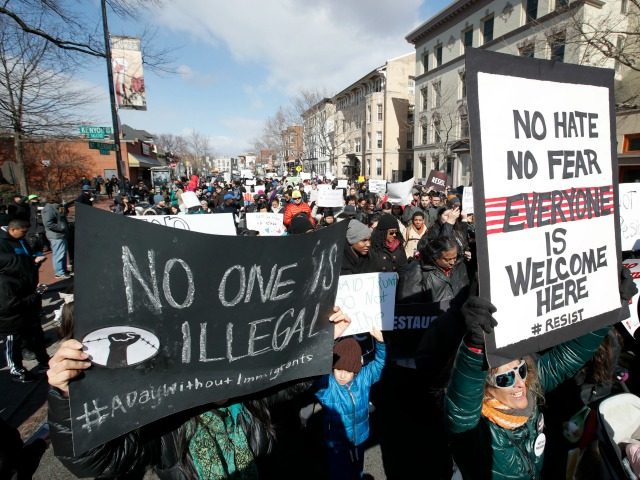
Why are we debating this because the facts are we are losing money on illegal immigrants.
Introduction
A continually growing population of illegal aliens, along with the federal government’s ineffective efforts to secure our borders, present significant national security and public safety threats to the United States. They also have a severely negative impact on the nation’s taxpayers at the local, state, and national levels. Illegal immigration costs Americans billions of dollars each year. Illegal aliens are net consumers of taxpayer-funded services and the limited taxes paid by some segments of the illegal alien population are, in no way, significant enough to offset the growing financial burdens imposed on U.S. taxpayers by massive numbers of uninvited guests. This study examines the fiscal impact of illegal aliens as reflected in both federal and state budgets.
The Number of Illegal Immigrants in the US
Estimating the fiscal burden of illegal immigration on the U.S. taxpayer depends on the size and characteristics of the illegal alien population. FAIR defines “illegal alien” as anyone who entered the United States without authorization and anyone who unlawfully remains once his/her authorization has expired. Unfortunately, the U.S. government has no central database containing information on the citizenship status of everyone lawfully present in the United States. The overall problem of estimating the illegal alien population is further complicated by the fact that the majority of available sources on immigration status rely on self-reported data. Given that illegal aliens have a motive to lie about their immigration status, in order to avoid discovery, the accuracy of these statistics is dubious, at best. All of the foregoing issues make it very difficult to assess the current illegal alien population of the United States.
However, FAIR now estimates that there are approximately 12.5 million illegal alien residents. This number uses FAIR’s previous estimates but adjusts for suspected changes in levels of unlawful migration, based on information available from the Department of Homeland Security, data available from other federal and state government agencies, and other research studies completed by reliable think tanks, universities, and other research organizations.
The Cost of Illegal Immigration to the United States
At the federal, state, and local levels, taxpayers shell out approximately $134.9 billion to cover the costs incurred by the presence of more than 12.5 million illegal aliens, and about 4.2 million citizen children of illegal aliens. That amounts to a tax burden of approximately $8,075 per illegal alien family member and a total of $115,894,597,664. The total cost of illegal immigration to U.S. taxpayers is both staggering and crippling. In 2013, FAIR estimated the total cost to be approximately $113 billion. So, in under four years, the cost has risen nearly $3 billion. This is a disturbing and unsustainable trend. The sections below will break down and further explain these numbers at the federal, state, and local levels.
Total Governmental Expenditures on Illegal Aliens
Total Tax Contributions by Illegal Aliens
Total Economic Impact of Illegal Immigration
Federal
The Federal government spends a net amount of $45.8 billion on illegal aliens and their U.S.-born children. This amount includes expenditures for public education, medical care, justice enforcement initiatives, welfare programs and other miscellaneous costs. It also factors in the meager amount illegal aliens pay to the federal government in income, social security, Medicare and excise taxes.
FEDERAL SPENDING
The approximately $46 billion in federal expenditures attributable to illegal aliens is staggering. Assuming an illegal alien population of approximately 12.5 million illegal aliens and 4.2 million U.S.-born children of illegal aliens, that amounts to roughly $2,746 per illegal alien, per year. For the sake of comparison, the average American college student receives only $4,800 in federal student loans each year.
FAIR maintains that every concerned American citizen should be asking our government why, in a time of increasing costs and shrinking resources, is it spending such large amounts of money on individuals who have no right, nor authorization, to be in the United States? This is an especially important question in view of the fact that the illegal alien beneficiaries of American taxpayer largess offset very little of the enormous costs of their presence by the payment of taxes. Meanwhile, average Americans pay approximately 30% of their income in taxes.
Taxes collected from illegal aliens offset fiscal outlays and, therefore must be included in any examination of the cost of illegal immigration. However, illegal alien apologists frequently cite the allegedly large tax payments made by illegal aliens as a justification for their unlawful presence, and as a basis for offering them permanent legal status through a new amnesty, similar to the one enacted in 1986. That argument is nothing more than a red herring.
FAIR believes that most studies grossly overestimate both the taxes actually collected from illegal aliens and, more importantly, the amount of taxes actually paid by illegal aliens (i.e., the amount of money collected from illegal aliens and actually kept by the federal government). This belief is based on a number of factors: Since the 1990’s, the United States has focused on apprehending and removing criminal aliens. The majority of illegal aliens seeking employment in the United States have lived in an environment where they have little fear of deportation, even if discovered. This has created an environment where most illegal aliens are both able and willing to file tax returns. Because the vast majority of illegal aliens hold low-paying jobs, those who are subject to wage deductions actually wind up receiving a complete refund of all taxes paid, plus net payments made on the basis of tax credits.
As a result, illegal aliens actually profit from filing a tax return and, therefore, have a strong interest in doing so.
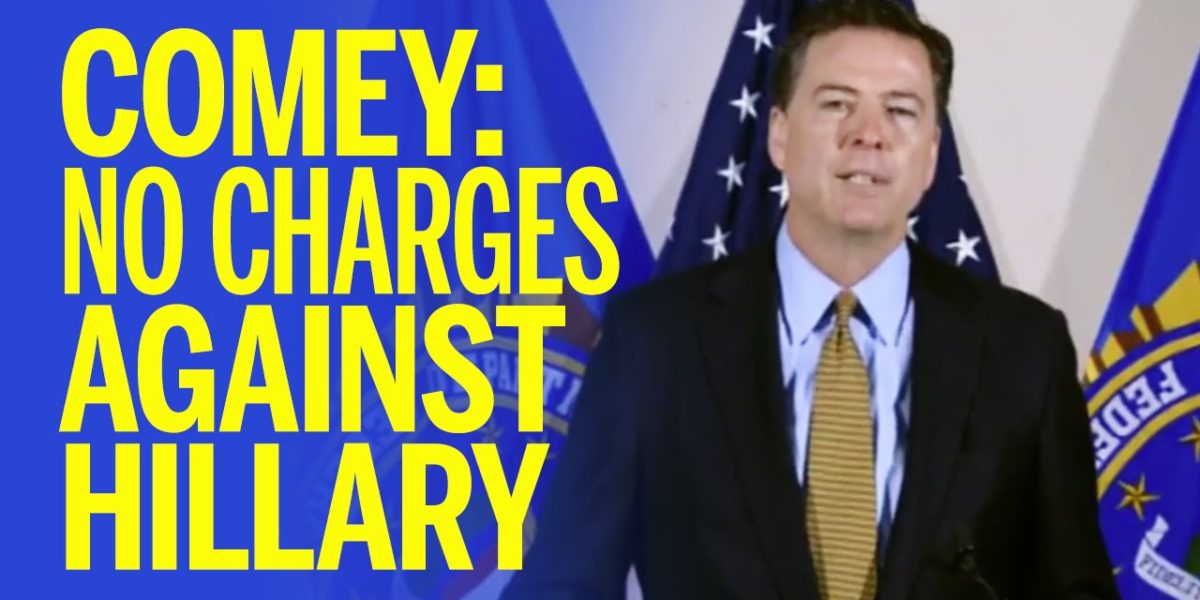
James The Corrupt Comey and Peter S. Needs to be investigated NOW.
The FBI didn’t flag that some emails from Hillary Clinton’s private email server were marked classified with a “(C)” when they were sent — something that seemingly would have been one of the first and most obvious checks in an investigation, and one that FBI agents instantly recognized put the facts at odds with Clinton’s public statements.
The Intelligence Community Inspector General noticed it after the FBI missed it, texts between FBI agent Peter Strzok and his mistress, FBI lawyer Lisa Page, reveal. “Holy cow,” Strzok wrote, “if the FBI missed this, what else was missed?”
“Remind me to tell you to flag for Andy [redacted] emails we (actually ICIG) found that have portion marks (C) on a couple of paras. DoJ was Very Concerned about this,” he wrote.
“Found on the 30k [emails] provided to State originally. No one noticed. It cuts against ‘I never sent or received anything marked classified,’” he wrote, referring to statements by Clinton downplaying the danger of her email practices.
Much of the more in-depth investigation considered whether Clinton and her aides emailed materials that were classified but were not marked as such, a harder determination to make.
The exchange occurred on June 12, 2016. FBI Director Jim Comey disclosed the findings of marked-classified emails to the House on July 7.
On May 10, 2016, Strzok had suggested that in his mind, the investigation was closer to being finished than to just getting started — suggesting that if it weren’t for the inspector general, it might have closed down and cleared her despite missing the most obvious first step.
“I cannot overstate to you the sense of urgency about wanting to logically and effectively conclude this investigation,” he said.
The ommission allowed Clinton to repeatedly and prominently state that she had “never received nor sent any material that was marked classified” on her private email server while secretary of state.
She even said so at major debates, and because the FBI hadn’t caught the letter (C), and therefore never stated its findings, PolitiFact rated the claim “Half True.”
When the FBI belatedly noticed and relayed the truth, the fact-checking site said “Now we know it’s just plain wrong.”
Clinton decided to print out 55,000 pages instead of providing the State Department with her emails in their digital format, a technique sometimes used by lawyers to make searches harder for their opponents. A CTRL-F search for “(C)” could have missed the markings because State had to re-digitize the forms with Optical Character Recognition, which can get tripped up on symbols, perhaps interpreting it as something like “[C]” or a copyright symbol. Nonetheless, the classified marker always appears at the beginning of a paragraph and is visually distinct.
The comments come from 500 pages of texts released Wednesday by Senate investigators.
Markings denoting the different levels of classified information include (C) for confidential, (S) for secret, and (TS) for top secret.
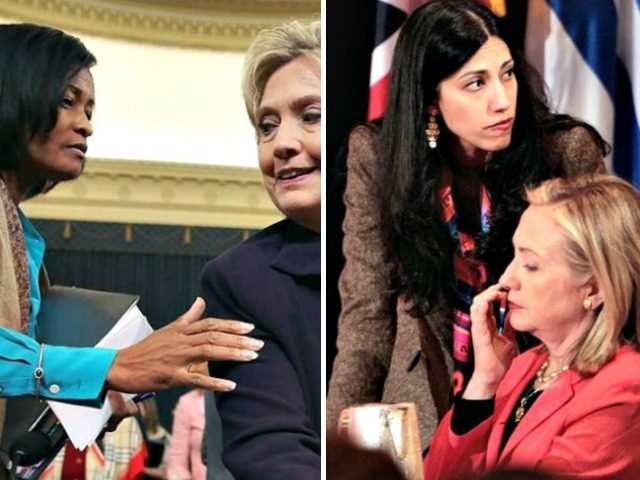
Congressional investigators are puzzling over a December 2016 text message that suggests the Justice Department sought to grant immunity to Hillary Clinton aide Huma Abedin.
In a Dec. 13, 2016 text exchange, FBI counterintelligence official Peter Strzok sent his mistress, FBI lawyer Lisa Page, a text message referring to a conversation he had with the Justice Department discussing immunity and potential grand jury testimony.
The Senate Homeland Security and Governmental Affairs Committee released the text message along with 384 pages of additional records on Wednesday.
“Talked with DoJ about HA interview,” Strzok wrote to Page.
“Told them we had to interview, no immunity. They said they thought that would get counsel to the point of saying she’s either taking the 5th in the Gj or you need to give her immunity. I said that’s fine, please have discussions to get the decision to that point and I would run it up the chain.”
Peter Strzok text message to Lisa Page, Dec. 13, 2016.
The initials “HA,” the gender reference and other text messages that Strzok sent in that time frame strongly suggest that he was referring to Abedin.
A day before the text about immunity, Strzok said that a top FBI official had offered to meet with Clinton’s lawyer, David Kendall.
Peter Strzok text message to Lisa Page, Dec. 12, 2016.
Kendall did not represent Abedin in the email case so it is unclear why the FBI sought to meet with him. A lawyer who represented Abedin on the email matter did not respond to a request for comment.
It is unclear what case Strzok was investigating at the time, and there have been no reports that Abedin was granted immunity or that she pleaded the Fifth.
The Hillary Clinton email investigation was closed for good on Nov. 6, 2016, just two days before the election. The FBI re-opened its investigation in late Oct. 2016 after Clinton emails were discovered on a laptop shared by Abedin and her husband, Anthony Weiner.
The FBI was still investigating Weiner for sending lewd messages to an underage girl.
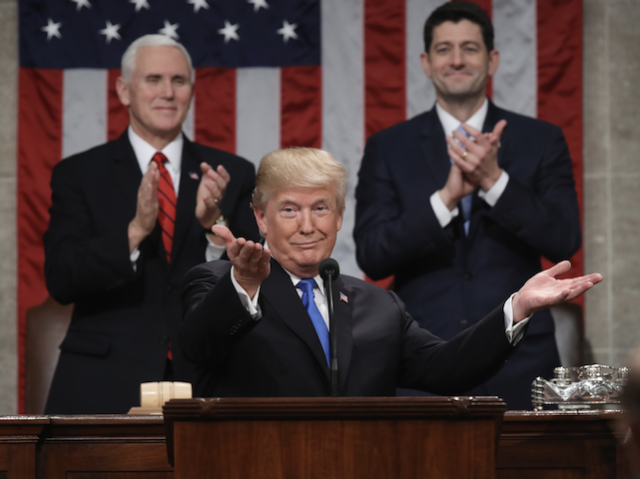
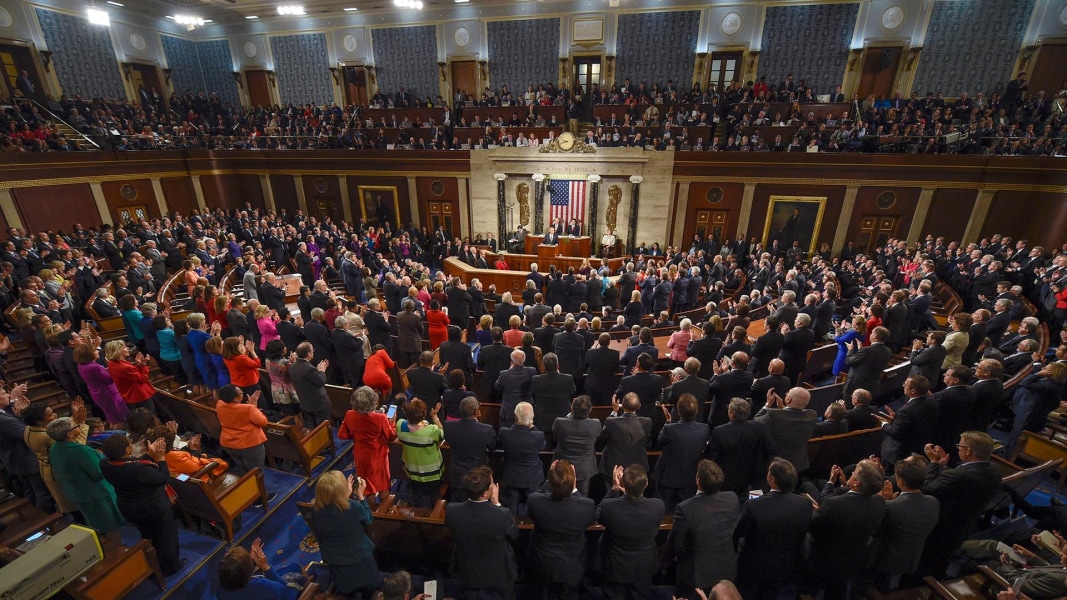
Join Our Show on tomorrow were we will give the BSET report on what President Trump had to say at the State of The Union address. Liberals showed up just to have long faces because they truly hate when America does well. We will also discuss those hero’s that the President invited as special guest.
Just some of the points we will be covering below:
He should talk about MAGA not MAD which is Make America DACA or MAD.
WASHINGTON — President Donald Trump stressed the need for “unity” Tuesday afternoon, hours before delivering a State of the Union address that White House officials have previewed as “bright and optimistic.”
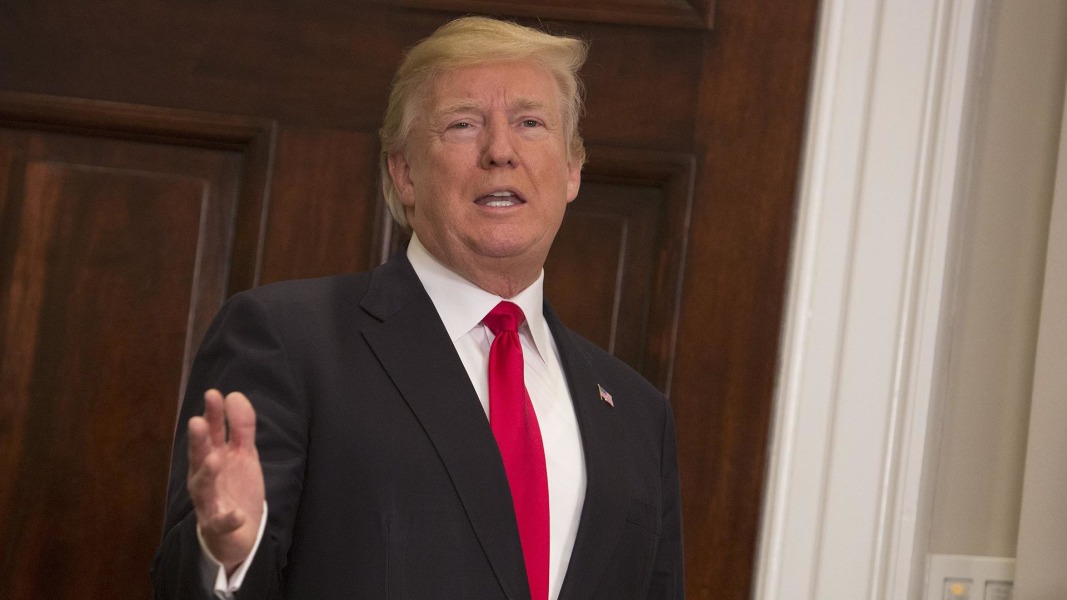
“I want to see our country united,” Trump told network news correspondents during a traditional, and otherwise off-the-record, lunch at the White House where he made the case that the same national divisions encountered by his administration had plagued his predecessors as well.
The United States “was divided, not just under President Obama or President Bush. I remember the impeachment of Bill Clinton. Tremendous divisiveness, not just over the past year,” he said, adding that he would consider uniting the country “a tremendous success.”
“I would love to be able to bring back our country in a great form of unity, without a major event — very tough to do. I would like to do it without a major event, because that major event is usually a bad thing. Unity is really what I’m striving for, to bring the country together,” he said.
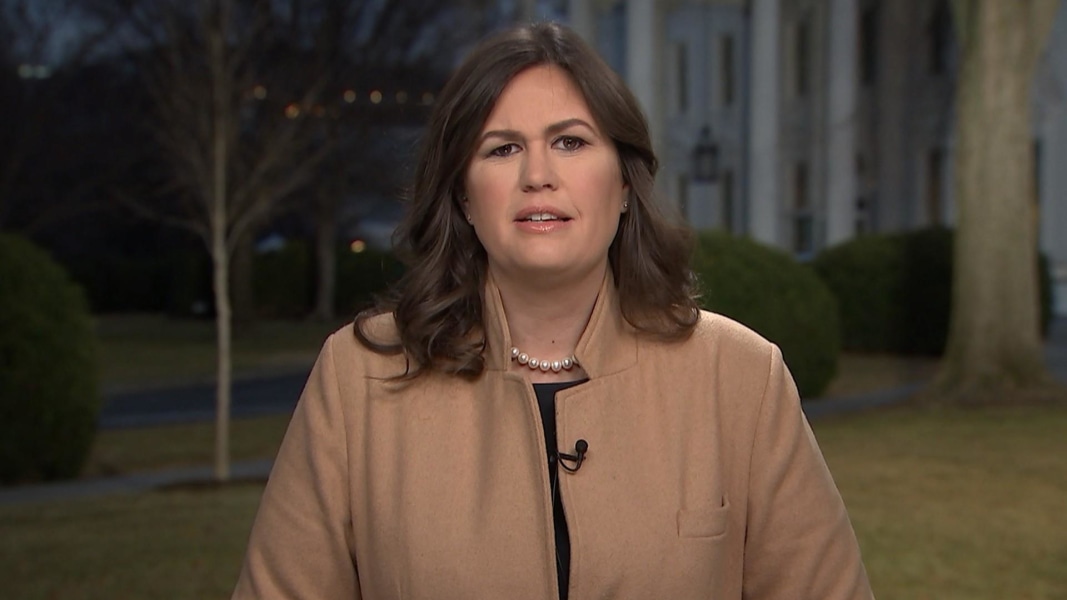
Aside from the traditional correspondent lunch, Trump spent Tuesday much as he’d spent the previous day: making impromptu changes to his first official State of the Union address as he practiced the speech, which is slated to include bipartisan overtures on big items like immigration, Press Secretary Sarah Huckabee Sanders said Tuesday.
The president did several “dry runs” of the speech Monday afternoon in the Map Room of the White House, said a White House official, who told NBC that Trump’s handwritten notes and edits on each draft have been transcribed into its more current versions.
The process of writing and re-writing the address began in December, this official said, with a “pretty meaningful” edit on the plane ride to Davos, Switzerland, last week.
“He’s been going through the speech meticulously,” Deputy Press Secretary Hogan Gidley told Fox News on Tuesday afternoon, describing Trump as using a “black felt-tipped pen” to edit the remarks before sending it back to staff, and calling him a “master messenger.”
Vice President Mike Pence, National Security Advisor H.R. McMaster, and National Economic Council Director Gary Cohn weighed in on policy in the speech, while staff secretary Rob Porter, policy advisor Stephen Miller, and speechwriters Vince Haley and Ross Worthington crafted the text
However, “the speech begins and ends with POTUS,” the same official told NBC, looking to stress Trump’s level of involvement in his remarks.
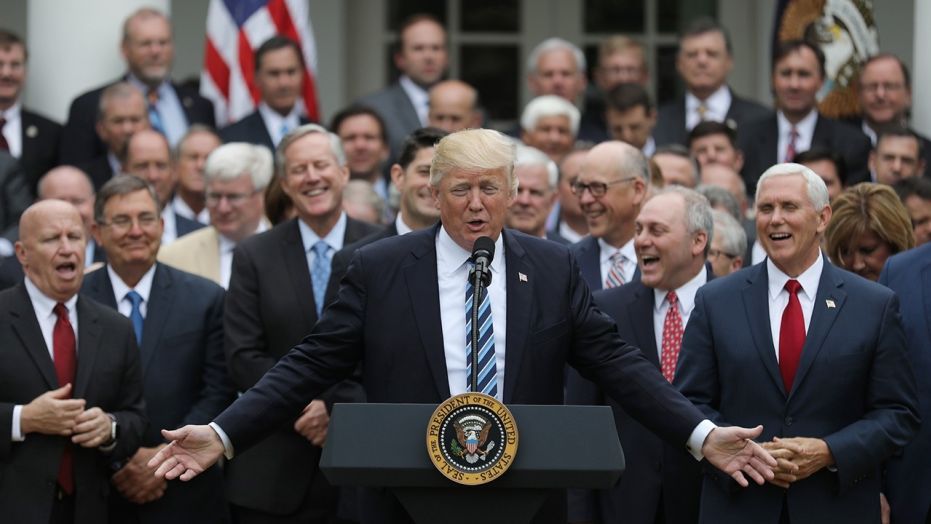
The address will cover “a lot of territory,” Trump himself told reporters Monday as he finished swearing in his new Health and Human Services secretary, Alex Azar. The president said he would tout the “great success” of the stock market and the tax cuts passed at the close of the year, but will also make a push on immigration policies, including DACA.
“For many years,” Trump said, lawmakers have “been talking about immigration” but “never get anything done.” Now, with him at the helm, he said he’s hopeful for action that unites Democrats and Republicans.
“We’re going to get something done, we hope bipartisan,” Trump said, noting that the reality in Congress for Republicans makes bipartisanship an essential factor, not a wishful one. “The Republicans really don’t have the votes to get it done in any other way. So it has to be bipartisan.”
Facebook
Twitter
Embed
Trump offers preview to State of the Union address 1:05
The White House released its immigration plan last week, in a bid to re-start stalled negotiations on the topic. Counselor to the president Kellyanne Conway said Monday the president’s actions and negotiations on this topic were a sign of his “openness” to getting a deal done — especially for “Dreamers” who were brought to the U.S. as children and protected from deportation under an Obama-era policy, DACA.
Bipartisanship, she said in an interview with The Washington Post on Monday afternoon, is “the only way to function in this town,” but she knocked Democrats for a strategy she described as “obstruct, resist, hold up a stop sign” to Trump.
Despite her own jabs across the aisle, Conway promised a State of the Union address that’s “positive in tone and content” and one in which Trump will be “forward looking” — seeking the nexus between his accomplishments over the past year and how those achievements have bettered the lives of Americans.
To support the president’s push for his agenda on issues such as immigration and border security are guests like Elizabeth Alvarado, Robert Mickens, Evelyn Rodriguez, and Freddy Cuevas: parents who lost daughters to violence from the gang MS-13.
Veterans who have battled ISIS, law enforcement officers on the front lines of the opioid crisis, and American workers who benefit from Trump’s tax cuts will also be seated with first lady Melania Trump for the address.
Facebook
Twitter
Embed
Sarah Huckabee Sanders: American people ‘sick and tired of Russia fever’ 6:00
And though senior administration officials previewed what they called an “optimistic speech,” it won’t be without the brand of tough talk that helped propel Trump to the office in the first place.
Noting once again his belief that “the world has taken advantage of us on trade for many years,” Trump promised Monday that his administration would bring any unfair practices to an end. But Tuesday’s speech will be light on specifics as to how that might be accomplished, senior administration officials told reporters over the weekend.
The speech, the officials said, would touch on the “broad themes of U.S. engagement in the world” — encompassing trade and global economic systems in the remarks, but not getting into specifics or naming names of countries that Trump feels are abusing their trade relationship with the United States.
Facebook
Twitter
Embed
The state of the union is always ‘strong.’ But why? 1:11
More than anything, the White House has indicated that the president’s remarks will likely seek to strike a tone of command and stability against the backdrop of a political system that has been reeling since his arrival one year ago. Trump’s address will come as investigations into his campaign’s contacts with Russia remain ongoing, and a three-day government shutdown is still only barely in the administration’s rear-view mirror.
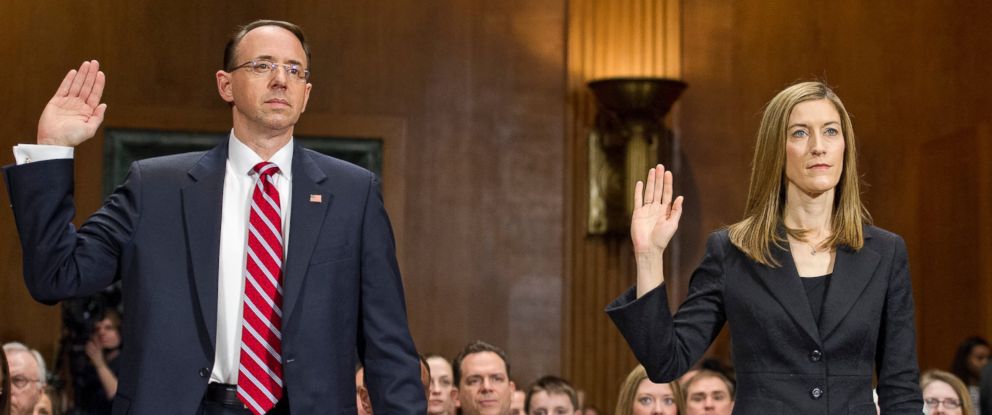
Rod Rosenstein needs to be investigated also. He looks like a child molester.
Deputy Attorney General Rod Rosenstein approved an application to extend surveillance of former Trump campaign adviser Carter Page shortly after taking office last spring, according to the New York Times.
That is one of the revelations in a memo compiled by House Intelligence Committee staffers that is set to be released within weeks, according to “three people familiar with it” who spoke to the Times.
The memo is expected to detail abuses by senior FBI officials in their investigation of the Trump campaign, which began the summer of 2016.
The House Intelligence Committee could vote to release the memo as early as Monday. It would give President Trump five days to object; otherwise, the memo will be released.
Democrats, as well as the Justice Department, have warned that releasing the memo to the public would be “extraordinarily reckless,” although the leaks of the memo to the Times makes those claims dubious.
Democrats have also claimed that the memo, which summarizes classified information held by the Justice Department, is misleading and paints a “distorted” picture, and they have prepared their own counter memo they want to release.
The people who spoke to the Times argued that Rosenstein’s renewal of a spy warrant on Carter Page, Trump’s former campaign foreign policy adviser, “shows that the Justice Department under President Trump saw reason to believe that the associate, Carter Page, was acting as a Russian agent.”
The memo, however, is expected to detail how the surveillance warrant was initially obtained inappropriately using the Trump dossier — a political document funded by the Clinton campaign and the Democratic National Committee.
It is expected to show that FBI and DOJ officials did not explain to the secret court granting spy warrants that the dossier was politically fueled opposition research. To obtain the warrant, the officials needed to show “probable cause” that Page was acting as an agent of Russia.
Page joined the campaign in March 2016, around the time the team was under pressure to release names of foreign policy advisers.
The former investment banker and Navy officer took a personal trip to Moscow to deliver a speech at a graduation ceremony in July 2016, which fueled nascent allegations that Trump was somehow colluding with Russia. Page left the campaign in September.
The Trump dossier claimed he met with two high-level Russian officials on that trip, despite no evidence of it and Page’s testimony under oath that he never met with them. Page has sued BuzzFeed for publishing the dossier.
The FBI had been tracking Page, who was previously based in Moscow, since 2013, but was never charged with any wrongdoing. The FBI reportedly received the surveillance warrant on him in fall of 2016, but Page had left the campaign by then.
Rosenstein, after he was confirmed as the deputy attorney general in late April 2017, approved renewing the surveillance warrant, according to the Times. When Trump fired then-FBI Director James Comey in May, Rosenstein appointed Robert Mueller to lead a special counsel.
Rosenstein has been in charge of the Russia investigation since Attorney General Jeff Session recused himself.