• Skip to main content
  • Skip to primary sidebar
  • Skip to footer
  • Home
  • About
  • Store
  • Videos
  • Breaking News
  • Articles
  • Contact

ET Williams

The Doctor of Common Sense

Blog

03/12/2017 by The Doctor Of Common Sense

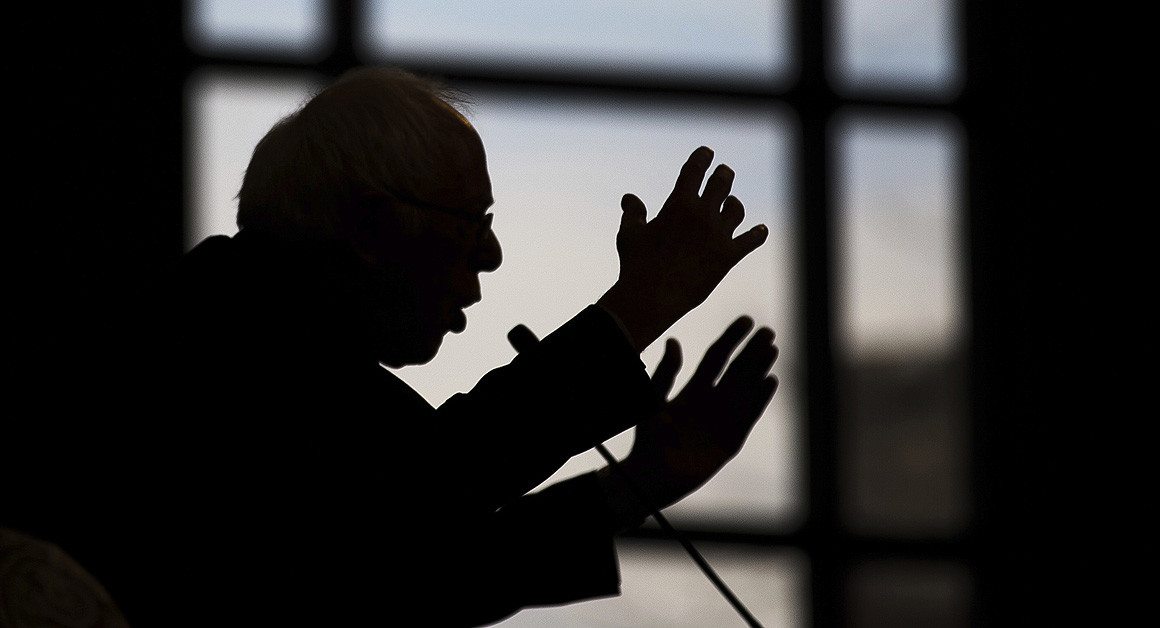
Party Leaders Fear Bernie Sanders’ Wing Will Apply to Ideological Purity Test

Bernie Sanders


With 27 GOP-controlled governorships up for election in 2018, national Democrats envision the midterm elections as a chance to rebalance the scales at the state level, where there are currently twice as many Republican governors than Democrats.

But already, party leaders are running into a complication — unresolved issues left over from the Hillary Clinton-Bernie Sanders presidential primary. Far from defeated, Sanders-aligned progressives are nationalizing their fight, showing less patience than ever for Democrats who don’t agree with them. And that’s generating fear and nervousness in the South — in places like Georgia, South Carolina and Tennessee — where some promising Democratic candidates who are looking at running statewide in 2018 could face resistance from the left.

“Here’s the challenge in many Southern states now: You have a more liberal primary base, because the more moderate voters are less likely to participate in Southern primaries, so it makes it more dicey. That certainly presents an opportunity for candidates who want to make a point rather than win an election — those candidates are less likely to be successful in a general election,” said South Carolina’s last Democratic governor, Jim Hodges. “In Southern states you’re going to need candidates who have more moderate stances to be successful.”

No Sanders-wing candidates have declared their candidacies yet in these Southern races. But the ambitions of Sanders’ post-presidential political operation, Our Revolution — and the wake of the Tom Perez-Keith Ellison proxy battle for the DNC chairmanship — has establishment-oriented Democrats worried about the prospect of grueling primaries or policy litmus tests in a region where the party can least afford to be divided.

“It is critical to recognize that there is a different set of policy issues in the Deep South that are not in play in the coastal areas or the West,” said Georgia House Minority Leader Stacey Abrams, a likely 2018 gubernatorial candidate, pointing to organized labor’s historic economic centrality in parts of the Midwest, and its relative absence in the South, as an example.

“My hope is that Our Revolution — or anyone else — will understand that purity to a progressive ideal does not [necessarily] mean purity in service of the community,” she added.

People close to Sanders’ political arm insist there’s no evidence that the group or its affiliates will try to mount candidate challenges or ideology tests — especially not in the Southern states where the senator was squashed by huge margins in the 2016 Democratic primaries, and where his relationship with local leaders has been strained.

After Sanders lost across the South by wide margins — from North Carolina by 14 points to Mississippi by 66 — in early 2016, party chairs and top regional officials sent him a stern letter asking him to stop minimizing Hillary Clinton’s wins there by characterizing the South as especially conservative. That dismissal of Southern primary results was viewed as a diminishment of the importance of African-American voters, who make up much of the Southern Democratic electorate.

Among Sanders loyalists, though, there’s disbelief and frustration that other Democrats remain wary of their movement, rather than more eager to channel its energy and money.

“The party needs to not see the progressive, Bernie wing of the party as a problem, but rather see it as an asset,” said Mark Longabaugh, a senior Sanders advisor. “The fact that, broadly speaking, candidates and operatives in the establishment wing see the Bernie wing — the activist part of the party — as a problem? That’s a problem in and of itself.”

Georgia state Sen. Vincent Fort, the Our Revolution-backed candidate for Atlanta mayor who made waves during primary season for switching from Clinton to Sanders, said the party establishment still fails to understand or believe in the power of Sanders-style grassroots organizing.

“What people have been talking about, they talked about it last year, and the discussion of it this year is increasing, is 2017 and 2018 are part of a whole, that we need a progressive mayor elected in Atlanta in 2017 as a prelude to electing a Democratic governor in 2018,” he said. “We need a progressive Democrat running in 2018, somebody who understands that trying to be Republican-lite is not a way to get elected. … I anticipate this playing out in the primary, I know progressives are going to say, ‘which of the candidates is a real progressive? Which candidate can we depend on to remain progressive?”

With Republicans in near-unified control of every governorship and legislature in the South, the region remains little more than an aspirational target for national Democrats. But the emergence of strong potential gubernatorial candidates like Abrams and former state Sen. Jason Carter, President Jimmy Carter’s grandson, in Georgia, and former Nashville mayor Karl Dean in Tennessee, has spurred hopes that a 2018 snapback election framed as a Trump referendum could sweep out some Republicans associated with him.

That’s also the hope in South Carolina, where GOP Gov. Henry McMaster was one of candidate Trump’s loudest early supporters.

“I hope all of these [progressive] groups will go out and help recruit candidates, because the hardest job for any party is recruiting candidates: there’s no mythical candidate tree where you can go and pick candidates. So they can help fill some of the holes we have,” said South Carolina Democratic Party Chairman Jaime Harrison, who is considering a governor run of his own. “I’m looking for who’s going to be my gubernatorial candidate here in South Carolina: I’m looking for someone who can reflect the values of our party and energize our base, but also who can win. So I don’t know if there needs to be a litmus test.”

In several states, establishment efforts to work with Sanders backers are picking up. Georgia Democratic Party chair DuBose Porter noted his vice chair for recruitment was a Sanders supporter. And candidates such as Florida’s Andrew Gillum are openly courting the Sanders wing — the Tallahassee mayor is speaking to his state’s Democratic Progressive Caucus later this month.

“No one should be afraid of folks with differing views or differing stances on policy. We’re all in the same party,” said Tennessee Democratic Party chair Mary Mancini.

These Democrats believe that as Sanders turns his movement toward near-term battles — he was in Mississippi for a unionization drive last weekend — his supporters’ firepower can be directed toward 2018.

“Our Revolution has expressed interest in having a 50-state strategy, and while their depth of field in the South is weaker than in the coastal areas, any group that can generate additional voters is a benefit to candidates in 2018,” said Abrams. “There is a specific group of non-engaged midterm voters who I think were animated by Senator Sanders’ campaign and who could tip the balance, especially in states like Georgia where you’re talking about a narrow window of 200,000 voters.”

http://www.politico.com/story/2017/03/governors-races-democrats-rift-235951
Filed Under: Bernie Sanders, Democrats, Politics Tagged With: Bernie Sanders, Conflict

03/12/2017 by The Doctor Of Common Sense

Muhammad Ali Jr. Religiously Profiled at Airport!

Muhammad Ali Jr.

A month after he was held by immigration officials and questioned about his Muslim faith at a Florida airport, Muhammad Ali Jr. was stopped and questioned Friday at Reagan National airport in Washington, D.C., at the ticket counter and again at the security checkpoint.

The incident was first reported in a tweet sent Friday afternoon from Rep. Debbie Wasserman Schultz’s account: “On way home on DOMESTIC FLIGHT Muhammad Ali Jr. detained AGAIN by @DHSgov. Religiously profiling son of ‘The Greatest’ will not make us safe.” The tweet included a photo of Wasserman Schultz and Ali Jr. on a plane.

The TSA said it did not detain Ali Jr., but only stopped him to verify his identity. In an email to the Courier-Journal, a TSA spokesman wrote, “The TSA does not have the authority to detain passengers, and that did not happen.”

According to the TSA, Ali Jr. arrived at the check-in counter at Reagan National, at which time “a call was made to confirm Mr. Ali’s identity with TSA officials.” After 11 minutes, he was eventually cleared and sent to the security checkpoint. At the checkpoint, Ali Jr.’s “large jewelry” set off the scanner and he was patted down by agents. After a seven-minute screening he was cleared to catch his flight.

In a phone interview Friday, Ali Jr.’s lawyer, Chris Mancini, told the Courier-Journal the phone call at the ticket counter lasted 20 minutes and called the TSA statement a “pack full of lies.” Mancini said Ali Jr. was trying to get his boarding pass when the computer “flagged” him. The ticket agent rejected his Illinois state-issued ID and put Ali Jr. on the phone with the Department of Homeland Security. Ali Jr. was asked over the phone to verify his date of birth and where he was born. He was not asked about his religion.

Mancini said Homeland Security officials kept Ali Jr. on the phone for about 20 minutes while a line formed behind them at the check-in counter. Eventually, Ali Jr. voluntarily gave his passport to the ticket agent, who read the passport number over the phone. Only then was Ali Jr. cleared. No explanation was given for the delay.

“It was either sloppy, suspect or designed to keep him from boarding,” Mancini said.

Mancini confirmed Ali Jr. was patted down while going through the security checkpoint but called that incident “irrelevant” and said Ali Jr.’s main complaint stemmed from the incident at the ticket counter.

In an email exchange with the Courier-Journal, a TSA spokesman bristled at the suggestion Ali Jr. was detained, writing, “In the security world detain means to take into custody. … We don’t do that. Law enforcement does.” The spokesman would not say why TSA questioned Ali Jr. but said he was free to walk out of the airport had he decided not to fly.

A spokesman for the Metropolitan Washington Airports Authority told the Courier-Journal that Ali Jr. was not arrested and that airport police were not contacted.

Reached by phone Friday, Department of Homeland Security spokesman David Lapan told the Courier-Journal that Ali Jr. arrived around noon to check in for his 1 p.m. JetBlue flight to Fort Lauderdale. Ali Jr. was one of the first travelers to board the plane.

Lapan said he could not comment on why TSA felt the need to call and confirm Ali Jr.’s identity.

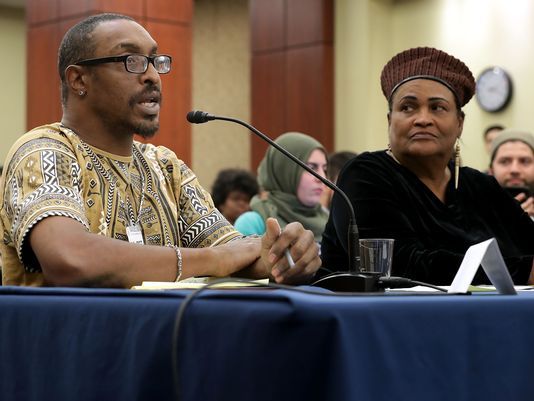
Ali Jr. and his mother, Khalilah Camacho-Ali, the second wife of Muhammad Ali, were in Washington to testify before Congress. Ali Jr. told members of Congress on Thursday the government needs to help end racial and religious profiling.

Mancini said Ali Jr. was not stopped or questioned when he used his state-issued ID to travel to Washington on Wednesday, and implied Friday’s incident was in response to Ali Jr.’s political visit.

“My only thought for what happened between now and Wednesday was going before Congress,” he said. “We criticized DHS and Trump.”

Camacho-Ali and Muhammad Ali Jr. were at the Fort Lauderdale-Hollywood International Airport on Feb. 7 when Ali Jr.was detained for close to two hours. He said he repeatedly was asked his name, where his name came from and what his religion was.

Ali Jr. told the Courier-Journal he and his mother were the only two passengers on the flight who were questioned.

“I got off the plane and was almost at baggage claim when they stopped me and asked, ‘What is your name, who named you and what is your religion,’” he said in a phone interview.

“I said my name is Muhammad Ali Jr., my parents named me, and that my religion is Muslim,” he said.

He said he was then whisked into a small room, held for one hour and 45 minutes, and asked the same questions again.

A U.S. Customs and Border Patrol spokesman said it’s not uncommon for customs and border protection officers to pull travelers aside after initial passport inspection for a secondary screening, which can consist of additional questions and verification of a traveler’s identity. What is asked in these interviews varies depending on the situation, he said, but “we have no interest in questioning anyone for two hours about their religion.”

Following the February incident, the Alis were invited to Washington to participate in a forum titled “Ali v. Trump: The Fight for American Values” hosted by Democratic members on the House Judiciary Committee. They are also launching a “Step into the Ring” campaign to call for religious freedom.

http://www.courier-journal.com/story/news/local/2017/03/10/muhammad-ali-jr-detained-again-flight/99030170/

Filed Under: Islam, Muslims, Religion and Politics Tagged With: Muhammad Ali Jr., profiling, religion

03/12/2017 by The Doctor Of Common Sense

“The Time has Come for Peace”

Trump and Abbas


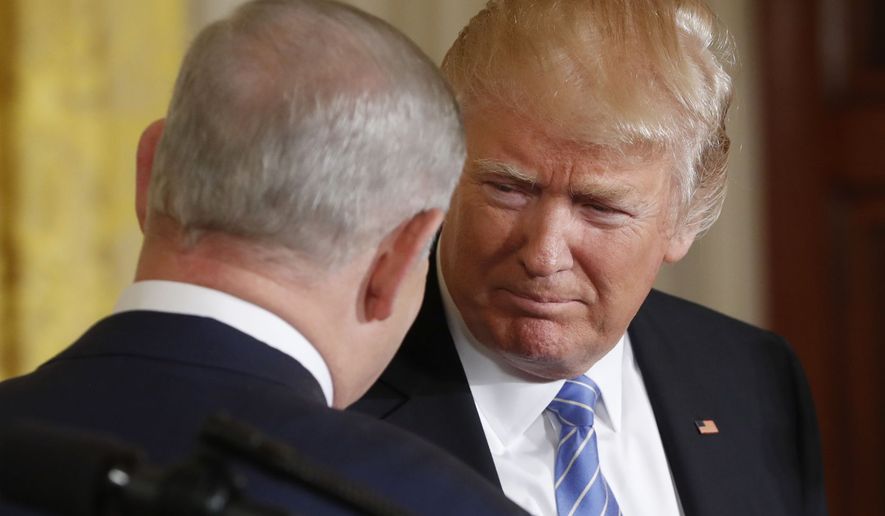
President Trump told Palestinian Authority President Mahmoud Abbas Friday that it’s time for a comprehensive agreement to end the Israeli-Palestinian conflict.

“The president emphasized his personal belief that peace is possible and that the time has come to make a deal,” the White House said in a readout of the phone conversation between the two leaders. “The president noted that such a deal would not only give Israelis and Palestinians the peace and security they deserve, but that it would reverberate positively throughout the region and the world.”

Mr. Trump invited Mr. Abbas to a meeting at the White House soon.

The president “underscored that such a peace agreement must be negotiated directly between the two parties, and that the United States will work closely with Palestinian and Israeli leadership to make progress toward that goal,” the White House said.

“The president noted that the United States cannot impose a solution on the Israelis and Palestinians, nor can one side impose an agreement on the other,” the statement said.

Abbas spokesman Nabil Abu Rdainah said Abbas “stressed the commitment to peace as a strategic choice to establish a Palestinian State alongside the state of Israel,” according to the official Palestinian WAFA news agency.

 Palestinians are concerned at the more favorable approach shown by Washington toward Israeli Prime Minister Benjamin Netanyahu since Mr. Trump came to power. Mr. Netanyahu and Mr. Trump have spoken on the phone at least twice since the inauguration, and Mr. Netanyahu visited Washington last month.

Palestinian officials indicated Abbas would emphasize his concern about Israeli settlement-building on occupied land and the need for a two-state solution to the conflict.— This article is based on wire-service reports.

http://www.washingtontimes.com/news/2017/mar/10/trump-tells-abbas-time-has-come-peace-deal-israel/

Filed Under: Donald Trump, International Politics and News, Israel, President Trump, The President, Trump Administration Tagged With: Abbas, Peace

03/08/2017 by The Doctor Of Common Sense

Arizona Police Chief Expresses a need for Meditation in the Police Force!

At a time when there is an uneasy, sometimes even volatile, divide between some communities and the police officers who are sworn to protect them, one police chief is encouraging her department to practice meditation as a way to help ease the stress of policing.

Chief Sylvia Moir, who has been the head of the Tempe Police Department in Tempe, Arizona, for the past year and has nearly 30 years of policing experience, believes teaching and practicing meditation should be a key piece of police officer development.

“In policing, it’s essential that we respond. We don’t react,” Moir told ABC News’ Dan Harris in an interview for his “10% Happier” podcast. “Without a doubt I think the [meditation] practice shows promise, getting us to be present, not take triggers, not take the bait that makes us react and if the practice can get us to see the perspective of another to enhance our compassion, then I think it does lend itself to broader application in policing.”

It’s important for officers to “be tactically sound and physically fit,” Moir said. She practices mindfulness, a series of meditation techniques that are designed to slow the mind, focus on the breath and bring attention back from distraction, as well as gratitude — focusing on positive emotions.

“I really practice gratitude a lot,” she said. “I say thank you for the people that come at me with anger, I say thank you for things I used to fight against, and it’s given me a really interesting kind of path.”

Moir said she usually practices meditation in the early morning for about 10 minutes while sitting in a chair.

“The great thing about meditation is that it takes no equipment,” she said. “I’m a runner and I’ve run, in the past, full marathons and I need my shoes and nowadays I need my GPS and I need my fuel and I need all my stuff and meditation really offers you … this equipment-free practice that enriches your life.”


Moir spoke at length about benefits of meditation, including how it not only helps officers make smarter decisions in the field but also how it makes them more thoughtful people who see tense situations from all perspectives, not just their own.

“It takes courage because there’s this narrative around police officers that we are hard and tough and cynical,” she said. “[But] I have found police officers to be incredible people, and we view our responsibility, our duty and this call that we are guardians always and warriors when we need to be.”

Moir admitted that some of her officers will grumble about whether it will make them lose their “edge,” but she doesn’t see it that way.

“We’re really good at — I call them perishable skills, the shooting, driving, defensible tactics,” she said. “And what we’re doing with mindfulness practices is we’re saying, ‘Look, we’re going to give you a set of tools, you take it, you use it for the whole you, personal and professional, make it what works for you. Maybe a little quirky. … Maybe different from what somebody else does but you make it yours.’”

As chief, Moir said mindfulness helps her deal with the public in high-stress situations and also lead her fellow officers. The practice has been useful, she said, in helping her realize “micro-cues” she may be unintentionally sending, such as a raised eyebrow or a squint, when she’s meeting with an officer or a grieving family member.

“I meet with a lot of people who are really angry,” she said. “I meet with people who are suffering, who don’t feel like they have been served by the justice system … with family members who have lost someone, [with] officers that have done wrong and I’m holding them accountable … it’s in those moments where I have to really engage but also listen.”

Meditation always struck me as the distillation of everything that was most annoying about the granola lifestyle. I pictured myself seated in an unbearable cross-legged position in a room that smells like feet. My attitude was not far from that of Alec Baldwin’s character on “30 Rock,” who said, “Meditation is a waste of time, like learning French or kissing after sex.”

Turns out, meditation is the victim of a terrible PR. It’s really just exercise for your mind — bicep curls for your brain. And there’s an explosion of recent science to back it up. A blockbuster MRI study from Harvard found that people who took an eight-week meditation course had thicker gray matter in the areas of the brain associated with self-awareness and compassion, while the regions associated with stress actually shrank.

Best of all, it doesn’t require robes, chanting or incense. You don’t even have to sit funny.

Three simple steps:

Sit Comfortably

You don’t have to twist yourself into a cross-legged position — unless you want to, of course. You can just sit in a chair. (You can also stand up or lie down, although the latter can sometimes results in an unintentional nap.) Whatever your position, you should keep your spine straight, but don’t strain.

Feel Your Breath

Pick a spot: nose, belly or chest. Really try to feel the in-breath and then the out-breath.

Return to the Breath

This one is the key: Every time you get lost in thought — which you will, thousands of times — gently return to the breath.

I cannot stress strongly enough that forgiving yourself and starting over is the whole game. As my friend and meditation teacher Sharon Salzberg has written, “Beginning again and again is the actual practice, not a problem to overcome so that one day we can come to the ‘real’ meditation.”

How an On-Air Panic Attack Improved My Life

Notice that I said the above steps are “simple,” but not easy. Repeatedly hauling your attention back from distraction takes grit, but it’s worth it. Once you learn how to watch your breath without reactivity or judgment, you can start to do the same with anger, annoyance, impatience and all the other noxious impulses and urges that too often carry us away.

Start with five minutes a day. It’s not a panacea, but it can help you in all sorts of ways — from curbing your addiction to email to reducing mindless eating to being less frequently yanked around by your emotions. These benefits are why modern meditators include CEOs, elite athletes, marines, and me, a skeptical newsman. I’ve even written a book about it, called “10% Happier,” coming out next month.

http://abcnews.go.com/Health/step-brain-hack-happiness/story?id=22466384

Filed Under: Police Tagged With: Arizona, Meditation

03/08/2017 by The Doctor Of Common Sense

Chicagoan is Killed Minutes after he is Freed from Jail!

Kamari Belmont

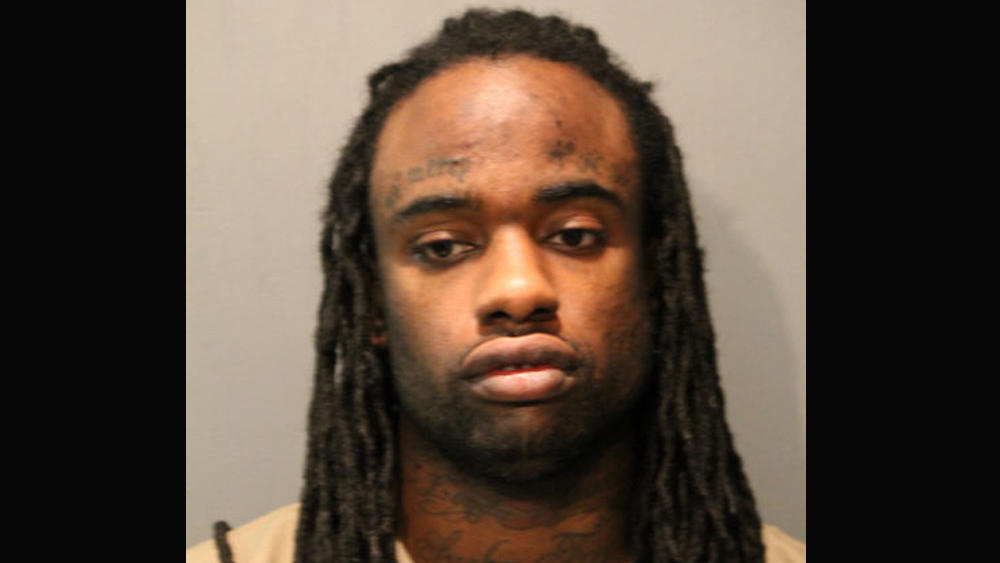
A man who beat his murder case when prosecutors failed to give him a speedy trial was killed minutes after leaving Cook County Jail on Monday night, according to authorities.

Kamari Belmont, 23, was being held on murder and robbery charges after he allegedly shot a man during a robbery and robbed another man a few hours later in 2015.  The man he shot died weeks later.

Cook County prosecutors dropped the murder charges the end of January after allowing too much time to elapse under the state’s speedy trial statute, according to court records and Belmont’s attorney.  The robbery charges remained and Belmont was ordered held on a $100,000 bond.

At 5:30 p.m. Monday, a friend of Belmont posted the required $10,000 on the bond and Belmont was released at 11:12 p.m., according to jail officials.

Belmont was a few block of the jail when a white SUV pulled up to his car on California Avenue and someone inside started shooting, police said. Belmont was hit several times.

The SUV ran a red light as it sped off and crashed into a car near Interstate 55, police said.  Those inside ran away.  Belmont collapsed in the street and died at the scene.

“Oh my God, I can’t believe it,” said Belmont’s attorney, Michael Johnson, who said he has known Belmont’s family for more than two decades. He said he’d seen Belmont at the jail recently as the family put together the bail money.

(Chicago Police Department)

“I told him, once he gets out he’s got to get out of the neighborhood,” Johnson said. “Unfortunately this isn’t the first time I’ve seen this.”

 But Johnson said he didn’t believe Belmont’s killing was street justice. The armed robbery and murder weren’t gang-related, Johnson said, and he didn’t think it possible that word spread that quickly of Belmont’s release from jail.

The shooting and robberies occurred on May 1, 2015.  The person who was shot, Sorrell Marshall, 40, died three weeks later.

Belmont and another man, Terrance Hogan, 23, were arrested the night of the shooting and initially charged with attempted murder and armed robbery. The charges were not upgraded to murder until nearly a year later, in April 2016, according to a timeline compiled by jail officials.

It wasn’t clear why prosecutors waited so long to file murder charges. However,  Marshall’s death was not immediately ruled a homicide by the Cook County medical examiner’s office, which initially marked the case as pending further investigation.

But the clock under the speedy trial statute had started ticking with the attempted murder charges. The murder charges did not reset the clock because they were based on the same set of facts, according to a three-page motion from attorneys for Hogan and Belmont.

Prosecutors had no choice but to drop the charges, Belmont’s attorney said.

A representative Cook County State’s Attorney Kim Foxx’s office did not respond to a request for comment.

Marshall was shot after he dropped off his girlfriend near her apartment at 37th and Vincennes and parked when Belmont and Hogan tried to rob him, according to authorities.  A struggle ensued, and Marshall was shot in the leg and the groin.

Belmont was arrested in Canaryville that night after he and Hogan held up a man in the South Loop, authorities said. A woman with the victim fled and flagged down a police car that tracked the phone to Canaryville.

Hogan was accidentally shot by police during the arrest, according to the police union at the time. He was arrested after he showed up at Mercy Hospital and Medical Center seeking treatment.

 http://www.chicagotribune.com/news/local/breaking/ct-murder-defendant-beats-charge-then-killed-20170307-story.html

Filed Under: Crime, Murder, Murder Suspect Tagged With: chicago, Trial

03/08/2017 by The Doctor Of Common Sense

Senator Tim Kaine’s Son Arrested for Causing Chaos at Trump Rally!

Trump Rally on March 4th

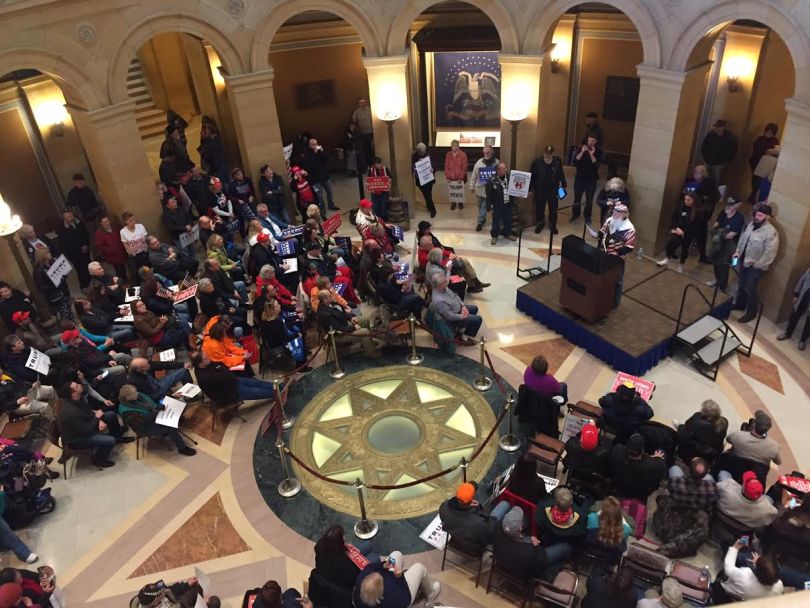
It took three cops and a chemical spray to subdue the youngest son of U.S. Sen. Tim Kaine, Hillary Clinton’s 2016 running mate, Saturday after he was identified as one of the counter-protesters who allegedly used fireworks to disrupt a rally in support of President Donald Trump at the Minnesota State Capitol.

Linwood Michael Kaine, 24, and four others were arrested on suspicion of second-degree riot after the “March 4 Trump” rally in St. Paul; a sixth person was cited for disorderly conduct. Counter-protesters clashed with Trump supporters in the Capitol rotunda after they disrupted the proceedings with air horns, whistles and chants. At one point, someone set off a smoke bomb.


NEW: Videos show smoke bomb thrown during Trump rally at Capitol, protesters ordered out


Linwood Kaine, a Minneapolis resident who attended Carleton College and goes by Woody, resisted arrest when confronted by officers outside the Capitol grounds, according to a St. Paul police spokesman. He was released from the Ramsey County jail on Tuesday morning pending further investigation, law enforcement officials said.

No charges were filed against him or the four other people who were arrested by St. Paul police.

St. Paul City Attorney Samuel Clark is reviewing the case for possible misdemeanor charges.

A voice-mail message left Tuesday night for Linwood Kaine was not returned.

Virginia Sen. Tim Kaine, a St. Paul native, released a Tuesday night statement through a spokesperson to the Pioneer Press.

“We love that our three children have their own views and concerns about current political issues,” he said. “They fully understand the responsibility to express those concerns peacefully.”

Woody Kaine is one of three children of Tim Kaine and his wife, Anne Houlton. An older son, Nat, a Marine serving overseas, was more visible during the presidential campaign. The couple also has a daughter, Anella.

The Minnesota State Patrol estimated the crowds at 400 Trump supporters and 50 counter-demonstrators.On Saturday afternoon, several hundred Trump supporters showed up at the Capitol for a permitted rally billed as the “March 4 Trump,” one of several held around the country.

Speeches had been going on for about a half-hour inside the newly renovated Capitol rotunda when a group of people tried to disrupt the event. At one point, someone set off a smoke bomb — apparently striking a woman in the head, police said.

A 61-year-old Plymouth woman said she was hit in the head at 12:30 p.m., about 10 minutes after she arrived at the Trump rally. The woman said she saw something coming toward her, tried to avoid the object, but it struck her in the forehead, according to Steve Linders, a St. Paul police spokesman. She was not injured. It was not clear who threw the smoke bomb.

Security guards intervened, skirmishes broke out, and someone sprayed chemical irritant into the crowd. Some counter-demonstrators dispersed, and the rally resumed.

LINWOOD KAINE’S ARREST

In th

The Minnesota State Patrol contacted St. Paul police to assist, reporting that troopers had identified five people who lit off fireworks inside the Capitol, Linders said. The State Patrol asked St. Paul officers to arrest the five.

Police approached them at a park near the Capitol, identified themselves as officers and the people ran in different directions, but officers caught up with them, according to Linders.

An officer ordered a man, later identified as Linwood Kaine, to get on the ground. He refused, Linders said.

“The officer was able to get ahold of Mr. Kaine, but he got up, squared off with the officer and the officer tried to take him to the ground again,” Linders said Wednesday. Another officer arrived and sprayed a chemical irritant toward Kaine.

“He then was taken to the ground, but continued to resist, at which point another officer deployed a knee strike to get him to cooperate with the officers and put his hands behind his back,” Linders continued. “After the strike, Mr. Kaine cooperated and was taken into custody without further incident.”

The State Patrol arrested a sixth person at the Capitol.

People involved in Kaine’s arrest were not aware that he is the son of Tim Kaine, and it was brought to the police department’s attention by a Pioneer Press reporter, Linders said. No one from the U.S. senator’s office had contacted the department, he said.

On Tuesday evening, Clark, the city attorney, said he was also unaware of any connection to Tim Kaine until a Pioneer Press reporter informed him of it.

The other five people arrested during the rally were Jonathan Adams, 25, of Minneapolis; Glenn Kimball, 22, of Minneapolis; Isabell Kimball, 26, of Minneapolis; Haley Ryan, 23, of Webster, Minn.; and Anton William Bueckert, 29, of Ontario, Canada.

Elisa Sarmento, one of the rally’s organizers, was upset by the disruption, though she said it didn’t have much of an impact.

“All we wanted to do was just celebrate our president in our own country,” Sarmento said. “We have the freedom to do it and for those young kids to come … and disrupt and hurt people, that’s very disappointing.”

3 cops, pepper spray used in arrest of Sen. Tim Kaine’s son near Trump rally at Capitol

Filed Under: Donald Trump, Politics, President Trump, The President, Trump Administration Tagged With: anti-Trump, Protesters, rally

  • « Go to Previous Page
  • Go to page 1
  • Interim pages omitted …
  • Go to page 249
  • Go to page 250
  • Go to page 251
  • Go to page 252
  • Go to page 253
  • Interim pages omitted …
  • Go to page 336
  • Go to Next Page »

Primary Sidebar

Recent Articles

  • Dave Chappelle pretends that Republicans Twisted His Trans Jokes
  • Things You Need ID In Order To Do In America And States That Don’t Ask For ID
  • It Is Supposed To Be America First Stop Foreigners From Holding Office
  • What Really Happened To Seth Rich And Is It Connected To Hillary Emails And Fake Russian Collusion?

Donate To Free Speech

Footer


Copyright © 2026 · Workstation Pro on Genesis Framework · WordPress · Log in