• Skip to main content
  • Skip to primary sidebar
  • Skip to footer
  • Home
  • About
  • Store
  • Videos
  • Breaking News
  • Articles
  • Contact

ET Williams

The Doctor of Common Sense

Blog

03/27/2017 by The Doctor Of Common Sense

Man’s Name On License Plate Too Offensive For Femi-Nazis


Anyone say anything about pussy? It’s the man’s name for the love of God.

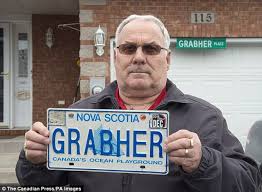
HALIFAX, Nova Scotia (AP) – A Canadian provincial government has withdrawn a man’s eponymous personalized vehicle license plate, saying Lorne Grabher’s surname is offensive to women when viewed on his car bumper.

Grabher said Friday that he put his last name on the license plate decades ago as a gift for his late father’s birthday, and says the province’s refusal to renew the plate late last year is unfair.

Transport Department spokesman Brian Taylor says while the department understands Grabher is a surname with German roots, this context isn’t available to the general public who view it.

The personalized plate program introduced in 1989 allows the province to refuse names when they’re deemed offensive, socially unacceptable and not in good taste.

http://pittsburgh.cbslocal.com/2017/03/27/government-says-mans-last-name-too-offensive-for-license-plate/


Filed Under: Crazy Stories, Democrats, Feminism, Feminism News and Issues, Funny, Liberals are nothing but Nazi scum, Liberals Are Stupid Tagged With: femi-nazis, Halifax, Lorne Grabher, Man's Name On License Plate Too Offensive For Femi-Nazis, socially unacceptable

03/27/2017 by The Doctor Of Common Sense

Religious Left? Are You Freaking Kidding Me?

There is no such thing as a left-wing Christian damit!

(Reuters) – Since President Donald Trump’s election, monthly lectures on social justice at the 600-seat Gothic chapel of New York’s Union Theological Seminary have been filled to capacity with crowds three times what they usually draw.

In January, the 181-year-old Upper Manhattan graduate school, whose architecture evokes London’s Westminster Abbey, turned away about 1,000 people from a lecture on mass incarceration. In the nine years that Reverend Serene Jones has served as its president, she has never seen such crowds.

“The election of Trump has been a clarion call to progressives in the Protestant and Catholic churches in America to move out of a place of primarily professing progressive policies to really taking action,” she said.

Although not as powerful as the religious right, which has been credited with helping elect Republican presidents and boasts well-known leaders such as Christian Broadcasting Network founder Pat Robertson, the “religious left” is now slowly coming together as a force in U.S. politics.

This disparate group, traditionally seen as lacking clout, has been propelled into political activism by Trump’s policies on immigration, healthcare and social welfare, according to clergy members, activists and academics. A key test will be how well it will be able to translate its mobilization into votes in the 2018 midterm congressional elections.

“It’s one of the dirty little secrets of American politics that there has been a religious left all along and it just hasn’t done a good job of organizing,” said J. Patrick Hornbeck II, chairman of the theology department at Fordham University, a Jesuit school in New York.

“It has taken a crisis, or perceived crisis, like Trump’s election to cause folks on the religious left to really own their religion in the public square,” Hornbeck said.

Religious progressive activism has been part of American history. Religious leaders and their followers played key roles in campaigns to abolish slavery, promote civil rights and end the Vietnam War, among others. The latest upwelling of left-leaning religious activism has accompanied the dawn of the Trump presidency.

Some in the religious left are inspired by Pope Francis, the Roman Catholic leader who has been an outspoken critic of anti-immigrant policies and a champion of helping the needy.

Although support for the religious left is difficult to measure, leaders point to several examples, such as a surge of congregations offering to provide sanctuary to immigrants seeking asylum, churches urging Republicans to reconsider repealing the Obamacare health law and calls to preserve federal spending on foreign aid.

The number of churches volunteering to offer sanctuary to asylum seekers doubled to 800 in 45 of the 50 U.S. states after the election, said the Elkhart, Indiana-based Church World Service, a coalition of Christian denominations which helps refugees settle in the United States – and the number of new churches offering help has grown so quickly that the group has lost count.

“The religious community, the religious left is getting out, hitting the streets, taking action, raising their voices,” said Reverend Noel Anderson, its national grassroots coordinator.

In one well-publicized case, a Quaker church in Albuquerque, New Mexico, on March 14 took in a Honduran woman who has been living illegally in the United States for 25 years and feared she would be targeted for deportation.

‘NEVER SEEN’ THIS

Leaders of Faith in Public Life, a progressive policy group, were astounded when 300 clergy members turned out at a January rally at the U.S. Senate attempting to block confirmation of Trump’s attorney general nominee, Jeff Sessions, because of his history of controversial statements on race.

“I’ve never seen hundreds of clergy turning up like that to oppose a Cabinet nominee,” said Reverend Jennifer Butler, the group’s chief executive.

The group on Wednesday convened a Capitol Hill rally of hundreds of pastors from as far away as Ohio, North Carolina and Texas to urge Congress to ensure that no people lose their health insurance as a result of a vote to repeal Obamacare.

Financial support is also picking up. Donations to the Christian activist group Sojourners have picked up by 30 percent since Trump’s election, the group said.

But some observers were skeptical that the religious left could equal the religious right politically any time soon.

“It really took decades of activism for the religious right to become the force that it is today,” said Peter Ubertaccio, chairman of the political science department at Stonehill College, a Catholic school outside Boston.

But the power potential of the “religious left” is not negligible. The “Moral Mondays” movement, launched in 2013 by the North Carolina NAACP’s Reverend William Barber, is credited with contributing to last year’s election defeat of Republican Governor Pat McCrory by Democrat Roy Cooper.

The new political climate is also spurring new alliances, with churches, synagogues and mosques speaking out against the recent spike in bias incidents, including threats against mosques and Jewish community centers.

The Sisterhood of Salaam Shalom, which encourages alliances between Jewish and Muslim women, has tripled its number of U.S. chapters to nearly 170 since November, said founder Sheryl Olitzky.

“This is not about partisanship, but about vulnerable populations who need protection, whether it’s the LGBT community, the refugee community, the undocumented community,” said Rabbi Jonah Pesner, director of the Religious Action Center of Reform Judaism, using the acronym for lesbian, gay, bisexual and transgender.

More than 1,000 people have already signed up for the center’s annual Washington meeting on political activism, about three times as many as normal, Pesner said.

Leaders of the religious right who supported Trump say they see him delivering on his promises and welcomed plans to defund Planned Parenthood, whose healthcare services for women include abortion, through the proposed repeal of Obamacare.

“We have not seen any policy proposals that run counter to our faith,” said Lance Lemmonds, a spokesman for the Faith & Freedom Coalition, a nonprofit group based in Duluth, Georgia.

https://www.yahoo.com/news/religious-left-emerging-u-political-force-trump-era-105901165.html

Filed Under: Anti-God, Christians, Crazy Liberals, Democrats, Donald Trump, Hypocrisy, Hypocrites, Insane, Liberals Are Stupid, Religion and Politics Tagged With: 'Religious left' emerging as U.S. political force in Trump era, Donald Trump, Faith in Public Life, Pat Robertson, Religious Left? Are You Freaking Kidding Me?

03/26/2017 by The Doctor Of Common Sense

16 shot, 1 dead in East End night club shooting; victim identified

Cameo Night Club

EAST END, Ohio (WKRC) – Fifteen people were injured and one person is dead after a shooting at the Cameo Night Club in the East End Sunday morning.

Police were called to the club at the 4600 block of Kellogg Avenue around 2:30 a.m. after shots were fired.

Chief Eliot Isaac said in a press conference Sunday that 16 people total were shot, one person dying from their injuries. That victim has been identified as 27-year-old O’Bryan Spikes.

Victims were taken to four area hospitals. Nine victims were taken to UC Medical Center. Seven are in stable condition and, of those seven, five will be released soon. Two victims are in critical condition. Two other victims were taken to Christ Hospital with minor injuries and are in stable condition. Several others were treated at Bethesda North and Mercy Anderson.

It’s not known what led up to the shooting, but police believe the conflict began between specific groups or individuals earlier in the day that escalated into the shooting. Officers say they believe there is one shooter at this time.

Police are actively investigating the scene and interviewing multiple witnesses. Chief Isaac said approximately 100 people were in the bar at the time.

There were officers working details outside the club at the time. The Cameo has a history of violent incidents, including a shooting inside the club on New Year’s Day in 2015 and a shooting in the parking lot in September 2015. There was also a violent incident recently on March 5


. Chief Isaac said security at the club do wand individuals and pat them down, but somehow several firearms were brought into the bar.

“This is going be a long process for us to solve this crime, crimes, plural, and heal as a community,” said Mayor John Cranley. He also urged witnesses or anyone with information to come forward. They can contact Crimestoppers at 352-3040.

“We recognize the horrific nature of this incident,” said City Manager Harry Black. “I have full confidence in our police professionals who are devoting all the necessary resources toward working this case. I want to recognize all of our first responders who answered the call last night and handled a very difficult situation extremely well. As our assessment and investigation continues we will continue to share information as soon as we are able.

http://local12.com/news/local/14-people-shot-at-kellogg-avenue-nightclub-1-dead

Filed Under: Black Lives Matter, BLM, Crime, News, Police Tagged With: nightclub, shootings

03/26/2017 by The Doctor Of Common Sense

Healthcare Fiasco

Image result for healthcare fiasco

The stunning collapse of the Republican health-care bill now imperils the rest of President Trump’s ambitious congressional agenda, with few prospects for quick victory on tax revisions, construction projects or a host of other issues in the months ahead despite complete GOP control of government.

While Republicans broadly share the goal of Trump’s promised “big tax cuts,” the president will have to bridge many of the same divides within his own party that sank the attempted overhaul of the Affordable Care Act. And without savings anticipated from the health-care bill, paying for the “massive” cuts Trump has promised for corporations and middle-class families becomes considerably more complicated.

Meanwhile, other marquee agenda items, including a $1 trillion investment in roads and other infrastructure and proposed crackdowns on both legal and illegal immigration, will require the support of Democrats, many of whom have been alienated by the highly partisan start to Trump’s tenure.

The lone exception for near-term victory could come with the confirmation of Supreme Court nominee Neil Gorsuch — but even that faces the prospect of a threatened filibuster by Democrats.

Trump and Republican leaders continued Saturday in their attempts to put a brave face on the health-care debacle. “ObamaCare will explode and we will all get together and piece together a great healthcare plan for THE PEOPLE,” Trump wrote in a morning tweet. “Do not worry!”

What happened to Trump’s promise to repeal and replace Obamacare ‘on Day 1’?

But others in the party acknowledged the political damage sustained by pulling the House bill, particularly for a president who had touted his own dealmaking prowess.

“It’s a momentum issue,” said Rep. Mike Coffman (R-Colo.). “The fact is that, you know, you came out of the gate and you stumbled.”

Doug Heye, a GOP consultant and former congressional staffer, said Republicans, having achieved control of both chambers of Congress and the White House, were left with a lot to prove.

“It sends a troubling sign to a lot of folks about the broader issue of whether Republicans will be able to govern,” he said.

Trump has said he would have preferred to start his term by cutting “the hell out of taxes.” Even before the health-care bill was pulled Friday, the president was already starting to turn the page.

Determined to highlight other priorities, Trump staged two announcements in the White House meant to underscore his commitment to creating jobs: granting a construction permit for the Keystone XL pipeline and appearing with executives of a telecom giant as they pledged to hire thousands of new employees, although the company’s plans had already been announced in October.

Separately, Treasury Secretary Steven Mnuchin said at an event Friday that he will push Congress to enact comprehensive tax revisions by its August recess, though he acknowledged that the timetable might slip.

The White House signaled Saturday that it was eager to move on. Trump’s weekly address made no mention of the health-care fight, instead focusing on his signing of legislation authorizing funding for NASA and his commitment to space exploration.

“We’re going to roll our sleeves up, and we’re going to cut taxes across the board for working families, small businesses and family farms,” Vice President Pence said Saturday at an appearance in Scott Depot, W.Va.

A senior White House official, however, said it was unlikely that Trump would ramp up a major sales effort on retooling taxes immediately, given that his team had been planning on using the coming days to push for Senate action on the health-care bill.

Trump’s top advisers had envisioned a three-step legislative agenda this year, starting with scaling back President Barack Obama’s signature domestic initiative. After that was complete, they wanted to move to a comprehensive overhaul of the tax code, followed by the creation of a $1 trillion infrastructure package.

The implosion of the health-care effort complicates the tax overhaul both logistically and politically.

House Republican leaders had been counting on changes to the tax code included in the health-care bill to make the task of paying for future tax cuts easier.

Americans for Tax Reform President Grover Norquist said the bloc of hard-line Republicans who helped stymie the health-care overhaul were guilty of “ripping the lungs out of tax reform.” If they don’t revisit the health-care bill immediately, Norquist said, they will soon realize that “they didn’t shoot and wound health-care reform, they shot and killed permanent tax reform.”

House Speaker Paul D. Ryan (R-Wis.) acknowledged Friday that the health-care defeat “does make tax reform more difficult, but it does not make it impossible.”

“We are going to proceed with tax reform,” Ryan said.

Hours before the health bill was pulled, Mnuchin said a “comprehensive” overhaul of the tax code should prove less complex. “Health care is a very, very complicated issue,” he said at a Friday event hosted by Axios. “In a way, [tax reform is] a lot simpler. It really is.”

Trump has proposed cutting the corporate tax rate from 35 percent to 15 percent, though many Republicans on Capitol Hill have been aiming for a 20 percent rate. Trump has also proposed consolidating the existing seven individual income-tax brackets into three brackets of 10 percent, 20 percent and 25 percent.

Trump’s advisers have argued that these changes would trigger a big expansion of economic growth, but some budget analysts have said the changes would widen deficits by anywhere from $2.6 trillion to $7 trillion over 10 years, depending on the measurement method used.

Many Republicans have long vowed that an overhaul of the tax code must be “revenue neutral,” which means they need to find new revenue to offset the reduction in rates. Trump’s advisers have not identified specific tax breaks they would eliminate to raise new revenue, and Trump himself often waved away debt concerns during the campaign.

[The ACA’s future is in Trump’s hands. His plan: ‘Let Obamacare explode’]

Meanwhile, House and Senate Republicans are at odds over the wisdom of a key component of tax restructuring.

Ryan has proposed a border-adjustment tax that would essentially create new taxes on items imported into the United States as a way to raise close to $1 trillion in new revenue while also providing incentives for companies to move operations to the United States.

Many other Republicans oppose this idea, though, and the fight probably will only intensify now. Some Republicans, including Sen. Lindsey O. Graham (S.C.), argue that the scheme would drive up prices on consumer goods, and many large retailers are strongly opposed.

Given such divides, as well as the mechanics of the budget process, it’s highly unlikely that lawmakers will produce a comprehensive tax bill by the August recess, if at all, said Jim Manley, a former longtime aide to former Senate majority leader Harry M. Reid (D-Nev.).

“It’s clearly not realistic, and it’s not going to happen, on policy and political grounds,” Manley said, adding that the Republican agenda is also undercut by “a president who’s out of his league and doesn’t know how to legislate.”

Republicans had planned to use a budget procedure called “reconciliation” for both the health-care overhaul and for the tax changes, as that would allow them to pass their plans with a simple majority in the Senate and make it impossible for Democrats to block the changes through a filibuster.

That’s still the plan with a tax overhaul.

Barry Bennett, an adviser to Trump during the general election, said he thought it was a “tactical mistake” for the president not to have started his term by pushing for tax changes.

“Now you’re going to have to carry these battle scars into the tax debate,” he said.

Former House speaker Newt Gingrich, who was a close adviser to Trump during the campaign, said the White House should postpone what is expected to be a messy battle over the tax code and instead pivot toward trying to build a large infrastructure package. Proceeding with infrastructure could attract bipartisan support, he said.

Some Democrats and labor unions have said they could support a big infrastructure package, though the White House has not specified how it plans to finance a package that includes roads, bridges, airports and broadband capability, among other things.

Mnuchin said Friday that the package would probably include several hundred billion dollars in public money but that the rest would be financed by the private sector, with public support as incentives. Democrats are wary of that approach and prefer more direct government spending.

Many Democrats and Republicans have tried — but failed — to pull off tax revisions in recent years. A principal reason changing the tax code is so difficult is that interest groups flood Washington looking for tax cuts but fight vigorously against any measure that would increase their bills.

“It’s very, very hard to get done,” said Doug Holtz-Eakin, a former director of the Congressional Budget Office who served as economic adviser to Sen. John McCain (R-Ariz.) when he ran for president in 2008. “There are tons of different interests involved, and there are very different views within the Republican Party. Now you are going to enter into a second exercise of that type where you have clear evidence that holdouts can kill it. That empowers the holdouts.”

Gingrich said the White House could learn some lessons from the failed House health-care effort and change its approach going forward.

“I hope [Trump is] going to decide that he has to have a much more hands-on approach to drafting these things and can’t just assume that it’s going to show up,” Gingrich said.

Despite contentions by White House press secretary Sean Spicer that Trump “left everything on the field” while lobbying for the health-care bill, other Republicans suggested he could have played a more assertive role starting earlier in the process.

“If Trump is going to be best advocate, he needs to be more aggressive,” Heye said. “I’d try to do some sort of autopsy and figure out how to do this better.”

Democratic leaders said Republicans would be doomed to failure in future debates if they didn’t seek to build more consensus.

“We don’t know what they’ll do with tax reform,” said Senate Minority Leader Charles E. Schumer (D-N.Y.), who warned, “if it’s huge tax cuts for the wealthy . . . it won’t fly.”

Looming on the Senate calendar is a confirmation vote for Gorsuch for the Supreme Court. Senate Democrats have said they plan to force Gorsuch to clear a 60-vote procedural hurdle, forcing Republicans to try to find eight Democrats to cross over and vote to advance the nomination.

Republicans have raised the prospect of turning to the “nuclear option” to force through Gorsuch’s nomination, a rule change that could further strain relations beyond the parties and undermine prospects for cooperation on other matters.

Today’s WorldView

What’s most important from where the world meets Washington

Beyond Gorsuch, Congress is facing a late-April deadline to pass a stopgap spending bill to keep the federal government running. That could also spark a partisan clash that could risk a government shutdown.

Senate Democrats have warned that they are willing to risk a shutdown fight if Republicans include funding in that package to construct a U.S.-Mexico border wall, another marquee campaign promise from Trump.

Budget analysts fear Congress must also reach an agreement to raise or suspend the debt ceiling by August or September or the Treasury Department could run out of flexibility to continue paying the government’s bills.

Trump, on Friday and in the days leading up to the vote, seemed undaunted by the challenges ahead.

“I hope that it’s going to all work out,” he told a House Republican dinner before the collapse of the health-care bill. “Then we immediately start on the tax cuts, and they’re going to be really fantastic, and I am looking forward to that one. That one’s going to be fun.”

https://www.washingtonpost.com/politics/trumps-path-forward-only-gets-tougher-after-health-care-fiasco/2017/03/25/eaf2f3b2-10be-11e7-9b0d-d27c98455440_story.html?utm_term=.e71dc8f54c98

Filed Under: Politics, Trump Administration Tagged With: Healthcare, trump, Unsuccessful

03/25/2017 by The Doctor Of Common Sense

Alan Bean talks about Aliens?!

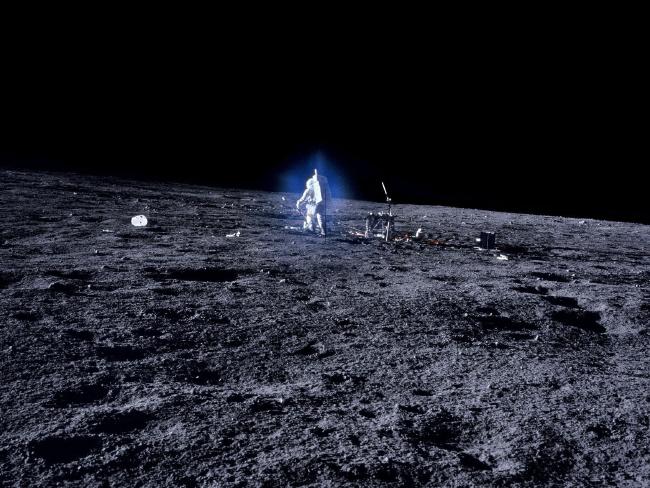
Astronaut Alan Bean on the moon, surrounded by a blue halo caused by vapour emissions from his backpack, featured in Michael Light's 2000 photographic exhibition ‘Full Moon’.

HE was an astronaut on the second manned mission to the moon and the fourth man to walk on its surface.

Alan Bean, 85, is one of only 12 people to have taken “one small step for man and one giant leap for mankind” on the moon.

The lunar module pilot was one of two crew members on-board Apollo 12 who walked on the moon days after it launched on November 14, 1969.

The crew’s primary mission objectives included an extensive series of lunar exploration tasks by the lunar module and the deployment of the Apollo Lunar Surface Experiments Package to be left on the moon’s surface to gather seismic, scientific and engineering data.

Mr Bean has logged 1,671 hours and 45 minutes in space — 10 hours and 26 minutes of that were spent on the moon and in Earth’s orbit.

His experiences in space have led Mr Bean to develop some interesting theories about the possibility of alien life.

“I do not believe that anyone from outer space has ever visited the Earth,” Mr Bean told news.com.au from his home in Houston, Texas.

“One of reasons I don’t believe they have been here is that civilisations that are more advanced are more altruistic and friendly — like Earth, which is better than it used to be — so they would have landed and said ‘we come in peace and we know from our studies you have cancer that kills people, we solved that problem 50 years ago, here’s the gadget we put on a person’s chest that will cure it, we will show you how to make it’.

“Just like some day, say 1000 years from now, when we can go to another star and see a planet, that’s what we would do because we will know how to cure cancer, cure birth defects, so we would teach them.”

The crew members of Skylab 3: commander and astronaut Alan L. Bean; scientist, pilot and astronaut Owen K. Garriott, and astronaut and pilot Jack R. Lousma. This crew spent 59 days and 11 hours in orbit.Source:Supplied

Mr Bean doesn’t doubt for a second that we are not alone.

“There’s so many billions of stars and these stars have planets around them so there must be statistically many planets around many stars that have formed life,” he said.

“Maybe some of them are like our life was 100,000 years ago, and some of them are like we are now, and there are probably some out there that are a 10,000 years in the future from where we are now.”

Mr Bean resigned from NASA in 1981 to become an artist. In his paintings he depicts the experiences of astronauts, including himself, who have walked on the moon. It’s a small club but it’s also one that he draws never-ending inspiration from.

“Even if I lived to 185 years old I wouldn’t run out of ideas of things to paint on this topic,” he said.

He uses textured and lunar tools, “sprinkled with bits of Apollo spacecraft and a touch of moon dust” to create his masterpieces, which sell for tens or hundreds of thousands of US dollars each via his website.

“I’m the only person on Earth who can do these paintings (from a first hand perspective),” he said.

WHAT IT WAS LIKE ON THE MOON

Mr Bean still remembers the first time he saw an “earthrise” from the moon.

“It was hard to believe (we) were 235,189 miles from home,” he said.

“I never heard any astronaut say that he wanted to go to the moon so he would be able to look back and see Earth.

“We all wanted to see what the moon looked like close up. Yet, for most of us, the most memorable sight was not of the moon, but of our beautiful blue and white home, moving majestically around the sun, all alone in infinite black space.”

Mr Bean said the Earth appeared small.

“To think everyone I ever knew, saw on television, or at the Super Bowl, was down there on the skin of that beautiful, colourful sphere,” he said.

“It did not seem possible. (I thought) there is just not enough room, and folks on the bottom will surely fall off.”

He didn’t leave anything personal behind on the moon because, according to him, that would have made him a “bad astronaut”.

The speed of which they travelled on the return trip was something that stunned the former naval aviator, who was used to flying at top speeds of about 600 miles per hour.

“We were travelling at speeds that are difficult for most humans, including us, to really grasp,” he said.

“For example, after a brief 11-minute rocket ride, we were in Earth’s orbit travelling at 17,431 miles per hour.

“That is about 290 times faster than the 60 miles per hour speed limit we drive our cars here on Earth.

“There were no sign posts along the way. As we sped along, we did not zip past any cities, towns, clouds, other spaceships, or anything else, for that matter.

“Except for the first few hours after leaving earth orbit, earth did not seem to move away or get smaller, and the moon did not seem to move toward us or get larger.

“If we waited an hour or so and looked out again, earth would look smaller … maybe, and the moon would look larger … maybe.”

Astronaut Alan Bean taking a core sample on the Moon’s surface in November 1969. Picture: NASA.Source:News Corp Australia

Mr Bean said the main thing he took away from the Apollo 12 mission was that “humans can do a lot of amazing things”.

“President Kennedy said we were going to go to moon by the end of the decade (in the 1960s),” Mr Bean said.

“It was an impossible dream and human beings got behind the whole idea and planned and worked to achieve it.

“I think the most important thing about us going to the moon back in the 60s was not what we invented but the feeling that throughout the world there are humans that can do a lot more than we imagined we could before.

“I know humans will go back again some day.”

Now when Mr Bean looks at the moon at night he fixes his eyes on where he once landed and reflects on how he was apart of something so special.

“It changed my attitude that we were able to do it and I thought a lot more of myself and friends,” he said.

“I thought ‘wow look what we did’.

“Now when I look at the moon, it just seems so far, far away.”

http://www.news.com.au/technology/science/space/astronaut-who-walked-on-the-moon-why-i-know-aliens-havent-visited-earth/news-story/cf021030a1a1b21d712512eb118d6b61

Filed Under: Uncategorized Tagged With: Aliens, NASA, Space, The Moon

03/25/2017 by The Doctor Of Common Sense

Not a Chance you Idiots!

SEOUL, March 24 (Yonhap) — North Korea seems to have finished preparing for another nuclear test, waiting for leader Kim Jong-un’s final decision, South Korean defense officials warned Friday.

“It’s assessed that North Korea is capable of conducting a nuclear test within hours after Kim Jong-un’s order,” an official said on the condition of anonymity. “We are keeping close tabs on its nuclear-related facilities with combined assets with the U.S.”

The warning came in response to foreign news reports that a nuclear provocation, which would be North Korea’s sixth, appears imminent.

Quoting U.S. officials with the “most recent intelligence” from the peninsula, Fox News said the reclusive nation is in the final stages of gearing up for the test.

“The test could come as early as the end of the month,” one official was cited as saying.

U.S. officials, Fox added, have detected evidence that North Korea has finished digging new tunnels around its nuclear site in Punggye-ri. But there have been no indications yet of busy activity of vehicles and equipment there.

The South Korean military official also said no unusual signs have been detected yet in the vicinity of the area where the North has carried out five nuclear tests, including two, last year.

Speaking at a National Assembly session last week, South Korea’s defense minister said the North seems all set to explode a nuclear bomb for a test at any time.

http://english.yonhapnews.co.kr/national/2017/03/24/0301000000AEN20170324002200315.html

Filed Under: Corruption, Idiots, Insane, International Politics and News Tagged With: North Korea, Nuclear Bomb, U.S. Surveillance

  • « Go to Previous Page
  • Go to page 1
  • Interim pages omitted …
  • Go to page 241
  • Go to page 242
  • Go to page 243
  • Go to page 244
  • Go to page 245
  • Interim pages omitted …
  • Go to page 336
  • Go to Next Page »

Primary Sidebar

Recent Articles

  • Dave Chappelle pretends that Republicans Twisted His Trans Jokes
  • Things You Need ID In Order To Do In America And States That Don’t Ask For ID
  • It Is Supposed To Be America First Stop Foreigners From Holding Office
  • What Really Happened To Seth Rich And Is It Connected To Hillary Emails And Fake Russian Collusion?

Donate To Free Speech

Footer


Copyright © 2026 · Workstation Pro on Genesis Framework · WordPress · Log in