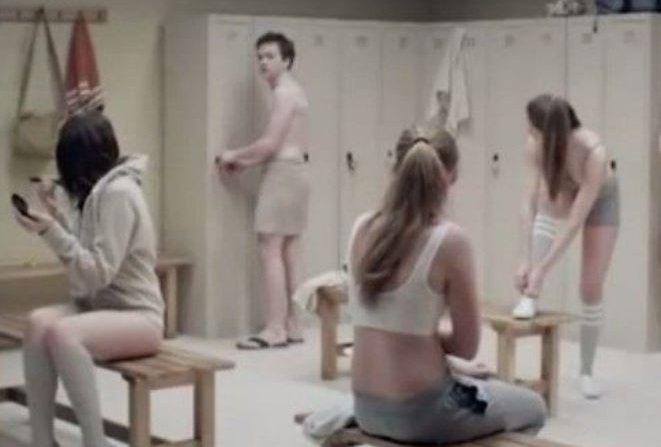
Why Don’t The Goon Just Say Hell Yes I Said It And It’s True?
Joy Reid’s old blog, The Reid Report (2000-2014), is littered with even more anti-gay posts than were originally discovered, reports the far-left blog Mediate. The MSNBC host is claiming these latest discoveries were not written by her, but by hackers as a means “to taint my character.”
Earlier this year, Reid admitted to authoring a number of posts on her old site that mercilessly ridiculed then-Republican Florida Governor Charlie Crist as a homosexual (even after he married a woman). Reid was clearly using homosexuality as a pejorative, as a weapon of ridicule, so the left-wing MSNBC anchor’s homophobia has already been well- established.
Nevertheless, after she apologized for this (and because she is not a conservative), Reid was allowed to resume a media career that traffics in conspiracy theories, race-baiting, and uninformed Trump-bashing.
Here are some the new finds on Reid’s old site that she claims she did not write:
Keeping it real … most straight men feel exactly the same way, and would have the exact same reaction to the idea of stripping naked in a sweaty locker room in close quarters with a gay teammate. Most straight people cringe at the sight of two men kissing… Most straight people had a hard time being convinced to watch ‘Broke Back Mountain.’ (I admit that I couldn’t go see the movie either, despite my sister’s ringing endorsement, because I didn’t want to watch the two male characters having sex.)
Does that make me homophobic? Probably. And I’m not exactly proud of it. But part of the intrinsic nature of “Straightness” is that the idea of homosexual sex is … well … gross … even if you think that gay people are perfectly lovely individuals. For the record I’m sure gay people think straight sex is gross, too, it’s the that the nature of political correctness is that gay people are allowed to say straight sex is gross but the reverse is considered to be patently homophobic.
While defending a Marine General who declared homosexual acts “immoral,” Reid (or her hacker) wrote in 2007…
“Some people use the [word] ‘immoral’ when they really mean ‘distasteful’ — I think a lot of heterosexuals, especially men, find the idea of homosexual sex to be … well … gross, and they lump it in with immorality.”
Mediaite adds that Reid (or her hacker) went on, “And then there are the concerns that adult gay men tend to be attracted to very young, post-pubescent types, bringing them ‘into the lifestyle’ in a way that many people consider to be immoral… Ditto with gay rights groups that seek to organize very young, impressionable teens who may have an inclination that they are gay.”
Other posts included a list of the top five “totally not gay celebrities” that included CNN’s Anderson Cooper, and singer Clay Aiken, who were only rumored at the time to be gay. In 2005, seven years before he came out, Reid said that Cooper is the “gayest thing on TV” and added that she has it “on good authority that Cooper is totally gay.”
Interestingly enough, Mediaite adds that Reid repeatedly wrote about opposing same sex marriage.
Reid’s hacker must have been fairly busy and thorough because dozens of politicians and celebrities were hit with gay jokes, according to Mediaite, including one aimed at her current colleague, MSNBC’s Chris Matthews.
Here is Reid’s full denial:
In December I learned that an unknown, external party accessed and manipulated material from my now-defunct blog, The Reid Report, to include offensive and hateful references that are fabricated and run counter to my personal beliefs and ideology.
I began working with a cyber-security expert who first identified the unauthorized activity, and we notified federal law enforcement officials of the breach. The manipulated material seems to be part of an effort to taint my character with false information by distorting a blog that ended a decade ago.
Now that the site has been compromised I can state unequivocally that it does not represent the original entries. I hope that whoever corrupted the site recognizes the pain they have caused, not just to me, but to my family and communities that I care deeply about: LGBTQ, immigrants, people of color and other marginalized groups.
It is worth noting, however, that Reid does admit these posts came from her blog … with the caveat that they were added by nefarious hackers after she had the site shut down. It’s unclear when the nefarious hackers would have hacked her site and added the controversial content, since it has been defunct for years and still is. More importantly, NBC could or would not specify exactly which posts Reid is claiming were doctored.
On top of Reid, there is Saturday Night Live star Alex Badwin, who has long history of homophobia. Morning Joe co-host Mika Brzezinski slut-shamed a woman who had photographic proof disgraced ex-Senator Al Franken (D-MN) groped her. Despite credible allegations of “stalking, groping and making explicit comments to female colleagues,” NBC still hired Mike Tircio to anchor the Winter Olympics. Andrea Mitchell is a rape denier. NBC paid off a staffer who accused Chris Matthews of harassment, and no fewer than six NBC staffers were fired for various acts of sexual misconduct, which in some cases went on for years.
Being a homophobe, sex abuser, or enabler, appears to be the opposite of a disqualifier at NBC News, so Reid has nothing to worry about.
This is what our politicians are doing instead of many the country better.
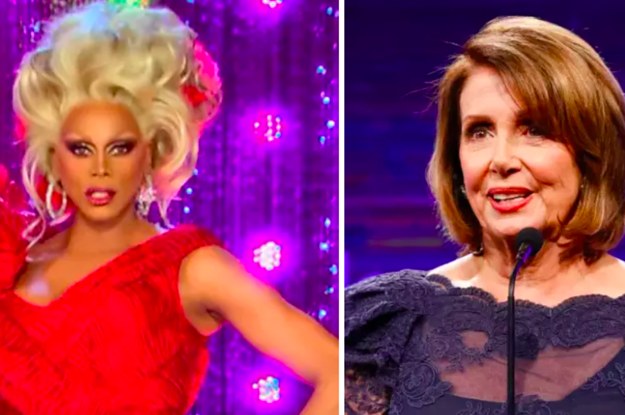
The Washington Post reported Thursday that the California lawmaker would join other celebrity guest judges including actor Tituss Burgess, actresses Kristen Chenoweth and Vanessa Hudgens, and singer Emma Bunton for the show’s upcoming third season.
Pelosi tweeted Thursday that she had a “fabulous” time filming her cameo for the show.
All I can say is, you betta werk! Had a fabulous time with @RuPaul and good luck to all the queens. #DragRacehttps://twitter.com/RuPaul/status/954074895247466497 …
501501 Replies
2,3052,305 Retweets
9,6699,669 likes
Drag Race All-Stars is a spin-off of the popular, long-running series RuPaul’s Drag Race, in which contestants from the original show vie to become the season’s top drag performer.
A representative for Pelosi told the Post that the 77-year-old lawmaker agreed to participate in the show as a way to stand against what she called President Donald Trump’s anti-LGBT policies.
The paper further reported that Pelosi was a fan of the show and its message of being proud of who you are.
RuPaul has been a vocal critic of Trump, telling the Hollywood Reporter in an August interview that the president’s administration represents a “resistance to moving forward.”
“That’s what the code words ‘make America great again’ are really saying,” the drag icon said. “Let’s go back in time to when we didn’t have to evolve and that we could just languish in our ignorance.”
RuPaul was also a featured speaker at last year’s Los Angeles Gay Pride Parade, which re-named itself the Resist March following Trump’s victory.
The third season of Drag Race All-Stars premieres Jan. 25 on VH1.
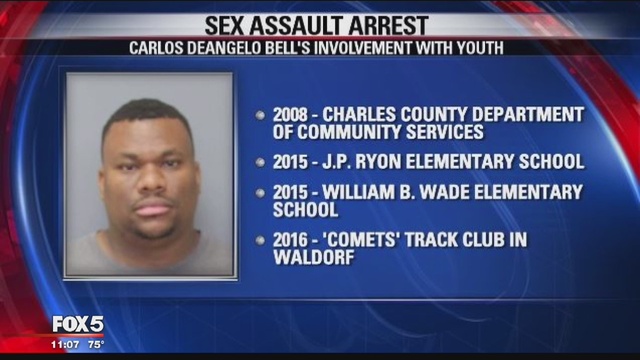
An HIV-positive former Maryland school aide and track coach pleaded guilty Friday to sexually abusing students and filming child pornography, prosecutors said.
Carlos Deangelo Bell, 30, of Waldorf, signed a plea agreement admitting guilt on 27 counts, including sexual abuse of a minor, porn charges and attempted transmission of HIV, the state’s attorney for Charles County, Tony Covington, said.
“You really can’t imagine what had to be gone through when investigating this case,” he said, alluding to the hours of video in the case that “nobody ever wants to see.”
Covington said one of his goals was maintaining the privacy and anonymity of the victims in the case, something made easier by avoiding a trial that would have been open to the public.
The charges cover conduct that spanned from May 2015 to June 2017, and the 42 victims range from 11 to 17 years old, Covington said.
Bell, who was originally facing 206 counts, will be sentenced March 28. Prosecutors said they will recommend up to 190 years in prison. Covington said another of his goals was to make sure that Bell spends the rest of his life in prison.
Bell also faces federal charges and is due in court again later this month.
“Based upon the evidence that the state presented it was in his best interest to enter into this negotiated guilty plea,” defense attorney James Crawford said, adding Bell would also plead guilty in federal court.
Covington said investigators are not aware of any victim testing positive for HIV, or human immunodeficiency virus. HIV is a virus that can destroy the immune system if left untreated.
The investigation started in December 2016 when detectives received a tip about “possible inappropriate behavior with a student while he was coaching track,” the Charles County Sheriff’s office said in a statement.
“A student’s parent observed suspicious text messages on their child’s phone that were sexual in nature,” Charles County Sheriff Troy Berry said.
Investigators sent Bell’s electronic devices from work and from home to the Maryland State Police crime lab, which recovered sexually explicit images involving the boys, Richardson said.
“Some of the evidence … included graphic images of Bell sexually assaulting victims. Some of the crimes appeared to have been committed on school property, and others at his home in Waldorf,” Berry said.
After a six-month investigation, Bell was arrested June 30 on charges of assaulting at least seven boys, mostly of middle school age, Charles County Sheriff’s Office spokeswoman Diane Richardson said at the time.
He was removed from his jobs as an instructional assistant at Benjamin Stoddert Middle School and as a track coach at La Plata High School late in 2016 when the investigation began. He began working for the school system in 2014.
Charles County Schools Superintendent Kimberly A. Hill applauded the plea deal and said, “Since learning of the charges against Mr. Bell we have focused on supporting the students affected.”
She said school district staff members were also getting additional training.
“We are taking every precaution that we can to make sure our employees are aware of the signs” of sexual abuse, she said.
An engineering student who was an LGBTQ activist was shot and killed by Georgia Tech campus police on Saturday night, officials said Sunday.
The school identified the victim as Scout Schultz, 21, a fourth-year engineering student from Lilburn, Georgia, who police said was armed with a knife. Schultz, president of Georgia Tech’s Pride Alliance, identified as non-binary and intersex and preferred to be referred to with they/them gender pronouns, according to the alliance’s website.
At a news conference Monday, Schultz’s family’s attorney said the student was experiencing a “mental breakdown” on the night of the shooting.
“What was Scout doing that day?” said the attorney, L. Chris Stewart. “Standing there disoriented, having a mental breakdown and was shot from 20 feet away.”
I self identify as a lizard today
Police made contact Saturday with Schultz outside a campus parking garage after they received a 911 call at 11:17 p.m. on Saturday, according to the Georgia Bureau of Investigation. The original call reported that Schultz was also carrying a gun, officials said.
In a video taken by a witness, Schultz can be heard yelling “Shoot me!” at police, as they give orders to drop the knife.
“Nobody wants to hurt you,” an officer says in the video.
But as Schultz continued to ignore the officers’ commands and stepped forward with the knife, a single shot rang out, and Schultz’s screams could be heard. He died later at Grady Memorial Hospital.
Stewart said that Schultz was holding a multipurpose tool, which contained pliers, a screwdriver and a “tiny, little knife.” He added that the knife was never exposed during the altercation.
The officer who pulled the trigger wasn’t identified, and it was unclear whether any disciplinary action would be taken.
“That’s one of the biggest problems in this county is officer’s actions with the mentally ill,” Stewart said, adding that more training needs to be implemented for police officers.
William Schultz, Scout’s father, called his son “the greatest kid.” When asked what he would say to the officer who shot Scout, William Schultz said: “Why did you have to shoot? That’s the question. That’s the only question that matters now.”
William Schultz added that his child had a 3.9 GPA and planned to graduate in December.
“Scout wanted to make new medical devices, and now we’ll never know what Scout might have come up with,” Scout’s mother, Lynne, said.
His parents said Scout had gone through counseling in the past and suffered from depression, but they were unaware of any current issues.
The family is hoping a civil suit and an investigation into the shooting will give them answers to the questions surrounding the student’s death. They said that Georgia Tech’s campus police currently don’t carry tasers, and they said they hope their child’s death might bring about policy change.
As the family mourned, Georgia Tech’s Pride Alliance mourned its leader, saying in a statement that Scout Schultz’s “leadership allowed us to create change across campus and in the Atlanta community.”
“Scout always reminded us to think critically about the intersection of identities and how a multitude of factors play into one’s experience on Tech’s campus and beyond,” the group said.
The Georgia Tech Progressive Student Alliance called Schultz “a constant fighter for human rights” and said it planned to place flowers and memorabilia in the West Village section of campus, but it declined to comment on Schultz’s death itself.
Meanwhile, the school offered students its condolences and made counselors available. It also shared the number for the Georgia Crisis and Access Line, which makes social workers and counselors available 24 hours per day.
“Scout’s sudden and tragic death today has been devastating news for the Schultz family, classmates, and for members of the community who knew Scout personally, the shock and grief are particularly acute,” Vice President of Student Life and Dean of Students John Stein said in a statement.
RALEIGH, N.C. (AP) — The NAACP urged religious conferences, athletic events and musicians on Friday to avoid North Carolina as part of a national boycott protesting the state’s conservative policies including a law limiting LGBT protections.
It was the first step in a national boycott that could expand to include other economic and tourism measures, according to a resolution approved by the group’s national board. The organization stopped short of telling its members to cease all travel and spending in the state — which has been a component of previous boycotts elsewhere.
“Right now in the state of North Carolina we have children — Dear God, children! — who are being imperiled, who face the prospect of being bullied as a consequence of politicians using them as political pawns while we talk about bathrooms,” said the NAACP’s national president Cornell Brooks.
His comments come two days after Republican President Donald Trump’s administration rescinded federal guidance that public schools nationwide should allow transgender students to use restrooms that match their gender identity.
The Rev. William Barber, who leads the state’s NAACP chapter, proposed the boycott late last year after a deal fell apart to repeal the North Carolina law known best for requiring transgender people to use restrooms in many public buildings corresponding to the sex on their birth certificate. The law, often referred to as House Bill 2, also excludes gender identity and sexual orientation from statewide antidiscrimination protections.
But Barber stressed the boycott would also pressure the Republican-controlled legislature over efforts to limit the new Democratic governor’s power as well as ongoing legal battles over voting rights and how electoral districts are drawn.
“What has happened in North Carolina makes this state a battleground … for the soul of America,” said Barber, who has drawn thousands to rallies protesting conservative policies in recent years.
The NAACP was part of a coalition that successfully sued to overturn much of a 2013 North Carolina elections law requiring photo ID from voters who cast ballots in person. A federal appeals court said it disproportionately targeted black voters. Republicans have appealed to the U.S. Supreme Court.
Republican Senate leader Phil Berger called on Democratic Gov. Roy Cooper to “condemn William Barber’s attempt to inflict economic harm on our citizens, and work toward a reasonable compromise that keeps men out of women’s bathrooms.”
Asked about the boycott, Cooper’s spokesman Ford Porter said in an email: “While Governor Cooper continues to urge business to come to North Carolina in spite of HB2, Republican legislative leaders need to stop holding our economy hostage to this disastrous law.”
The NAACP’s boycott resolution says the group won’t hold future national meetings in North Carolina and urged other groups to take their business elsewhere, too. The resolution says the organization could take other steps, such as urging the divestiture of North Carolina-related investments.
Brooks declined to offer further specifics or a timetable for deciding on whether to escalate the effort, but suggested the group’s previous boycotts could serve as a model.
The NAACP boycotted South Carolina for 15 years over flying the Confederate battle flag on Statehouse grounds. When that boycott was approved, the group urged all of its members nationwide to avoid visiting or spending money in the state. The flag was removed in 2015.
Already, House Bill 2 has caused numerous conventions, concerts and sporting events to pull out of North Carolina, depriving it of hundreds of millions of dollars in economic impact. The state also lost several large-scale business projects with hundreds of jobs because of the law.
The NAACP’s announcement comes as Charlotte hosts scores of students and alumni from historically black colleges and universities as part of the men’s and women’s CIAA basketball tournaments. The conference has moved other athletic events from the state, but said late last year that time constraints and contractual obligations made it too difficult to move the basketball games. The CIAA’s basketball tournaments brought an estimated $56 million to the city in 2015, according to local tourism officials.
The Fort Des Moines Church of Christ said the commission is violating the church’s freedom of religion with its interpretation of the Iowa Civil Rights Act.
The 32-page lawsuit seeks to strike down as unconstitutional a portion of a 2007 Iowa law that could apply transgender bathroom rules to churches.
The Fort Des Moines Church of Christ filed the lawsuit on Monday against the Iowa Civil Rights Commission seeking to keep the state from enforcing rules allowing biological males who identify as women to use women’s bathrooms and showers and the same for females identifying as men.
The commission has said the state law sometimes applies to churches, which the church says would be a violation of its constitutional rights of free speech and freedom of religion.
“The Iowa Civil Rights Commission is essentially marching right into the church and directing how Fort Des Moines must use its own facilities. It is an astonishingly unprecedented government overreach,” said Christiana Holcomb, of the Alliance Defending Freedom for Faith, for Justice.
Tom Conley is an Iowa Civil Rights commissioner. He said the commission was just doing its job and following the law and his personal feeling is this is an issue that can be resolved.
“I think there is room for compromise and I don’t think we’ve really had that. On one hand, we have people who believe their religious rights are being violated. On the other hand, there is a perception people who are transgender, gay, or lesbian are trying if you will — to cram it down the throat of people who aren’t,” said Conley.
Conley suggests a third gender neutral bathroom could be the solution.
Donna Red Wing is the executive director for One Iowa, which advocates for LGBTQ.
She said there is a legal line the church has crossed.
“If they are involved in a bonafide religious activity they are exempt. If they are offering public accommodation that could be a camp open to all kids, could be a food pantry. If they receive funds from local, state, or federal government that takes them out of the bonafide religious activity into public accommodation,” said Red Wing.