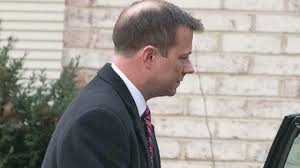
House Committee on the Judiciary Chairman Bob Goodlatte on Friday subpoenaed former FBI Agent Peter Strzok to appear for a deposition next week.
Goodlatte issued the subpoena even though Strzok’s attorney said that Strzok is willing to testify voluntarily before Congress.
“We regret that the Committee felt it necessary to issue a subpoena when we repeatedly informed them that Pete was willing to testify voluntarily,” Strzok lawyer Aitan Goelman said in a statement after Goodlatte issued the subpoena.
A statement on the Judiciary Committee’s website said that the panel has “repeatedly requested to interview Mr. Strzok regarding his role in certain decisions, but he has yet to appear.”
As the FBI’s deputy chief of counterintelligence, Strzok oversaw the bureau’s investigation into possible Trump campaign ties to the Russian government. He was also a top investigator on the former Secretary of State Hillary Clinton email probe. (RELATED: Strzok: ‘We’ll Stop’ Trump Presidency)
While working on the Trump-Russia matter, Strzok sent numerous text messages criticizing the then-presidential candidate. In one Aug. 8, 2016 text message, Strzok told FBI attorney Lisa Page that “we’ll stop” Trump’s presidency.
A Department of Justice inspector general’s report released June 14 blasted Strzok over the text messages, saying that the messages indicated a “biased state of mind” and implied “a willingness to take official action to impact the presidential candidate’s electoral prospects.”
Strzok was escorted from FBI headquarters June 15. Attorney General Jeff Sessions said on Thursday that Strzok no longer has his security clearance. (RELATED: Strzok Loses Security Clearance)
Goelman said that his client “intends to answer any question put to him, and he intends to defend the integrity of the Clinton email investigation, the Russia collusion investigation to the extent that that’s a topic, and his own integrity,” in a letter sent to Goodlatte on Saturday.
Goelman said that Strzok “wants the chance to clear his name and tell his story.”
Who In Their Right Mind Thinks That These Idiots Are Not Corrupt?
Sources tell The Daily Caller disgruntled FBI agents are too afraid of retaliation to speak out about the Bureau’s many troubles.
The sources say agents don’t trust Congress to protect them from the consequences of testifying and claim whistleblower protection laws are ineffective.
The FBI rarely punishes those who retaliate against whistleblowers, according to the agency itself.
Even as a new Rasmussen poll shows a majority of voters believe senior law enforcement officials broke the law to stop Donald Trump from beating Hillary Clinton in the 2016 election, rank-and-file FBI agents who want to testify against their superiors to Congress feel they can’t due to an ineffective whistleblower protection law.
These agents believe the sluggishness of the law exposes them to an inordinate risk of reprisal, so they have remained in hiding and afraid to speak the truth.
Hillary Should Be Serving A Life Sentence.
This story is based on interview transcripts with two FBI agents that one former White House official provided The Daily Caller. A third special agent also reached out to The Daily Caller to provide information about the current state of the Bureau
The former White House official who maintained direct contact with at least two agents told TheDC they are “hunkering down because they see good people being thrown to the dogs for speaking out and speaking out does nothing to solve the problems.” He believes that “Congress and DOJ are so weak and clueless and can’t be trusted to follow through.”
According to transcripts he shared with TheDC, one special agent said, “It’s a question of basic credibility — Congress, the executive, and oversight are not seen to have any gravitas or seriousness. The inmates have been running the asylum and they don’t respect, much less fear, their overseers. We know we’ll be hung out to dry.”
The agent added, “And don’t get me wrong, there are still a few good people scattered about, but main Justice and the bureaucrats are running the show, want to run out the clock on this administration, and keep the status quo.”
Another special agent, when asked about being subpoenaed, said, “This is a great opportunity for senior or [soon to be retiring] guys, not for someone like me. It’d be suicide. I hate to say it, but neither the judiciary nor the executive branch is wielding any kind of effective oversight right now, and the top managers know it.”
He continued, “You still have a ton of bad people in place. Unless that changes, and I haven’t seen any degree of seriousness on the part of ranking members nor staffers, I’m not meeting with anyone nor willing to be subpoenaed. I’m not coming forward until they get their act together. Right now, it’d be sacrificing a career for cheap political points.”
TheDC has learned that the bureau has already warned agents that the agency will come back viciously against all those “behind destroying their narrative, and will go after their families and friends, too.”
“I’ve worked hard to strengthen legal protections, especially for FBI employees. You have a right to cooperate with Congressional inquiries, just as you have a right to cooperate with the Inspector General. Anyone who tells you otherwise is lying.”
Sen. Grassley’s law does an appropriate job at protecting whistleblowers from unfair prosecution, but it is not prosecution that prevents agents from stepping forward—it is the possibility of going bankrupt from attorneys’ fees when defending themselves against retaliatory legal actions by their agency.
For example, an FBI agent who came forward as a government whistleblower in 2013 told TheDC he experienced “personal humiliation, stress-related illnesses, and a huge financial loss, requiring my wife (who had undergone two cancer surgeries) to go to work so we could make ends meet.”
However, despite the whistleblower protection law, it seems the agency’s retaliation will likely not be investigated as the process is, as one agent put it to TheDC over email, “slow by design and at the end of the process they will never be held accountable.”
That agent went on to say, “Even with the enactment of the new law, what is the deterrent for retaliation against Whistleblowers? The FBI executives will just stall, ignore, and run out the clock until the victim runs out of money for legal fees or else retires.”
He added, “That is why the new Whistleblowers want to be subpoenaed. They simply don’t have the resources to fight the inevitable retaliation that will ensue, regardless of the new law.”
According to a December 1, 2015 letter from then-FBI Assistant Director Stephen Kelly, less than 2 percent of FBI retaliation claims result in punishment for the retaliators or a remedy for the victims.
“They leave you penniless, unemployed, and unemployable. Those who work those issues in the government who are aware of the score recognize the roadkill they will become if they come forward,” one former Department of Defense official told TheDC.
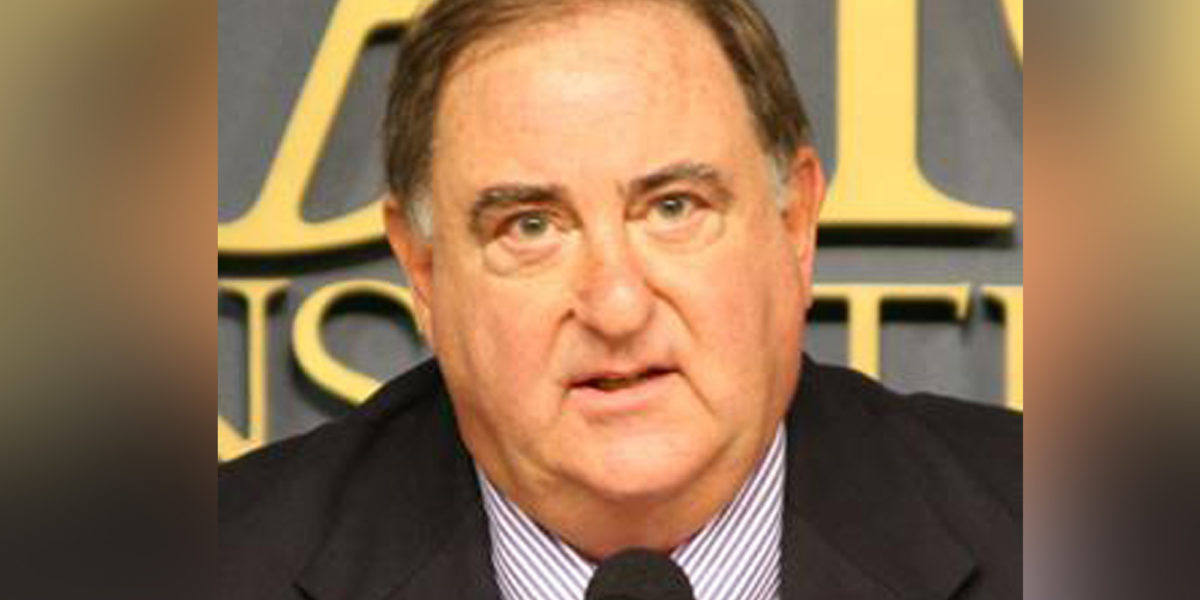
Last week, reports indicated Stefan Halper, a Cambridge professor and longtime aide to some of Washington’s most powerful figures, was outed as an FBI informant planted inside Donald Trump’s 2016 presidential campaign.
The New York Post writes:
Halper made his first overture when he met with Page at a British symposium. The two remained in regular contact for more than a year, meeting at Halper’s Virginia farm and in Washington, DC, as well as exchanging emails.
The professor met with Trump campaign co-chair Sam Clovis in late August, offering his services as a foreign-policy adviser, The Washington Post reported Friday, without naming the academic.
…
Days later, Halper contacted Papadopoulos by e-mail. The professor offered the young and inexperienced campaign aide $3,000 and an all-expenses-paid trip to London, ostensibly to write a paper about energy in the eastern Mediterranean region.
Here are a few fast facts about Halper’s history in politics.
Got His Start in Nixon/Ford Years
The Stanford and Oxford-educated Halper started his career in government in 1971 as a member of President Richard Nixon’s Domestic Policy Council. The foreign policy expert served as the Office of Management and Budget’s Assistant Director of Management and Evaluation Division between 1973-1974. Halper then served as an assistant to all three of President Gerald Ford’s Chief of Staffs — Alexander Haig, Donald Rumsfeld, and Dick Cheney — until 1977.
Accused of Leading a Spy Ring Inside Jimmy Carter’s Presidential Campaign
The Reagan-Bush presidential campaign hired Halper to serve as Director of Policy Coordination in 1980 and would later be embroiled in the Debategate affair, a scandal in which CIA operatives were accused of leaking the Carter campaign’s foreign policy positions to the Republican ticket.
Four decades ago, Halper was responsible for a long-forgotten spying scandal involving the 1980 election, in which the Reagan campaign – using CIA officials managed by Halper, reportedly under the direction of former CIA Director and then-Vice-Presidential candidate George H.W. Bush – got caught running a spying operation from inside the Carter administration. The plot involved CIA operatives passing classified information about Carter’s foreign policy to Reagan campaign officials in order to ensure the Reagan campaign knew of any foreign policy decisions that Carter was considering.
Halper also worked as Deputy Assistant Secretary of State for Political-Military Affairs during President Ronald Reagan’s first term.
Had a Stint as a Bank Executive
In 1984, Halper was chairman of three financial institutions — National Bank of Northern Virginia, Palmer National Bank, and George Washington National Bank. White House official Oliver North wired loaned funds from the Palmer National Bank to a Swiss bank account, which were later used to aid the contras.
Believed Hillary Clinton Would Be a Better Steward for U.S.-UK Relations
In March 2016, Halper told Russia’s Sputnik News that he believed then-Democratic presidential nominee Hillary Clinton would prove to be a steadier hand in preserving the “special relationship” enjoyed by the United States and Britain.
“I believe Clinton would be best for US-UK relations and for relations with the European Union. Clinton is well-known, deeply experienced and predictable. US-UK relations will remain steady regardless of the winner although Clinton will be less disruptive over time,” Halper said.
Why Did Bob Mueller Not Investigate Any Of These SOB’s.
Leakers to the New York Times confirmed in a story published on Wednesday that the FBI had run a spy operation on the Trump campaign that involved government informants, secret subpoenas, and possible wiretaps.
The story comes ahead of the release of the pending Department of Justice inspector general report on the FBI’s actions during the 2016 election, and likely is an attempt by the leakers to paint the FBI’s efforts in the most flattering light possible.
But the story revealed that the FBI – which is supposed to be an apolitical agency – was spying on the Trump campaign through phone records and with “at least one” human asset.
“The F.B.I. obtained phone records and other documents using national security letters — a secret type of subpoena — officials said. And at least one government informant met several times with Mr. Page and Mr. Papadopoulos,” the Times reported, citing “current and former officials.”
The revelation of “at least one government informant” appears to confirm a Washington Post story last week in which leakers revealed that the FBI had a “top secret intelligence source” — a U.S. citizen who likely lived overseas — who had spied on members of the Trump campaign for the FBI.
The Post‘s report came out as House Intelligence Committee Chairman Devin Nunes (R-CA) was fighting the Justice Department for access to information on the source.
According to the Wall Street Journal‘s Kimberley Strassel, the source meant “the FBI secretly had a person on the payroll who used his or her non-FBI credentials to interact in some capacity with the Trump campaign.”
“This would amount to spying, and it is hugely disconcerting,” she wrote in a piece last Thursday.
The Times‘ story also seems to conflict with what the FBI has previously maintained — that the investigation into the Trump campaign began with information that Papadopoulos had told an Australian diplomat he knew that Russians had stolen emails that would be embarrassing for Clinton.
Leakers told the Times that “within hours” of opening the investigation into the Trump campaign on July 31, 2016, the FBI dispatched two agents to London to interview the Australian diplomat who had talked to Papadopoulos, meaning that the investigation had officially opened even before they interviewed him.
In fact, it was not until two days after the investigation began that the agents summarized their interview — which apparently “broke with diplomatic protocol” — and sent the summary back to Washington.
The Times‘ story glosses over this discrepancy by saying the agents’ report “helped provide the foundation” for the case – instead of sparked the case – as has been claimed.
Those facts appear to confirm that the FBI had opened the investigation on the Trump campaign based on other information — perhaps the “top secret intelligence source.”
Strassel also questioned in her piece when the investigation really began, and why. She wrote:
“…when precisely was this human source operating? Because if it was prior to that infamous Papadopoulos tip, then the FBI isn’t being straight. It would mean the bureau was spying on the Trump campaign prior to that moment. And that in turn would mean that the FBI had been spurred to act on the basis of something other than a junior campaign aide’s loose lips.”
The Times’ story is also vague as to when exactly FBI agents began looking into the Trump campaign, saying that it was “days” after their investigation on Hillary Clinton’s email server ended. Comey had announced he would not seek charges against Clinton on July 5, 2016, and the FBI officially launched their investigation on July 31, 2016.
According to the Times‘ story, the investigation seems to have been sparked by suspicions over some campaign members’ pre-existing connections with Russia before they joined the campaign.
Flynn, a retired three-star general, was once paid $45,000 by Russian outlet Russia Today for a 2015 speaking engagement; Paul Manafort — a veteran Republican strategist — had lobbied for pro-Russian interests in Ukraine long before he joined the Trump campaign; Carter Page had previously worked in Moscow and Russian spies had tried to recruit him. In Papadopoulos’s case, he “seemed to know” Russia had “political dirt” on Clinton.
The FBI also found Trump’s behavior suspicious, although he was not under investigation. FBI officials were also alarmed by reports that wrongly suggested that Trump’s campaign had tried to change the GOP’s stance on Ukraine in a way favorable to Russia.
The Times’ story also confirms the FBI used the salacious Steele dossier in addition to “F.B.I. information” to obtain a wiretap on Page. Democrats have tried to downplay the FBI’s reliance on the document.
The story reveals the FBI — instead of alerting the Trump campaign that it might be a target of Russian influence operations — went to lengths to hide the investigation.
Former Deputy Attorney General Sally Q. Yates claimed in an interview with the Times that they did not want word of the investigation to leak and to impact the election.
“You do not take actions that will unnecessarily impact an election,” she said. (Instead, they secretly spied on the Trump campaign as mentioned above, via phone records, secret subpoenas, and at least one informant.)
The story downplays the actions of FBI agent Peter Strzok, who played a key role in the Clinton email and Trump campaign investigations.
The story claims that the FBI did not reveal eagerness to investigate Trump, citing one of Strzok’s text messages to FBI lawyer Lisa Page, with whom he was having an extramarital affair.
The Times quoted Strzok as texting Page with, “I cannot believe we are seriously looking at these allegations and the pervasive connections.” In reality, he had texted Page “OMG I CANNOT BELIEVE WE ARE SERIOUSLY LOOKING AT THESE ALLEGATIONS AND THE PERVASIVE CONNECTIONS.”
The Federalist’s Mollie Hemingway, who has reported on the FBI’s investigation in depth, called the Times’ report “an attempted whitewash” of FBI behavior.
The story reveals that the code name for the investigation on the Trump campaign was “Crossfire Hurricane,” based on a Rolling Stones song.
Nowhere in the story, however, is there evidence of any collusion during the campaign. The story states that Trump’s former national security adviser, Michael Flynn, was about to be cleared in November 2016, until he took actions after the election that the FBI wanted to examine.
The story also states: “The question they confronted still persists: Was anyone in the Trump campaign tied to Russian efforts to undermine the election?”
“A year and a half later, no public evidence has surfaced connecting Mr. Trump’s advisers to the hacking or linking Mr. Trump himself to the Russian government’s disruptive efforts,” it states.
The story also shows former CIA Director John Brennan taking an active role in pushing the investigation along.
By mid-August, Brennan shared intelligence with Comey showing that the Russian government was behind an attack on the election. It states he also briefed top lawmakers that summer about Russian election interference and intelligence that Moscow supported the Trump campaign.
Other reports have said Brennan briefed then-Senate Minority Leader Harry Reid (D-NV), who then urged then-FBI Director James Comey to investigate the Trump campaign in an August 27, 2016 letter that could be shared with media — even though there was already an open FBI investigation.
A separate report on Wednesday published by the American Spectator’s George Neumayr said that leaked news stories in the British press showed that Brennan’s spying on Trump began around April 2016.
“As it became urgently clear to Brennan that Trump was going to face off against Hillary, Brennan turned to ‘intelligence partners’ in Europe for dirt on Trump. But they didn’t have any, save some pretty skimpy material on ‘contacts’ between Trump campaign officials and Russians,” he writes. He continues:
From April 2016 to July 2016, according to leaked stories in the British press, he assembled a multi-agency taskforce that served as the beginnings of a counterintelligence probe into the Trump campaign. During these months, he was ‘personally briefing’ Obama on ‘Russian interference’ — Brennan’s euphemism for spying on the Trump campaign — and was practically camped out at the White House. So in all likelihood Obama knew about and had given his blessing to Brennan’s dirt-digging.
The Times‘ story seems to corroborate that taskforce. According to the Times, “intelligence agencies began collaborating to investigate” the Russian government attack on the election, which involved the FBI’s Crossfire Hurricane team.
“The Crossfire Hurricane team was part of that group but largely operated independently,” three officials told the Times.
Former Director of National Intelligence James Clapper gave inconsistent testimony to a House panel about his contacts with CNN’s Jake Tapper regarding the infamous Steele dossier, according to a report released by congressional Republicans on Friday.
The report, published by the GOP side of the House Permanent Select Committee on Intelligence, shows that Clapper acknowledged speaking with Tapper about the dossier while he was still serving as director of national intelligence.
“I didn’t have any contact with media until after I left the government on the 20th of January, so I don’t quite understand, at least what I’ve read, that somehow I leaked about the dossier,” Clapper told Lemon in the interview.
“So you didn’t leak anything about the dossier to any media?” Lemon asked.
CNN, where Clapper is now a national security analyst, played a crucial role in the dossier saga.
On Jan. 10, 2017, the network published a story written by Tapper and three other CNN journalists revealing that on Jan. 6, then-President-elect Donald Trump was briefed on the salacious allegations laid out in the dossier, which was written by former British spy Christopher Steele and funded by Democrats.
CNN used that briefing as a hook to publish its story about the existence of the dossier, which included allegations that Trump was being blackmailed. BuzzFeed News used CNN’s report as a news hook of its own, publishing the dossier in full later on Jan. 10, 2017.
CNN’s report cited “multiple U.S. officials” as sources. The sources remain unidentified.
It has since been revealed that then-FBI Director James Comey conducted Trump’s private briefing on the dossier’s unverified allegations. Memos that Comey wrote following his meetings with Trump showed that CNN was looking for a “news hook” to release information about the dossier.
Comey wrote in a memo following that briefing that he explained to Trump that “media like CNN had [the dossier] and were looking for a news hook.”
“I also explained that one of the reasons we told him was that the media, CNN in particular, was telling us they were about to run with it,” Comey wrote in a Jan. 28, 2017 memo following a dinner meeting with Trump.
In their report, House Intel Republicans assert that when Clapper was initially asked about leaks during his July 17, 2017 committee interview, he “flatly denied” discussing the Steele dossier “or any other intelligence related to Russia hacking of the 2016 election with journalists.”
But Clapper “subsequently acknowledged discussing” the dossier with Tapper. He also admitted he might have spoken with other journalists.
Committee Republicans note that Clapper’s interaction with Tapper took place in early January 2017, “around the time [Intelligence Community] leaders briefed President Obama and President-elect Trump, on ‘the Christopher Steele information.’”
In a report of their own released on Friday, Democrats claimed that Republicans had an “intent to smear Clapper” with their allegations about his media contacts.
“Despite this dark insinuation, the report neither cites evidence, nor even alleges, that Clapper disclosed information – classified or unclassified – illegally or improperly,” Democrats write, noting that Clapper was authorized to engage with the media.
Democrats pointed to an exchange that Clapper had with Florida Rep. Tom Rooney, a Republican.
“Did you discuss the dossier or any other intelligence related to Russia hacking of the 2016 election with journalists?” Rooney asked.
“No,” said Clapper.
“Did you confirm or corroborate the contents of the dossier with CNN journalist Jake Tapper?” Rooney asked.
“Well, by the time of that, they already knew about it. By the time it was — it was after — I don’t know exactly the sequence there, but it was pretty close to when we briefed it and when it was out ail over the place. The media had it by the way,” said Clapper.
Clapper said later that he discussed the dossier with Tapper after the document was made public. He said he did not remember specifics of his conversation with the CNN anchor.
“Did you discuss the dossier with any other journalists besides Mr. Tapper?” Clapper was asked.
“I could have. I don’t remember specifically talking about the dossier,” he replied.
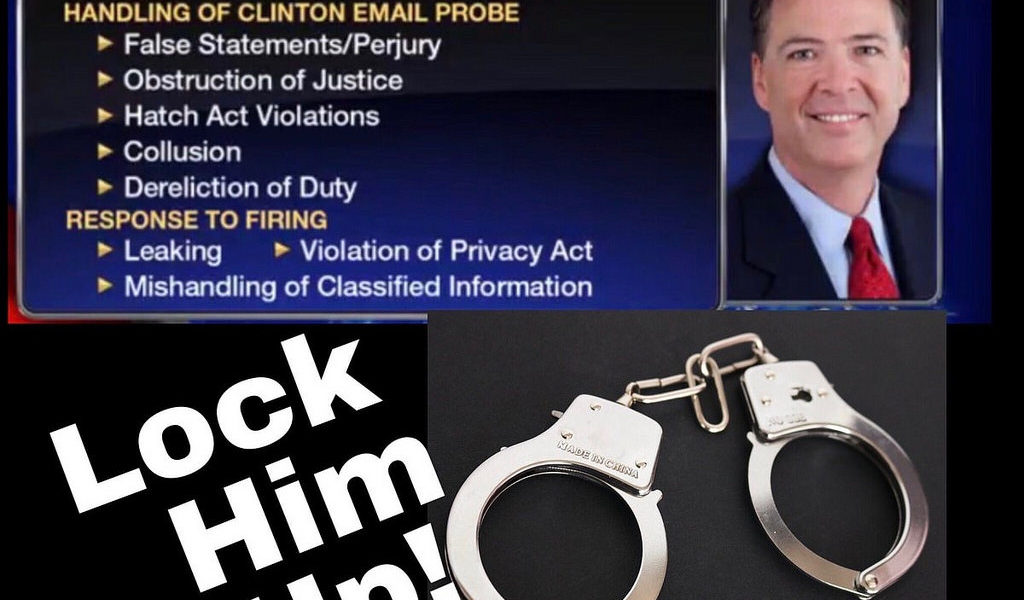
In an interview that aired Sunday night, former FBI Director James Comey sat down with ABC’s George Stephanopoulos and offered an ominous assessment of the country under President Donald Trump’s leadership.
Stephanopoulos brought up Comey’s remarks that right now is a “dangerous” time in America.
“I think it is [dangerous],” Comey told Stephanopoulos. “And I chose those words carefully. I was worried when I chose the word “dangerous” first. I thought, is that an overstatement? And I don’t think it is.”
Indict That Bastard.
He expounded, “I worry that the norms at the center of this country — we can fight as Americans about guns, or taxes or immigration, and we always have, but what we have in common is a set of norms — most importantly, the truth. And if we lose that, if we lose tethering of our leaders to that truth, what are we?”