DOJ attorney George Toscas will be deposed Thursday as part of a congressional investigation into possible FISA abuse.
Staffers with the House Judiciary and House Oversight Committees will quiz Toscas about DOJ official Bruce Ohr.
Ohr will be interviewed on Aug. 28.
House Republicans will resume an investigation of the FBI and DOJ’s handling of the Russia investigation on Thursday with a deposition of George Z. Toscas, a national security attorney at the Department of Justice.
Toscas, who handles counterterrorism and counterespionage cases, will appear for a deposition at 10 a.m. before staffers with the House Judiciary and House Government & Oversight Committees, a source familiar with the matter tells The Daily Caller News Foundation.
Toscas was one of 17 current and former FBI and Justice Department officials included on a list submitted to the two House committees by California Rep. Devin Nunes, the chairman of the House Intelligence Committee.
Nunes suggested interviewing Toscas and the other officials regarding an investigation into the FBI and Justice Department’s possible abuse of the Foreign Intelligence Surveillance Act (FISA).
Congressional Republicans have probed whether the agencies misled federal surveillance judges by relying on the unverified Steele dossier to obtain FISA warrants against former Trump campaign adviser Carter Page.
Toscas is mentioned throughout text messages exchanged between former FBI counterintelligence official Peter Strzok and former FBI attorney Lisa Page. Strzok and Page, neither of which work for the FBI (Strzok was fired on Aug. 10), mentioned Toscas most often during the FBI’s Hillary Clinton email investigation.
The Washington Post has reported that Toscas was the Justice Department official who reminded then-FBI Deputy Director Andrew McCabe about Clinton emails found on Anthony Weiner’s laptop. McCabe had been informed about the emails weeks earlier but failed to take action on them until late-October 2016.
Strzok and Page, who have already been interviewed by the House panels, also mention Toscas in text messages sent at key points in the FBI’s investigation into Russian meddling in the 2016 presidential campaign.
Strzok sent one message to Page on July 30, 2016, the day before the FBI opened the Russia probe, that appears to reference Toscas and then-FBI Deputy Director Andrew McCabe.
“Do you know if Andy got concurrence back from George about the preamble? No need to ask Andy right now, I think we can in very good faith date the [letterhead memorandum] July 2016,” Strzok wrote.
TheDCNF’s source says that Republicans will ask Toscas about the origins of the government’s Russia probe as well as about Bruce Ohr, the Justice Department official who served as a back channel between the FBI and Christopher Steele, the former British spy who wrote the dossier.
Ohr was also in contact with Glenn Simpson, the founder of Fusion GPS, the opposition research firm that hired Steele as part of an anti-Trump project financed by the Clinton campaign and DNC.
Ohr’s wife, a Russia expert named Nellie Ohr, worked for Fusion GPS on the Trump project.
Ohr, who was demoted in December from his position as assistant deputy attorney general, will be interviewed by the two House committees on Aug. 28.
Republicans want to know who at the Justice Department, if anyone, directed Ohr to maintain contact with Steele. The relationship has raised questions because the FBI cut ties with Steele on Nov. 1, 2016 because of the former spy’s unauthorized contacts with the media.
Lawmakers have also questioned why Ohr was meeting with Steele despite claims from top DOJ officials that he was not on the team leading the Russia investigation.
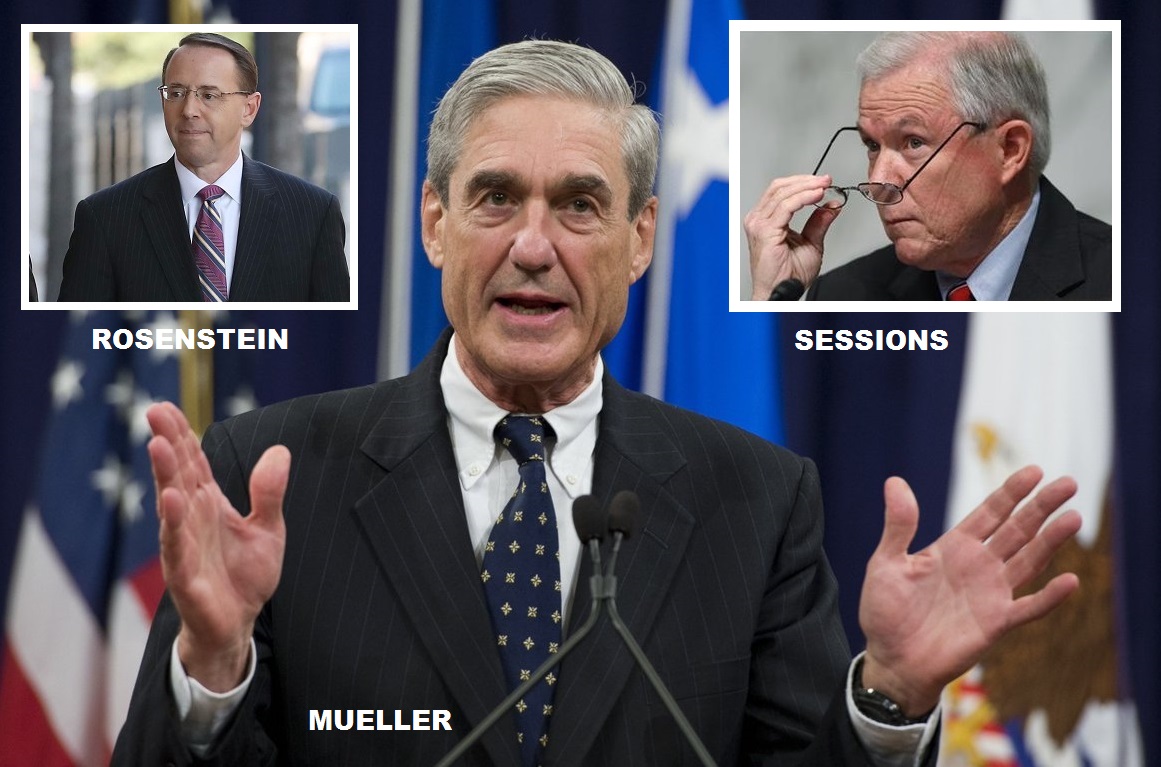
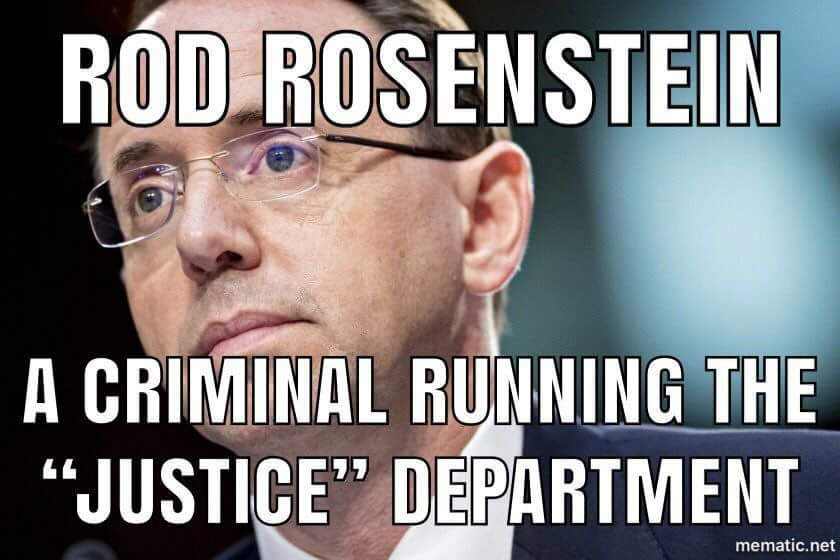
“To my knowledge he wasn’t working on the Russian matter,” Deputy Attorney General Rod Rosenstein testified on June 28.
Ohr was interviewed a dozen times by the FBI after the election about his interactions with Steele. Text messages and emails recently provided to Congress also show that Ohr and Steele were in contact throughout 2016 and 2017.
Who Did The SOB Work For? Obama Needs To Be In Prison With His Whole Administration.
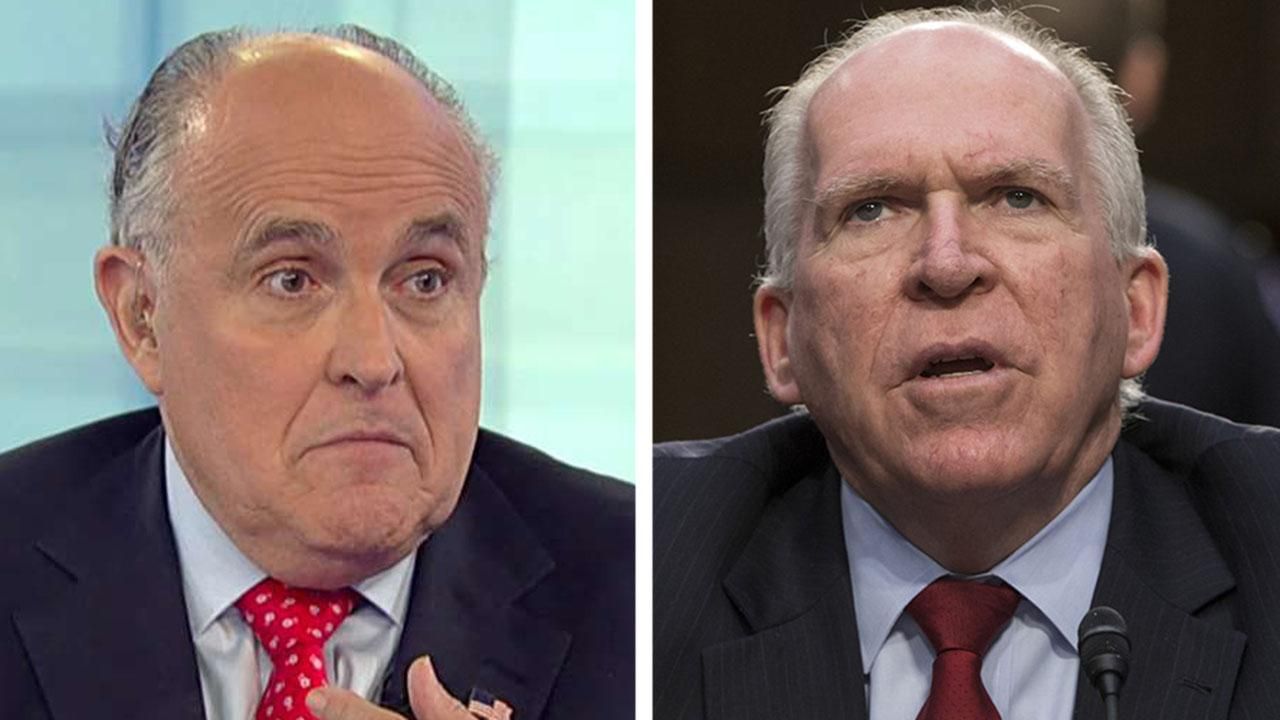
President Trump’s lawyer Rudy Giuliani announced on Monday evening that he believes former CIA Director John Brennan is the person responsible for the entire Mueller investigation. Giuliani made the claim during a segment of “Hannity” on Fox News.
“She got off because of that fixed investigation. A totally phony fixed investigation run by Peter Strzok who then turns around, the dossier is obtained on the day that they dropped the case against Trump — against Hillary. So that case gets dropped and they had to even up the score,” Giuliani stated.
“The reality is I’m going to tell you. We don’t have the time to go into it, we can do it later, I’m going to tell you who was the quarterback for all of this. It isn’t just Strzok. Strzok is a bit of a puppet. Then there’s Mueller, he’s a puppet. The people working for him, some of them are,” he continued.
Hannity cut of Giuliani saying, “I have a funny feeling you are about to drop a bomb on me.”
“Well the guy running it is [John] Brennan and he should be in front of a grand jury. Brennan took an affidavit – a dossier, unless he’s the biggest idiot intelligence agent that ever existed, although he never did much intelligence work, it’s false. You could look at it and laugh,” Giuliani stated.
This Country Is Falling Fast With The Corruption Going On And On And No One Gets Punished .
Who presides over the impeachment trial of a state Supreme Court justice if the entire state Supreme Court is being impeached?
It’s an absurd constitutional hypothetical West Virginians are left to grapple with, after the West Virginia House of Delegates Judiciary Committee drafted articles of impeachment against four justices on the state’s highest court.
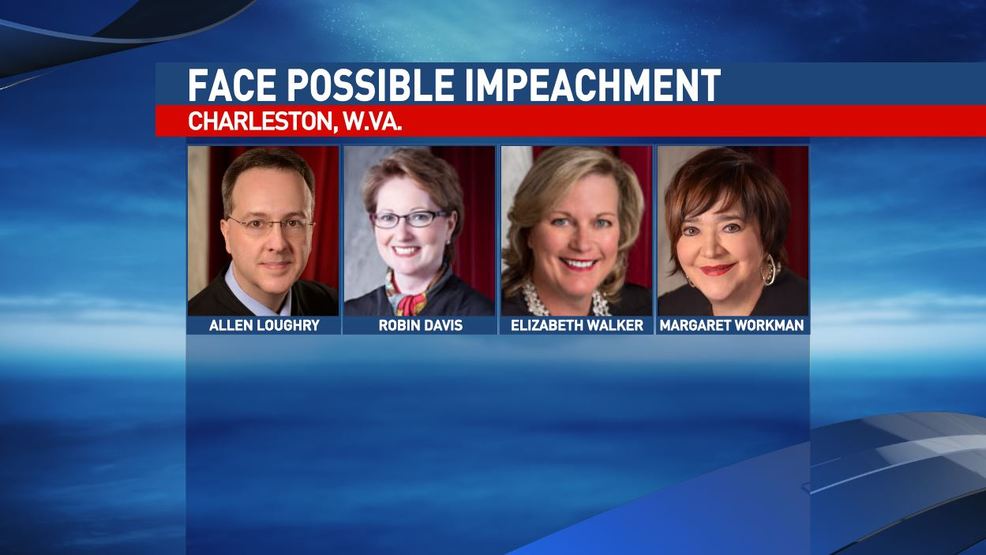
Five justices sit on the state Supreme Court in West Virginia. The state legislature has drafted articles of impeachment against Chief Justice Margaret Workman and Justices Robin Jean Davis, Beth Walker, and Allen Loughry. The court’s fifth justice, Menis Ketchum, retired in late July. Ketchum will plead guilty to two federal corruption charges on Aug. 29.
Loughry was placed on unpaid administrative leave in June after a state commission lodged a 32-count complaint against him, alleging pervasive violations of the state ethics code. He has since been indicted in federal court for fraud, witness tampering, and making false statements to investigators. (RELATED: First Justice Suspended From Scandal-Ridden State Supreme Court)
The remaining three justices — Workman, Davis, and Walker — face impeachment for wasting government resources and failing to effectively administer the state courts. All three spent large sums of taxpayer dollars on lavish improvements to their chambers in the state capital, which cumulatively totaled almost $750,000, and allegedly abused state travel resources. Workman and Davis also allegedly authorized compensation for other state judges in excess of the amounts allowed by West Virginia law.
“There appears to be, based on the evidence before us, an atmosphere that has engulfed the court of cavalier indifference to the expenditure of taxpayer funds, to the protection of taxpayer-paid assets, and an almost incomprehensible arrogance that for some reason they are not a coequal branch but a superior branch of government,” Delegate John Shott said during a judiciary committee hearing on Aug. 7.
West Virginia’s constitution provides that the chief justice shall preside over impeachment trials in the state Senate. As Chief Justice Workman herself, however, is subject to impeachment, she is ineligible to preside, as are the rest of her colleagues.
Workman appointed Cabell County Circuit Judge Paul Farrell to the high court on an interim basis late Friday. Farrell will serve in Loughry’s seat, pending the election of a successor in November. Farrell will also preside over impeachment proceedings in the legislature — though Walker disputes his power to do so.
In a short statement issued late Friday, Walker argued against Farrell’s installation as the presiding officer for impeachment.
“I believe it is improper to designate any justice as acting chief justice for impeachment proceedings in which I or my colleagues may have an interest and that have not yet commenced in the Senate,” she wrote.
Prior to this summer’s abrupt turn of events in West Virginia, Davis was cited in the press for possible ethics violations in unrelated matters. The Daily Caller News Foundation reported in March 2017 that a series of contributions made to her 2012 re-election campaign strongly resemble an illegal straw donation scheme, conducted at the behest of an attorney defending a $92 million civil judgment in the state Supreme Court. (RELATED: New Evidence Of Illegal Donations To West Virginia Judge Emerges)
That attorney, Michael Fuller of the McHugh Fuller Law Group, also purchased the Davis family private jet in December 2011.
Davis issued a ruling in 2014 preserving a large portion of Fuller’s $92 million award.
GOP Gov. Jim Justice will appoint new justices if any of the court’s current members are impeached.
http://dailycaller.com/2018/08/12/west-virginia-impeachment-supreme-court/
______________________________________________________________________________________
FIRST JUSTICE SUSPENDED FROM SCANDAL-RIDDEN STATE SUPREME COURT
West Virginia’s Judicial Investigation Commission cited state Supreme Court Justice Allen Loughry for 32 alleged violation of the state ethics code, prompting Loughry’s colleagues to suspend him from his official duties.
The embattled justice has been implicated in a range of alleged wrongdoing, including abuse of state resources, lying under oath, and hiding information from colleagues.
The complaint charges that Loughry “engaged in a pattern and practice of lying and using his public office for private gain.”
The details set forth allege Loughery lied pervasively about the procurement of new furnishings for his chambers, telling local news anchors, radio talk show hosts, newspaper editors, and members of the West Virginia state legislature that he was not involved in the lavish renovations of his office. Emails, eyewitness testimony, and other records show he was intimately involved in the selection of a $32,000 suede sectional, and a $7,500 wooden medallion with a county-by-county rendering of the state.
The total cost of the renovation ran over $350,000. (RELATED: New Evidence Of Illegal Campaign Donations To West Virginia Judge Emerges)
The complaint also identifies some 12 instances in which Loughery used state transportation for personal reasons, and notes the justice used state transportation some 148 times without logging his activity. He later attempted to exempt the justices from transportation disclosure requirements.
In April state auditors discovered Loughry removed a state-owned antique desk to his private residence. The so-called Cass Gilbert desk, named for an architect most famous for designing the U.S. Supreme Court building in Washington, D.C., in his possession is valued at almost $50,000.
The justice also concealed two federal subpoenas related to court business from the other four justices on the court. The subpoenas were issued in December 2017 and February 2018, when Loughry was serving as chief justice. He was removed as chief on a 4-1 vote when the other justices were made aware of the subpoenas on Feb. 16, 2018.
The complaint butresses its allegations with lengthy quotes from his book “Don’t Buy Another Vote, I Won’t Pay For A Landslide,” a meticulous history of political corruption in the state.
“Of all the criminal politicians in West Virginia, the group that shatters the confidence of the people the most is a corrupt judiciary,” he wrote.
_________________________________________________________________________________
NEW EVIDENCE OF ILLEGAL CAMPAIGN DONATIONS TO WEST VIRGINIA JUDGE EMERGES
New evidence has emerged suggesting a corporate entity funneled thousands of dollars to a West Virginia Supreme Court judge’s re-election campaign at the urging of an attorney who had a major case pending on the high court’s docket.
A source involved in a series of campaign contributions made to West Virginia Supreme Court Justice Robin Jean Davis told The Daily Caller News Foundation that they believed a corporate entity may have donated at least $6,000 to her 2012 re-election campaign in the names of various people connected to the company, as a personal favor for a friend of the firm’s president.
TheDCNF first reported on a series of suspicious campaign contributions made to the Davis re-election effort in August 2016.
Contribution records reviewed by TheDCNF show that six individuals from Plant City, Fla., contributed to Davis’s 2012 campaign. All six donations were made in the amount of $1,000, the maximum allowed by West Virginia law. Each donation was made on Jan. 12, 2012.
None of these individuals has an extensive history of political activism. It is unclear what connection, if any, the Plant City donors have to West Virginia judicial politics.
The only connection the donors have to each other is their relationship with Steve Edwards, president of a Plant City landscaping company called S&O Greenworks. Though no contributions were made in Edwards’ name, several came from individuals close to him and his company.
His wife, Jennifer Edwards, appears to have made two contributions to the Davis re-election effort. One contribution was made in her married name, and another was made in the name Jennifer Schlichenmayer, Edwards’s maiden name. Two other S&O Greenworks employees also made donations. Additional contributions came from two individuals who live on Steve Edwards’ street.
One of these individuals told TheDCNF that they did not make a donation to the Davis campaign, and that any donation made in their name was submitted without their knowledge or permission. The source asked for anonymity in order to speak candidly about the donations.
The individual claims that the first time they learned a donation to Davis was made in their name was in TheDCNF’s Aug. 4 report. The source said that they are not politically active and had never heard of Robin Jean Davis before reading TheDCNF’s report.
“No,” the source replied when asked if they donated to the Davis campaign. “I have never been into politics. I don’t know anyone like [Justice Davis.]”
The source said they believed the donation was made by Steve Edwards using S&O Greenworks funds at the behest of a Mississippi-based attorney named Michael Fuller. Edwards and Fuller have a longstanding personal relationship.
Fuller is a partner at the McHugh Fuller Law Group, and argued a major case before Justice Davis in 2014. The case concerned a $91.5 million judgement Fuller had secured for his client against a nursing home in a trial court in West Virginia.
Other lawyers at his firm, as well as their relatives, also made $1,000 donations to the Davis campaign on Jan. 12, 2012, the same day the Plant City contributions were made. During this same period, Fuller purchased a private jet from Davis, as TheDCNF documented in the Aug. 4 report.
Davis later wrote an opinion preserving much of a $91.5 million judgement Fuller secured in a trial court.
The source said Steve Edwards once informed them that he would use company funds to do a favor for Fuller, though they did not know what the funds were being used for.
“I have to cut a couple of checks out of our account for something that [Fuller’s] doing, but he’s going to reimburse us,” the source said, quoting Edwards. “I remember thinking ‘This guy’s a multi-millionaire, why does he need to borrow money from us?’”
The source added they believed the funds expended by S&O Greenworks at Fuller’s urging totaled approximately $10,000. They further claimed that other contributions emanating from S&O employees were likely made at Edwards’ orders or by Edwards himself.
The Campaign Legal Center’s Paul Ryan, an expert on campaign finance laws, previously told TheDCNF that the fact posture of this case suggests the existence of a straw donor racket. A straw donation occurs when individuals use another’s money to make political contributions in their own name or in the names of others. Straw donations are illegal.
Ryan did not pass a definitive judgement on the facts of this case, and emphasized he is not an expert on the campaign finance laws particular to West Virginia.
“$1,000 contributions are highly unusual from people of modest means in my experience,” he told TheDCNF. “Particularly when the contribution is going to someone in another state, when the contribution is coming from someone with no track record of involving themselves as political contributors, those are all red flags to me.”
“I wouldn’t refer to straw donors as a common practice,” he added. “It’s always unusual, it’s always a big deal, in my opinion, and I want to see strong enforcement to prevent use of straw donors.”
The source’s allegations concerning the use of S&O funds for political contributions also raises legal questions, as does Fuller’s alleged promise to reimburse the company for the expenditures.
Steve Edwards and Michael Fuller did not respond to TheDCNF’s inquiries about this story.
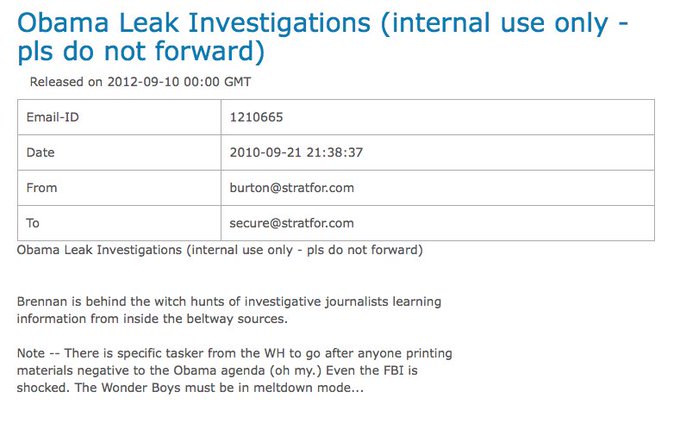
“Says a lot, DOESN’T IT?” Sharyl Attkisson shares leaked internal email that’s SO VERY damning for John Brennan
You know when an email says, ‘Internal use only, please do not forward,’ that what’s inside is going to be (good!) very damning for SOMEONE, somewhere. And in this case with the email leaked in Sharyl Attkisson’s tweet, that someone is John Brennan (with a dash of Obama).
Looking back, this leaked internal email from government intel firm says a lot, doesn’t it? pic.twitter.com/Q2MYNlJQRz
LeadingMarines@LeadingMarines
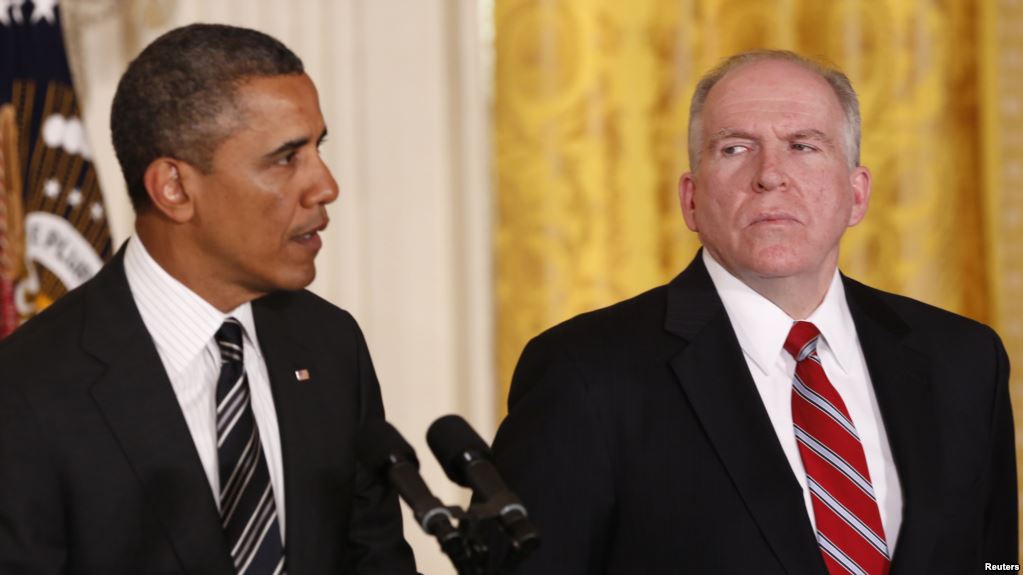
Watched you and it gave me chills. 7 combat tours and almost 100 yrs active duty defending the constitution in my family. NOT WHAT WE FOUGHT FOR. Old enough to remember Nixon and ashamed DEMS have politicised this. Not what the guy on right fought for!
This editor still doesn’t understand why people like Brennan don’t lose that clearance the moment they are no longer in the official position. It’s not like people who lose, quit, or switch jobs get to keep accessing their old jobs after they’re gone.
Revoke it. No brainer.
Sharyl Attkisson
✔@SharylAttkisson
·
Looking back, this leaked internal email from government intel firm says a lot, doesn’t it? pic.twitter.com/Q2MYNlJQRz
How did the candidate of hope and change turn into the president of secret kill lists, drone strikes hitting civilians, and immunity for torturers? The answer may lie in his relationship with the CIA director, a career bureaucrat turned quiet architect of a morally murky national security policy who isn’t going to let a little thing like getting caught spying on the Senate bring him down.
Shortly before 9 a.m. on March 11, 2014, Dianne Feinstein, the 80-year-old chair of the Senate Intelligence Committee, walked into the Senate chamber with a thick stack of papers and a glass of water. The Senate had just finished a rare all-night session a few minutes earlier, and only a handful of staffers were left in the room. Feinstein had given thousands of speeches over her career, but none quite like this.
“Let me say up front that I come to the Senate floor reluctantly,” she said, as she poked at the corners of her notes. The last two months had been an exhausting mix of meetings and legal wrangling, all in an attempt to avoid this exact moment. But none of it had worked. And now Feinstein was ready to go public and tell the country what she knew: The CIA had broken the law and violated the Constitution. It had spied on the Senate.
“This is a defining moment for the oversight of our intelligence community,” Feinstein said nearly 40 minutes later, as she drew to a close. This will show whether the Senate “can be effective in monitoring and investigating our nation’s intelligence activities, or whether our work can be thwarted by those we oversee.”
Two hours later and a few miles away at a Council on Foreign Relations event near downtown Washington, the CIA responded. “As far as the allegations of, you know, CIA hacking into Senate computers,” CIA Director John Brennan told Andrea Mitchell of NBC News, shaking his head and rolling his eyes to demonstrate the ridiculousness of the charges, “nothing could be further from the truth. I mean, we wouldn’t do that.”
Brennan was 58, but that morning he looked much older. He’d hobbled into the room on a cane following yet another hip fracture, and after some brief remarks he eased himself into a chair with obvious discomfort. Two years earlier in a commencement address at Fordham University, his alma mater, Brennan had rattled off a litany of injuries and ailments: In addition to his hip problems, he’d also had major knee, back, and shoulder surgeries as well as “a bout of cancer.” Years of desk work had resulted in extra weight and the sort of bureaucrat’s body that caused his suits to slope down and out toward his belt. “I referred the matter myself to the CIA inspector general to make sure that he was able to look honestly and objectively at what the CIA did there,” Brennan said. “And, you know, when the facts come out on this, I think a lot of people who are claiming that there has been this tremendous sort of spying and monitoring and hacking will be proved wrong.”
Mitchell, who had already asked him two questions about the allegations, pressed again. “If it is proved that the CIA did do this, would you feel that you had to step down?”
Brennan chuckled and stuttered as he tried to form an answer. Two weeks earlier, he had told a dinner at the University of Oklahoma that “intelligence work had gotten in my blood.” The CIA wasn’t just what he did; it was his “identity.” He had worked too hard to become director to give up without a fight. “If I did something wrong,” Brennan eventually told Mitchell, “I will go to the president, and I will explain to him exactly what I did, and what the findings were. And he is the one who can ask me to stay or to go.”
But Obama was never going to ask for his resignation. Not then, and not months later when the CIA inspector general’s report came back, showing that the agency had done what Feinstein claimed. Brennan was Obama’s man. His conscience on national security, and the CIA director he’d wanted from the very beginning. Not even a chorus of pleas from Democratic senators, members of Obama’s own party, made any difference. John Brennan would stay, the untouchable head of America’s most powerful intelligence agency.
Brennan has been many things: a CIA official, a CEO, and even, briefly, a television pundit. He was a top official at the CIA during the torture years of the Bush administration, and the architect of Obama’s shadowy, controversial drone program. But for all that, he remains largely unknown, the gray heart of United States national security policy. Of the dozens of former and current government officials I reached out to, men and women from both the Bush and the Obama administrations, few seemed to have a handle on him. Some saw him as strong and principled, a warrior-priest who could do no wrong. Others saw him as a yes-man who sucked up to power and got lucky.
Several former colleagues, particularly in the CIA, refused to talk about him. He is vindictive, one explained through an intermediary: “He’ll come after me.” Another initially agreed to chat and then emailed me back a few days later, writing, “Unfortunately, I learned today that, because of my active security clearances and continuing work with the intelligence community, it would be best for me to decline your offer of an interview.”
Brennan himself was of little help. Through a spokesperson, he declined multiple interview requests over a series of months. Two years earlier, I’d argued that he was the wrong man for the CIA based on his counterterrorism approach in Yemen. But now I wanted to get a fuller sense of him, both as a person and as a director, and look at his entire career rather than just a single country. Brennan wasn’t interested. Even relatives were off-limits. At one point I sent his older sister a three-line email, explaining who I was and asking if she “might have some time to answer some questions about him and what he was like as a kid.” She never wrote back. But the next day I received an email from the CIA’s head of public affairs warning me against “harassing the director’s family.”
And yet in almost every public speech he’s given over the past 10 years, Brennan opens with a smattering of personal anecdotes, little crumbs of biographical detail that, along with everything else, form an almost kaleidoscopic portrait of the man and the country he serves. It all depends on the angle, the subtle shift in emphasis that changes everything: inside government or outside, friend or foe, enhanced interrogation techniques or torture, signature strikes or crowd killing, patriot or criminal.
This is Brennan’s story, his life and his career. But it’s also ours. The excesses and mistakes of more than a decade of war, what we tolerate and what we don’t. What we’re willing to forgive and what we won’t. Politicians who don’t deliver on their promises, and well-intentioned individuals who bring about great harm. It’s about the man he is, and the country we’ve become. The institutionalization of a post-9/11 national security state, and the unending compromises of a country always at war.
The origin story Brennan prefers, the one he tells reporters, goes something like this: One day in the spring of 1977, during his senior year at Fordham, he was riding the bus to class when he came across a CIA recruitment ad in the New York Times. Brennan was intrigued. He liked history and he liked to travel. Back from a year abroad in Cairo, Brennan had already applied to graduate school, but even he seemed to know he wasn’t cut out for academia. “He never struck me as someone who would go on and get a Ph.D.,” John Entelis, one of his professors, told me last fall. “He just didn’t fit the mold.”
On a campus filled with what another of his former teachers described as “well-groomed hippies,” Brennan fit right in with long hair and an earring. He blended in within the classroom as well, rarely raising his hand or trying to make a point. To his professors, Brennan still carried himself like the jock he had been in high school, like someone who hung out near the back of the room and didn’t appear comfortable speaking in public. “He wasn’t intellectually aggressive,” Entelis said.
But that year in Egypt had given him a case of what Brennan would later call “wanderlust.” And that is why in the spring of his senior year, weeks away from graduating, he was so intrigued by the ad. Even his birthday, Brennan often explains in interviews, seemed to fit. Nathan Hale, often considered America’s first spy, was hanged on Sept. 22, the same date Brennan was born.
Hale was 21 the day the British executed him in what is now upper Manhattan, less than eight miles from Fordham’s campus. Brennan was the same age that spring. Completing the circle was the fact that Hale was born in 1755, Brennan in 1955. For an undergraduate with a romantic sense of history, the parallels must have been powerful. In many ways, this appears to be how Brennan views himself: Hale’s successor and heir — patriotic, idealistic, and willing to do whatever it takes to serve his country.
Three years after that day on the bus, following a graduate degree in government from the University of Texas and wedding the woman he took to his college graduation, Brennan walked into the CIA’s headquarters in Langley, Virginia, as a career trainee making just over $17,000 a year (a “GS-9” on the government’s “general schedule” pay scale). Two of the CIA’s four directorates, the Directorate of Intelligence and what was then called the Directorate of Operations, got most of the attention. These were, respectively, the analysts who stayed home and the case officers who worked abroad, or in rough agency slang: the nerds and the jocks. Brennan had little doubt. He was a jock.
That lasted around a year. In 1981, Brennan switched to the intelligence side. Of the people who eventually agreed to speak with me, several had theories for the move. Like their views of Brennan himself, some were dark and others more innocuous. But none of them knew for certain. Brennan didn’t talk about it and they didn’t ask. “It was unusual,” one of them told me. “But not unprecedented.” The recruit who had once dreamed of operating abroad was now a deskbound analyst, a nerd.
The CIA did, however, send him to Saudi Arabia for a couple of years as part of a joint program with the State Department. But that wasn’t quite the same. Instead of a covert program with the CIA using the State Department as cover, this was an open one: CIA analysts working as foreign service officers. The State Department, which never had enough people to go around, got a free body, and the CIA got some time abroad for its analysts, who often spent most of their careers in Langley.
None of this, however, stopped Brennan from later suggesting to co-workers that this had been a full-fledged agency position. It was one of those habits powerful men often acquire, revising and editing their stories as they go, shaping everything to fit their audience of the moment. Bosses who had never championed Brennan in life were transformed into mentors in death, and small exchanges took on the flavor of intimate conversations. People who didn’t know Arabic were convinced he spoke the language fluently; Republicans he worked with thought he was one of them, while Democrats left the conversation thinking he was theirs.
By the time Brennan got back to Langley in 1984, the agency was undergoing a culture change. “Loyalty to individuals assumed a much greater role,” wrote former CIA analyst John A. Gentry in a biting critique published years later (and removed from the internet soon after Gentry declined an interview for this story). “Those who adapted to the new rules,” Gentry continued, “experienced often meteoric rises.” Brennan adjusted quickly, finding mentors and winning promotions.
“To get ahead in the Directorate of Intelligence you had to do three things,” Judith Yaphe, who worked in the same office as Brennan, told me. “You had to write well, brief well, and get along with others well. And John knew how to do all three.” Other co-workers noticed a similar set of skills. “John’s got a very good political sense of what people want,” said one former CIA official who worked with Brennan and requested anonymity to talk about a former colleague. “John is very good at managing up.”
For the next few years, Brennan did exactly that, as he worked his way up the agency ranks. The older men who ran the division liked him. Brennan seemed to remind them of a younger version of themselves, and they rewarded him for it with promotions and plum assignments. They saw him as a “rising star, an up-and-comer,” the former CIA official said.
Brennan came into the agency in 1980 as a Middle East specialist in what would turn out to be the final decade of the Cold War, the CIA’s main focus since its founding. Once inside, Brennan started spending time on counterterrorism, a new subfield that few really understood. The CIA established its first counterterrorism center in 1986. Within four years, Brennan was running terrorism analysis for the center. A decade later, the Middle East and counterterrorism, Brennan’s two specialties, would be at the center of a revamped CIA. And, in time, so would he.
To get there, Brennan needed the help of two men: George Tenet and Barack Obama. He met Tenet in the mid-1990s when they were both at the White House, Tenet as a member of the National Security Council and Brennan as the CIA’s daily briefer to the president. Two decades later, just after the 2008 presidential elections, he met Obama for the first time.
Both times the meetings came at just the right moment: before Tenet moved to the CIA and before Obama went to the White House. Each was looking for a guide, someone they could trust. And Brennan made sure he was exactly what they needed: a perfect deputy, loyal and devoted. “John knew how to show his superiors ‘I pledge allegiance to you,’” one former co-worker told me.
In 1995, when Tenet left for Langley as the CIA’s deputy director, he took Brennan with him as his executive assistant. The two went well together, patron and guide. Tenet gravitated toward the big issues as he learned how to navigate the CIA’s hallowed seventh floor — where the CIA’s top officials have their offices — while Brennan handled the details and protected his boss. “John was George’s alter ego,” said John Rizzo, a longtime lawyer at the CIA and author of the memoir Company Man, who worked extensively with both men. “He was Tenet’s eyes and ears to the rest of the agency.” Other former senior CIA officials were more blunt: “Brennan is a creature of George,” one of them said. (Through a spokesperson, Tenet declined a request for an interview.)
Later, during a stint as Tenet’s chief of staff, Brennan became notorious for asking, “How will this affect George?” according to an article in the Los Angeles Times. The closer the two became, the more Brennan seemed to conflate Tenet with the agency he ran. Loyalty to one meant loyalty to the other. Tenet was the CIA, and it was Brennan’s job to protect him. “Brennan is a very good staff officer,” the same former senior CIA official explained to me. “He’s detailed, and incredibly hardworking. His whole life was serving the principal.”
Brennan followed Tenet up the agency ladder, rising alongside his patron. Tenet would eventually make director and, just before that in 1996, Brennan asked for a promotion of his own. Sixteen years after he’d started at the CIA, Brennan still wanted to be a spy. That’s what had attracted him all those years ago on the bus to Fordham, and that’s what he wanted now. In 1996, Tenet gave Brennan his wish, and made him chief of station in Saudi Arabia. Much like Brennan’s initial move from operations to intelligence, putting a career analyst in charge of a station was unusual although not unprecedented.
But there was a bigger problem. On the government pay scale, Brennan was a GS-15, making somewhere between $70,000 and $90,000 per year. CIA station chiefs are members of a separate pay scale, called the Senior Executive Service, and at the time they were making more than $123,000 per year. Brennan didn’t need just one promotion; he needed three. And that was unprecedented. “I’d never heard of anything like it,” one former senior CIA official told me. Tenet was playing favorites.
On June 25, 1996, shortly before Brennan arrived in the kingdom, a truck bomb struck the Khobar Towers, killing 19 American servicemembers in one of the deadliest terrorist attacks against the U.S. at the time. A few weeks later, Osama bin Laden faxed out a fatwa, declaring war on the United States. Few had heard of bin Laden at the time, and almost no one paid attention to his statement. According to multiple intelligence officials who requested anonymity to talk about classified operations, Brennan’s tenure in Saudi Arabia — like much of the CIA at the time — was marked by caution and convention. He walked a careful line with the Saudis, not wanting to push them too hard.
In early 1998, while in Saudi Arabia, Brennan helped convince Tenet to pull the plug on an agency operation to capture bin Laden. Brennan favored a Saudi effort, which was still in the works, to convince the Taliban to expel the al-Qaeda leader from Afghanistan. But the Saudi talks with the Taliban eventually broke down. The CIA never got another opportunity to capture bin Laden. Years later, Brennan defended his actions, telling a congressional committee, “I didn’t think that it was a worthwhile operation and it didn’t have a chance of success.” Besides, he added, “I was not in the chain of command at the time.”
When Brennan did finally get his chance to take part in an actual operation, al-Qaeda wasn’t even the target. The CIA had put together a disruption campaign aimed at Iranian intelligence, and, according to Tenet’s memoir as well as a U.S. official working in Saudi Arabia at the time, Brennan was supposed to approach one of their agents on the streets of Riyadh and ask if he wanted to work for the U.S. The CIA shadowed the agent for weeks, tracking him back and forth to work and planning the confrontation. But the closer the operation got, the more worried Brennan became. According to the same U.S. official, Brennan asked an FBI agent to borrow a bulletproof vest. “John,” the FBI agent said, “he’s not going to shoot you; he’s going to laugh at you.” Brennan blanched, but insisted.
On the big day, Brennan approached the Iranian’s car and said, “Hello, I’m from the U.S. Embassy, and I’ve got something to tell you.” The agent jumped out of his car, said something about Iran being a peace-loving country, and then sped off.
“That’s not how you recruit an agent,” Lindsay Moran, a former case officer in the Directorate of Operations, told me. “Historically, a number of bad things have happened when an analyst has been put in charge of a station.”
At Brennan’s going-away party in 1999, Ambassador Wyche Fowler Jr., a white-haired political appointee and former senator from Georgia, who stood on tradition and spoke in a nasally Southern drawl, gave a glowing retrospective of Brennan’s three years in the kingdom. Sitting at tables in the ambassador’s massive dining room, the men who worked with Brennan on a daily basis tried to square what they were hearing with their own experience. “It was like he walked on water,” a U.S. official who attended the event later told me. “It sounded like John was a god.”
Toward the end of his remarks, Fowler’s voice started to crack and his hand moved toward his eyes as if he might cry. “It was so over-the-top,” the former U.S. official told me. “We were almost embarrassed for him.” Another agent whispered: “Is he drunk?” But that’s how it was between Brennan and his supervisors. He knew how to manage up.
This Child Molester Looking SOB Should Be Investigated For Obstruction.
Reps. Mark Meadows (R-NC), Jim Jordan (R-OH), and other House Republicans introduced articles of impeachment against Deputy Attorney General Rod Rosenstein on Wednesday.
Meadows and Jordan argued that the Department of Justice (DOJ) had problematic decision-making during the 2016 presidential campaign and failed to comply with House oversight requests. The House conservatives also chastised the DOJ and Rosenstein for withholding “embarrassing documents,” knowingly hiding information from Congress, abusing the Foreign Intelligence Surveillance Act (FISA) process, and “failure to comply with Congressional subpoenas.”
The Constitution empowers the House to impeach any officer of the executive or judicial branches. However, that only occurs in rare instances. The House only requires a simple majority of of the legislative chamber, or roughly 218 votes, to impeach a member of the executive or judicial branch. If the House were to impeach Rosenstein, then the Senate will require a two-thirds majority to remove him from office.
Jordan said in a statement on Wednesday, “The DOJ is keeping information from Congress. Enough is enough. It’s time to hold Mr. Rosenstein accountable for blocking Congress’s constitutional oversight role.”
House Freedom Caucus Chairman Mark Meadows said:
With Attorney General Sessions’ recusal, Rod Rosenstein has been in charge of the Department of Justice as the agency has made every effort to obstruct legitimate attempts of Congressional oversight. The stonewalling over this last year has been just as bad or worse than under the Obama administration. Multiple times we’ve caught DOJ officials hiding information from Congress, withholding relevant documents, or even outright ignoring Congressional subpoenas—and now we have evidence that Mr. Rosenstein signed off on a document using unverified political opposition research as a cornerstone of a FISA application to spy on an American citizen working for the Trump campaign. This level of conduct, paired with the failure to even feign an interest in transparency, is reprehensible. And whether you’re a Republican or a Democrat, this kind of obstruction is wrong—period.
For 9 months we’ve warned them consequences were coming, and for 9 months we’ve heard the same excuses backed up by the same unacceptable conduct. Time is up and the consequences are here. It’s time to find a new Deputy Attorney General who is serious about accountability and transparency.
Rep. Andy Biggs (R-AZ) said:
Congress gave Mr. Rosenstein plenty of time to comply with our requests. We have been reasonable and up front with him. Unfortunately, at almost every opportunity, Mr. Rosenstein has resisted and defied Congress’s constitutional oversight. His time to obstruct our investigations has expired. Mr. Rosenstein’s Department is subject to constitutional checks and balances. I call on my colleagues to assert our constitutional responsibility and approve these articles of impeachment.
So far, the articles of impeachment have 11 cosponsors.
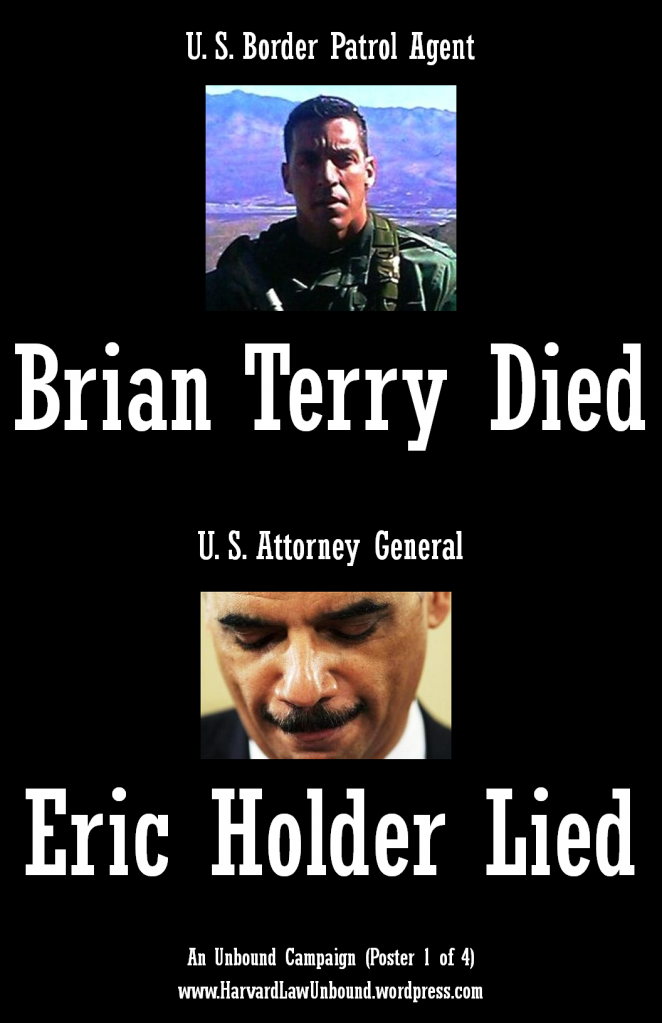
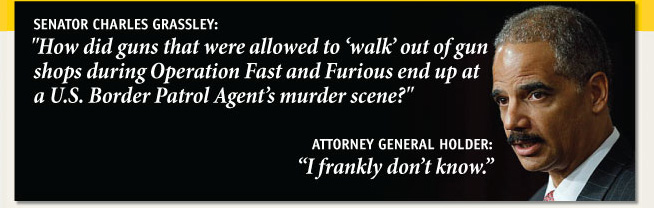
Mr. “Fast and Furious” should be put in a Mexican prison for allowing guns to be received by the Drug Cartels.
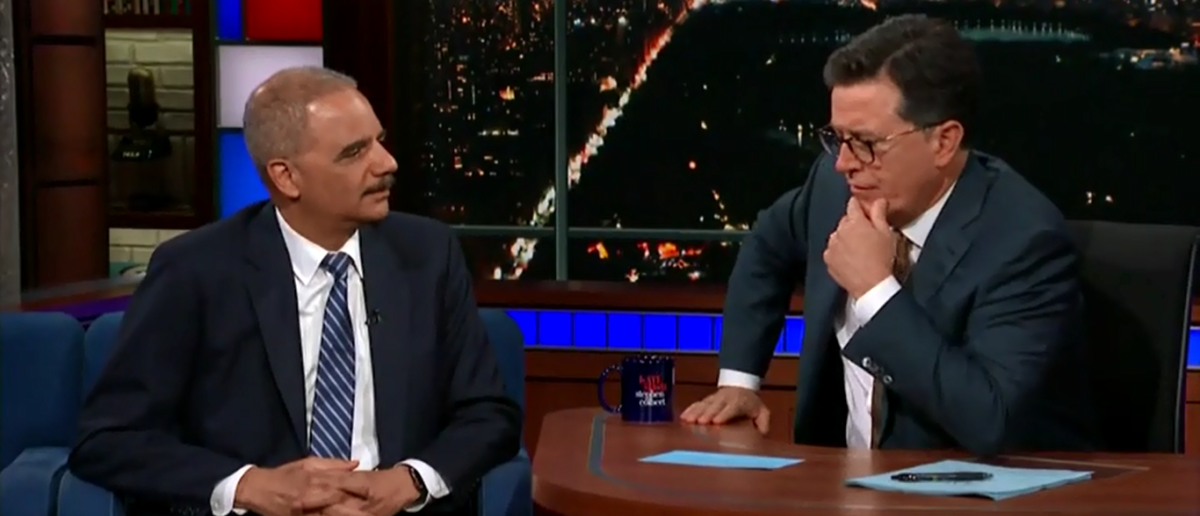
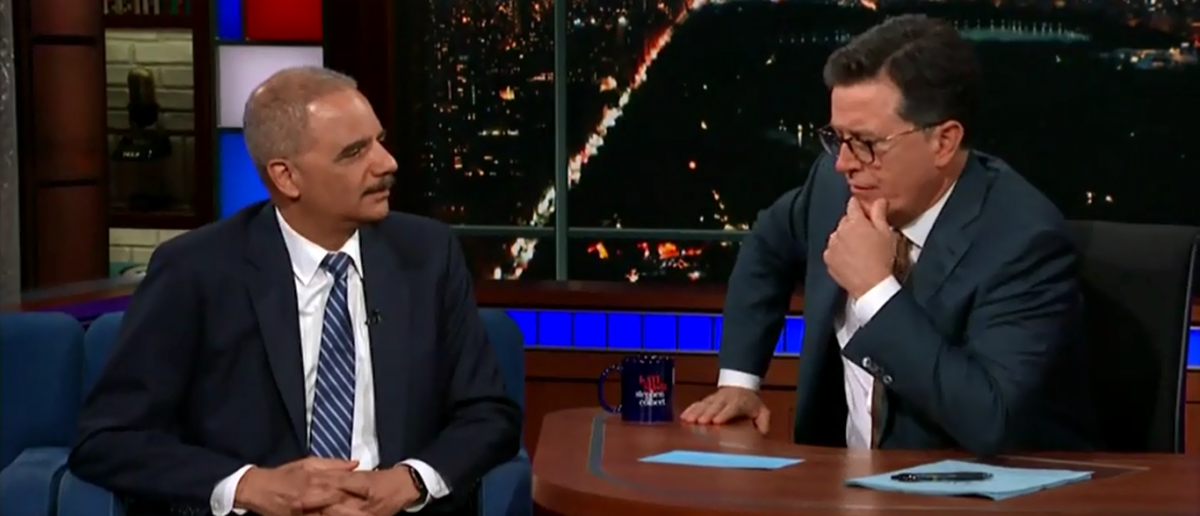
Former Obama administration Attorney General Eric Holder defended the use of Foreign Intelligence Surveillance Act (FISA) warrants to spy on the Trump campaign Monday, during an interview with comedian Stephen Colbert.
“No idea. I signed a lot,” Holder said on “The Late Show.” “A lot, a lot, a lot. That’s more than a little.”
Holder also said he’s glanced at the FISA warrant regarding former Trump adviser Carter Page, but has not read it in full.
How Can Anyone Believe What Eric Holder Says?
“I’ve looked at it. I’ve not read it fully, no,” he replied. Holder said President Donald Trump should not feel exonerated by the release of the FISA warrant and slammed California GOP Rep. Devin Nunes for his work on bringing the information to light.
“I’m serious, if you look at it, it goes totally contrary to that which he says it’s going to contain. Devin Nunes is proven to be totally wrong,” Holder said. “It is really one of these questions of ‘who are you going to believe, me or your lying eyes?’ You just look at it and you can see that it is — as I said, paints just a totally different picture than what the House Republicans and this president has said.”
Holder claimed the warrant wasn’t strictly based on the Steele dossier, but a litany of facts and evidence he failed to mention during the interview.
“There are these things called facts, and then there’s this other stuff,” Holder concluded. “They still exist. The sun’s the center of the solar system, that’s still true. There are certain facts. And if you look at this FISA warrant, you will see that it is not simply based, as they’ve been trying to say — it’s all based on the Steele dossier. It is clear that it is not.”