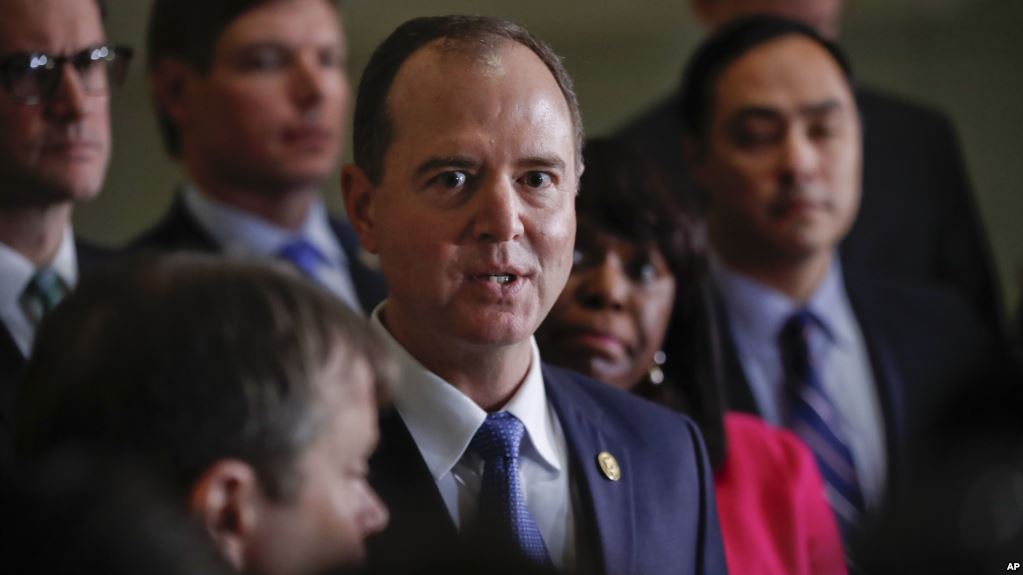
Lawyer Adam Waldman said during an appearance before the Senate Select Committee on Intelligence on Nov. 3 that he relayed information about possible links between billionaire activist George Soros and Fusion GPS.
Waldman said he received the information in a March 16.
Waldman said Daniel J. Jones asserted he was working with Fusion GPS and that the research firm was being funded by a “group of Silicon Valley billionaires and George Soros.”
An American lawyer who served as a back channel between dossier author Christopher Steele and Democratic Sen. Mark Warner is opening up about explosive testimony he gave to a Senate committee late last year.
Adam Waldman said that during an appearance before the Senate Select Committee on Intelligence (SSCI) on Nov. 3, he relayed information about possible links between billionaire activist George Soros and Fusion GPS, the opposition research firm that commissioned the dossier.
Waldman said he received the information in a March 16 meeting he had with Daniel J. Jones, a consultant and former staffer to California Sen. Dianne Feinstein.
Waldman told The Daily Caller News Foundation that Jones asserted that he was working with Fusion GPS and that the research firm was being funded by a “group of Silicon Valley billionaires and George Soros.” Jones also described Fusion as a “shadow media organization helping the government.”
“He was there as Fusion GPS. He brought up Fusion GPS,” Waldman told TheDCNF of his interaction with Jones.
“It was very, very clear.”
Waldman, 49, also said that Jones mentioned Glenn Simpson, one of Fusion’s co-founders and Steele’s main partner on the dossier project.
Waldman’s testimony about the meeting was first revealed in a Daily Caller op-ed published last week by Oleg Deripaska, a Russian billionaire who is a client of Waldman’s.
In the op-ed, Deripaska, a former business partner of former Trump campaign chairman Paul Manafort’s, largely criticized the so-called “Deep State,” which he alleges has pushed a false narrative about the Russia investigation. But the piece also broke news about his lawyer’s Senate testimony and the claims about Fusion GPS and Soros funding.
Jones, Fusion GPS, and a representative for Soros did not return repeated requests for comment. A spokesperson for the Senate panel declined to discuss Waldman’s testimony.
Reached by phone, Fusion GPS attorney Josh Levy declined to comment on Waldman’s testimony about Jones and Soros connections to the firm, saying “I’m not commenting for your story.”
Waldman’s link to key players in the Russia investigation is one of the more intriguing wrinkles in the dossier saga. On one side is Oleg Deripaska, an oligarch with close ties to Vladimir Putin. On the other are Steele, Jones and Warner, all of who are involved in one way or another in investigating the Kremlin’s meddling in the 2016
election.
How the two sides found a common link in Waldman remains a mystery, one that lawyer said he is presently unable to discuss in full.
Waldman, who runs Endeavor Law Firm and also represents actor Johnny Depp, entered the national spotlight last month after text messages that he exchanged last year with Warner were leaked to Fox News. The messages, which Waldman provided to SSCI in September, showed that he negotiated with Warner on behalf of the London-based Steele to set up an interview with the committee.
Warner sought the meeting in his capacity as the top Democrat on Senate Intel.
Steele, as is now widely known, was hired by Fusion GPS in June 2016 to investigate Donald Trump’s ties to Russia. The Clinton campaign and Democratic National Committee paid Fusion for the project.
Waldman’s texts to Warner mention Steele, Deripaska, and Jones, who was an SSCI staffer for Feinstein when she chaired the panel.
Encrypted text messages provided to SSCI and obtained by TheDCNF corroborate some of Waldman’s claims, particularly regarding his meeting with Jones and a suggestion from him that he helped with anti-Trump news stories.
A March 15 message shows Jones contacted Waldman and introduced himself as being with an upstart non-profit group called the Democracy Integrity Project.
Signal messages from Daniel Jones to Adam Waldman
“Dan Jones here from the Democracy Integrity Project. Chris wanted us to connect,” reads the intro message, referring to Steele and to a newly formed non-profit group of which little is known.
Corporate registration documents show that a group by that name was formed in Washington, D.C. on Jan. 31, 2017, several weeks before Jones’ outreach to Waldman and several weeks after BuzzFeed News published the dossier.
Waldman’s contact with Warner began in February 2017 and initially centered on Deripaska and Wikileaks founder Julian Assange. Waldman suggested in his initial texts that he was in communication with Assange, who is living under asylum in the Ecuadorian embassy in London.
The lawyer first mentioned Steele to Warner on March 17, a day after he met with Jones, who now runs a consulting firm called the Penn Quarter Group.
“Chris Steele asked me to call you,” Waldman wrote to Warner.
The text messages show that Warner, a Democrat, sought to meet with Steele separately from other members of the Senate committee. But Waldman said that Steele first wanted a letter signed by Warner and North Carolina Sen. Richard Burr, the Republican chairman of the committee, formally seeking an interview with Steele.
Warner rebuffed the idea and pressed for a private meeting with Steele, going as far as offering to travel to England.
“We want to do this right private in London don’t want to send letter yet cuz if we can’t get agreement wud rather not have paper trail,” Warner wrote on March 30.
Waldman’s texts to Warner also refer to Jones.
“[Steele] said he will also speak w Dan Jones whom he says is talking to you,” Waldman wrote in an April 25 message. “I encouraged him to engage with you for the sake of the truth and of vindication of the dossier,” the text continued.
Later that day, he wrote that “[Steele] said Dan Jones is coming to see you.”
“I suggest you explain to Dan why a call is the necessary first step rather than a letter from your perspective.”
Waldman had only a few text exchanges with Jones, but the messages provide some insight into Jones’ investigative work on Trump.
“Our team helped with this,” Jones wrote in a March 17 message that included a link to a Reuters article about Russian nationals’ investments in Trump-owned buildings. The article focuses heavily on Russians’ investments in Trump real estate properties in Sunny Isles Beach, Fla.
Jones did not describe who was included on his team, but Glenn Simpson, the Fusion GPS co-founder, testified to two congressional committees last year that his firm conducted research into Trump’s real estate deals in Sunny Isles Beach.
“I spoke w Warner and he did mention you as discussed. He obliquely brought your org up so it was natural,” Waldman wrote on March 19.
Waldman and Warner’s leaked texts show that the two called each other multiple times around that date.
The two sets of text messages, and Waldman’s testimony, raises numerous questions about the dossier.
It remains unclear why Jones reached out to Waldman. Jones and Waldman’s relationships to Steele are also a mystery. Waldman declined to comment on that particular matter, and a request for comment from Steele’s lawyers in London was forwarded to a legal adviser who said they could not speak to the media on Steele’s behalf.
Little else is known about Jones’ work with Fusion GPS or on the dossier. The only reporting on those connections comes from The Federalist which recently reported that Jones was working with Fusion as part of a post-election effort to validate the dossier.
Republican lawmakers remain puzzled by the Warner-Waldman and the possible links between Deripaska and Steele.
Republican Iowa Sen. Chuck Grassley, the chairman of the Senate Judiciary Committee, recently sent letters to Waldman and Deripaska’s London-based attorney, Paul Hauser, inquiring whether they or Deripaska have ever hired Steele or his private intelligence firm, Orbis Business Intelligence.
Grassley also sent letters in January to members of the Clinton campaign and DNC asking about any communications with more than 20 individuals, including Fusion GPS employees, Waldman and Jones.
Grassley appears interested in exploring what implications any links between Steele and Deripaska would have for the dossier, which BuzzFeed News published on Jan. 10, 2017. Waldman denies one lead that lawmakers appear to be chasing: that Deripaska was a source for the dossier.
Waldman has represented Deripaska since 2009, largely on visa issues. The oligarch has fought the State Department over its decision in 2006 to revoke his visa after the agency became concerned about the industrialist’s alleged ties to Russian organized crime.
The aluminum magnate pays Waldman $40,000 a month for the work, according to documents filed by under the Foreign Agents Registration Act.
Deripaska has also worked in the past with Paul Manafort, the former Trump campaign chairman who was recently indicted by Special Counsel Robert Mueller on money laundering and bank fraud charges.
While Manafort was on the campaign, he and Deripaska were in a dispute over a failed business venture involving cable TV stations in Ukraine. Deripaska accused the Republican consultant of squandering $19 million from the deal.
“If he needs private briefings we can accommodate,” Manafort wrote to an associate on July 7, 2016, while he was still with the Trump campaign.
And just before joining the campaign in April 2016, Manafort sent a cryptic message to his associate: “How do we use to get whole?”
The emails have fueled speculation that Manafort sought to use his position on the campaign to help settle his debts to Deripaska.
The FBI will not expedite the release of documents about secret meetings between Comey and Obama
Comey held a secret Oval Office meeting with Obama on Jan. 5, 2017
TheDCNF requested records of all meetings between the two
The FBI states it will not expedite the release of documents about secret meetings between FBI Director James Comey and former President Barack Obama, according to a letter the bureau sent to The Daily Caller News Foundation.
Such information is not “a matter of widespread and exceptional media interest in which there exists possible questions about the government’s integrity which affects public confidence,” David Hardy, the section chief for the bureau’s Record/Information Dissemination Section, told TheDCNF in a Feb. 26 letter.
TheDCNF, under the Freedom of Information Act (FOIA), requested records of all meetings between Comey and Obama and sought an “expedited process” as provided under the act when issues are of great interest to the media and the records address issues pertaining to government integrity. TheDCNF FOIA request was filed Feb. 16, 2018.
The issue prompting the FOIA request was the disclosure Comey held a secret Oval Office meeting with Obama on Jan. 5, 2017. Comey never divulged the meeting to Congress.
Susan Rice, Obama’s national security adviser, former deputy Attorney General Sally Yates, and former Vice President Joe Biden also attended the meeting.
The National Archives revealed the existence of the meeting and released a declassified version of an email Rice sent to the Senate Committee on the Judiciary. Rice wrote an email to herself about the secret Jan. 5 meeting with Comey on Inauguration Day Jan. 20, 2017, as President Donald Trump was being sworn into office. The email suggested Comey may have misled Congress and was attempting to cover up the extent of his relationship with Obama.
Christopher Bedford, TheDCNF’s editor-in-chief, called the FBI denial “shameful.”
“The FBI just told us that Director James Comey potentially lying to Congress should not be of interest to us, that it doesn’t speak to their ‘integrity,’ and that it shouldn’t impact America’s ‘confidence’ in them,” Bedford said. “They said this with a straight face. We disagree, we think the American people disagree, and we think it’s absolutely shameful.”
Republican Sens. Chuck Grassley, chairman of the Senate Judiciary Committee and subcommittee chairman, and Lindsey Graham released the Rice email after they received it from the National Archives.
“President Obama had a brief follow-on conversation with FBI Director Comey and Deputy Attorney General Sally Yates in the Oval Office,” Rice stated in the email on Jan. 5.
The President urged Comey to proceed “by the book” on the Russian investigation, according to Rice.
Grassley of Iowa and Graham of South Carolina wrote to Rice in a Feb. 8 letter saying the email seemed “odd” to them.
“It strikes us as odd that, among your activities in the final moments on the final day of the Obama administration, you would feel the need to send yourself such an unusual email purporting to document a conversation involving President Obama,” the two wrote.
“Despite your claim that President Obama repeatedly told Mr. Comey to proceed ‘by the book,’ substantial questions have arisen about whether officials at the FBI, as well as at the Justice Department and the State Department, actually did proceed ‘by the book,’” the two senators continued.
Comey claimed in June 8, 2017, testimony before the Senate Select Committee on Intelligence he had only two face-to-face meetings with the president in which they were alone.
“I spoke alone with President Obama twice in person (and never on the phone) – once in 2015 to discuss law enforcement policy issues and a second time, briefly, for him to say goodbye in late 2016,” Comey’s opening statement read.
The qualifier that he had meetings with Obama “alone” permitted the former director to suggest he only met with the former president on two occasions.
TheDCNF filed its FOIA request before the bureau “seeking records that identify and describe all meetings between former FBI Director James Comey and President Barack Obama. This records request is for all meetings with President Obama alone or with meetings with the President in the company of other administration officials.”
TheDCNF requested records to include all Comey “logs, director appointment schedules, emails and memos outlining the meetings with the former President along with administration officials,” adding, the records “should list the date of the meeting, location, topic and meeting participants.”
TheDCNF stated it sought an “expedited request” for producing the records.
“The issue of Director Comey’s meetings with President Obama is a key troubling issue for Senate Judiciary Chairman Chuck Grassley,” TheDCNF wrote in its application for the expedited processing. TheDCNF attached to Grassly-Graham letter to Rice in the FOIA request for expediting handling.
Hardy said TheDCNF failed to meet its standards for expedited processing as provided under 28 CFR 16.5 (e)(1)(iv).
“You have not provided enough information concerning the statutory requirements permitting expedition: therefore your request is denied,” he told TheDCNF.
Former President Barack Obama denied that his administration had any scandals that embarrassed him or his team.
It is unclear why Obama clarified that there were no scandals “that embarrassed us.”
“There were mistakes,” he admitted. “We’d screw up, but there wasn’t anything venal during eight years. I know that seems like a low bar, but you look at the presidency; that’s no small thing.”
Conservatives remember the Obama years differently, citing the Fast and Furious scandal, the IRS scandal, wiretapping journalists, the terror attacks in Benghazi, delivering pallets of cash to Iran, and former Secretary of State Hillary Clinton’s illegal use of a private email server for government emails.
Obama’s speech at MIT was strictly off the record, but Reason acquired the audio.
The former president also insisted there was not much drama either, thanks to his leadership and organization skills.
“Typically speaking, you didn’t hear about a whole lot of drama inside our White House, and that was also rare,” he said.
But Obama failed to mention reports of his press secretary Robert Gibbs’s cursing at Valerie Jarrett and first lady Michelle Obama. Gibbs left the administration soon after.
Obama admitted there were arguments among his “team of rivals” in the White House but said it was more about people trying to solve tough issues.
“I did have a strong bias towards people who just wanted to get things right, get things done, as opposed to people who were obsessed with ‘I want to be right. I want to prominent. I want to have my name in the headlines,’” he said. “And if you can create that culture, then you are more likely to be successful.”
NEW YORK — Democrats on the House Intelligence Committee on Saturday released a purported rebuttal to a four-page House Republican memo from earlier this month that alleges abuse of surveillance authority on the part of Obama-era federal agencies.
The Democratic rebuttal contains misleading claims, omits key details, and, perhaps unintentionally, actually proves the FBI and Department of Justice utilized the infamous, largely discredited 35-page anti-Trump dossier to obtain a FISA court warrant to monitor an individual formerly associated with Donald Trump’s 2016 presidential campaign.
Here are seven key problems with the claims made inside the Democrats’ rebuttal memo.
1 – The House Democratic rebuttal opens with a seemingly deceptive statement that Steele’s dossier “did not inform” the FBI’s decision to start its investigation into Trump’s campaign in late July.
This is the first contention in the rebuttal, which relates it is trying to “correct the record.” However, the Republican memo did not assert that the dossier informed the FBI’s decision to launch its investigation in late July or anytime. Instead, the GOP memo documented that Steele’s dossier formed an “essential part” of the FISA court applications submitted by Obama-era federal agencies to monitor the communications of Carter Page, who briefly served as a volunteer foreign policy adviser to Donald Trump’s presidential campaign.
Meanwhile, even though House Democrats seem to be rebutting a contention that was not made in the Republican memo, there are possible issues with the rebuttal’s claim that the FBI’s investigative team only received Steele’s “reporting” in mid-September, ostensibly referring to the written dossier. The Democrats entirely ignore that last July, Steele reportedly traveled to Rome, where he met with an FBI contact to supply the agency with alleged information he found during the course of his anti-Trump work. The Washington Post reported that Steele met with the FBI on July 5, 2016. The Democratic memo reveals that the DOJ “accurately informed the court that that the FBI initiated its counterintelligence investigation on July 31, 2016.” That is 26 days after Steele met with the FBI in Rome.
2 – While perhaps not intending to, the Democratic memo actually confirms that the Obama Justice Department did use Steele’s largely discredited dossier for FISA court applications to monitor Page.
The memo contains a sentence stating that “as DOJ informed the court in subsequent renewals”; but the rest of that sentence is redacted. The next sentence states that “Steele’s reporting about Page’s Moscow meeting,” with the remainder of that sentence also redacted. The next sentence states that “DOJ’s applications did not otherwise rely on Steele’s reporting, including any ‘salacious’ allegations about Trump…” The word “otherwise” indicates that, according to the Democratic memo, DOJ did indeed rely on Steele’s dossier for something.
As a side note, interestingly, the Democrats only use the term “salacious” regarding the dossier, not fully quoting from former FBI Director James Comey’s famous remarks in which he testified that the anti-Trump dossier contained “salacious and unverified” material.
Meanwhile, the Democratic rebuttal goes on to cite specific instances of the FISA applications utilizing Steele’s dossier, with the applications citing Steele’s alleged sources reporting that Page took meetings in Russia.
In a clear attempt to minimize the importance of the dossier, the Democratic memo refers to a 2013 case in which Russian agents allegedly targeted Page for recruitment. In that case, Page was identified in court documents made public as “Male-1” in reference to a case involving three Russian men identified as Russian intelligence agents. The spy ring was accused of seeking information on U.S. sanctions as well as methods of developing alternate sources of energy. The FBI court filings describe “the attempted use of Male-1 as an intelligence source for Russia,” but Page was not accused of having been successfully recruited or spying. The court documents cite no evidence that “Male-1” knew he was talking with alleged Russian agents. That the Obama-era federal agencies needed to still use the dossier in light of that 2013 case may show that the 2013 episode was not enough to obtain a FISA warrant on Page. Steele’s dossier contains claims of updated meetings between Page and Russians that went into the year 2016.
The House Republican memo and a subsequent criminal referral authored by Sens. Chuck Grassley (R-IA) and Lindsey Graham (R-SC) both state that the FISA applications relied heavily on the dossier. Grassley and Graham both reviewed the original FISA applications.
The Grassley-Graham memo relates (emphasis added):
On March 17, 2017, the Chairman and Ranking Member were provided copies of the two relevant FISA applications, which requested authority to conduct surveillance on Carter Page. Both relied heavily on Mr. Steele’s dossier claims, and both applications were granted by the Foreign Intelligence Surveillance Court (FISC). In December of 2017, the Chairman, Ranking Member and Subcommittee Chairman Graham were allowed to review a total of four FISA applications relying on the dossier to seek surveillance of Mr. Carter Page, as well as numerous other documents relating to Mr. Steele.
3 – The rebuttal leaves out key information that may dispute the Democratic document’s claim that the FISA warrant was “not used to spy on Trump or his campaign.”
The rebuttal claims this is the case because Page “ended his affiliation with the campaign months before DOJ applied for a warrant.” This is misleading. The FISA warrant gives access to phone calls, email, web browsing history and other electronic records, meaning agents can retrieve any emails or recorded communications from the period Page was affiliated with the campaign and would be able to access any recorded communications with the campaign from that period. Also, according to reports, the FBI monitored Page while he spoke to then-Trump adviser Steve Bannon about Russia in January 2017.
4 – The rebuttal tries to give legitimacy to the possibly illicit surveillance of Page by noting that two of the presiding federal judges were appointed by President George W. Bush and one by President Ronald Reagan.
However, the Republicans’ issue has never been claims of partisanship on behalf of the judges, but rather the charge that key information was withheld from the judges, primarily the origins of the dossier, which was produced by the controversial Fusion GPS and paid for by Hillary Clinton’s 2016 presidential campaign and the Democratic National Committee. Republicans also charge that the FISA court was not told about credibility issues related to Steele.
5 – The Democratic memo raises immediate questions about the possible use of a second dossier authored by Cody Shearer, a shadowy former tabloid journalist who has long been closely associated with various Clinton scandals.
The rebuttal states that the DOJ provided the FISA court with “additional information obtained through multiple independent sources that corroborate Steele’s reporting.” The rebuttal does not mention the names of the other “independent sources.”
Shearer reemerged in the news cycle last month when the Guardian newspaper reported that the FBI has been utilizing a second dossier authored by Shearer as part of its probe into Trump and alleged Russian collusion.
The Guardian reported the so-called Shearer memo was given to the FBI by Steele in October 2016 to back up some of his claims.
According to the Guardian report, the FBI is still assessing portions of the Shearer memo. The newspaper reported that, like Steele’s dossier, Shearer’s memo cites an “unnamed source within Russia’s FSB” alleging that Trump was compromised by Russian intelligence during a 2013 trip to Moscow in which the future president purportedly engaged in “lewd acts in a five-star hotel.”
Shearer’s name was reportedly associated with the Grassley-Graham criminal referral of Steele, which contains redacted information that Steele received information from someone in the State Department, who in turn had been in contact with a “foreign sub-source” who was in touch with a redacted name described as a “friend of the Clintons.”
Numerous media reports have since stated that the second dossier author mentioned in the Grassley-Graham memo was Shearer, an associate of longtime Clinton friend Sidney Blumenthal.
According to sources who spoke to CNN, Shearer’s information was passed from Blumenthal to Jonathan Winer, who at the time was a special State Department envoy for Libya working under then-Secretary of State John Kerry.
Citing the same source, CNN reported that Shearer’s dossier is “actually a set of notes based on conversations with reporters and other sources.” CNN reported that Shearer had “circulated those notes to assorted journalists, as well as to Blumenthal.”
National Review previously dubbed Shearer a “Creepy Clinton Confidante” and “The Strangest Character in Hillary’s Vast Left-Wing Conspiracy.”
6 – While trying to argue otherwise, the Democratic rebuttal actually confirms the key contention in the Republican memo that the FBI and DOJ failed to inform the FISA court that Steele’s dossier was funded by Hillary Clinton’s 2016 presidential campaign and the Democratic National Committee (DNC) via the Perkins Coie law firm.
In an attempt to rebut the Republican argument that the FISA court was not informed about the dossier’s specific origins, the Democratic memo quotes from an explanation to the court that Steele:
was approached by an identified U.S. person who indicated to Source #1 [Steele] that a U.S.-based law firm had hired the identified U.S. person to conduct research regarding Candidate #1’s ties to Russia. (The identified U.S. person and Source #1 have a long-standing business relationship.) The identified U.S. person hired Source #1 to conduct this research. The identified U.S. person never advised Source #1 as to the motivation behind the research into candidate #1’s ties to Russia. The FBI speculates that the identified U.S. person was likely looking for information that could be used to discredit Candidate #1’s campaign.
Contrary to the rebuttal’s characterization, this paragraph is a far cry from informing the court that the dossier utilized in the FISA warrant was paid for by Trump’s primary political opponents, namely Clinton and the DNC. Also, the general mention of “a U.S.-based law firm” does not identify to the FISA court the actual firm, Perkins Coie, which is known for its representation of Clinton and the DNC. Further, informing the FISA court about “an identified U.S. person” who hired Steele fails to actually identify that U.S. person as Glenn Simpson, founder of the controversial Fusion GPS.
The Democrats claim that the above-referenced paragraph proves the Obama-era agencies informed the FISA court about the “political” origins of the dossier. However, the Republican memo specifically and apparently correctly charged that “neither the initial application in October 2016, nor any of the renewals, disclose or reference the role of the DNC, Clinton campaign, or any party/campaign in funding Steele’s efforts.” The Democratic memo fails to dispute that charge.
7 – The Democratic rebuttal omitted key details about the FBI’s internal assessments of Steele and his reporting.
The Democratic memo claims that the Obama-era agencies “repeatedly affirmed to the Committee the reliability and credibility of Steele’s reporting, an assessment also reflected in the FBI’s underlying source documents.”
Actually, the House Republican memo documents that a “source validation report conducted by an independent unit within FBI assessed Steele’s reporting as only minimally corroborated.”