
• Skip to main content
  • Skip to primary sidebar
  • Skip to footer
  • Home
  • About
  • Store
  • Videos
  • Breaking News
  • Articles
  • Contact

ET Williams

The Doctor of Common Sense

Blog

05/21/2019 by The Doctor Of Common Sense

Central American Is Emptying Out, And America Is Being Destroyed By Illegal Immigrants

HUHUETENANGO, Guatemala — Amidst the chaos of third-graders getting ready for recess, a small empty desk stands out. The child who used to sit there is gone, having left for the United States with his father.

In another classroom, four girls work together to fix their costume for the school’s carnival. The rest of their ninth-grade class has dropped out — some to go to the U.S., others because their families couldn’t afford school any longer.

In a neighboring town, a teacher gardens to empower young women after the village’s only secondary program closed due to a lack of students.

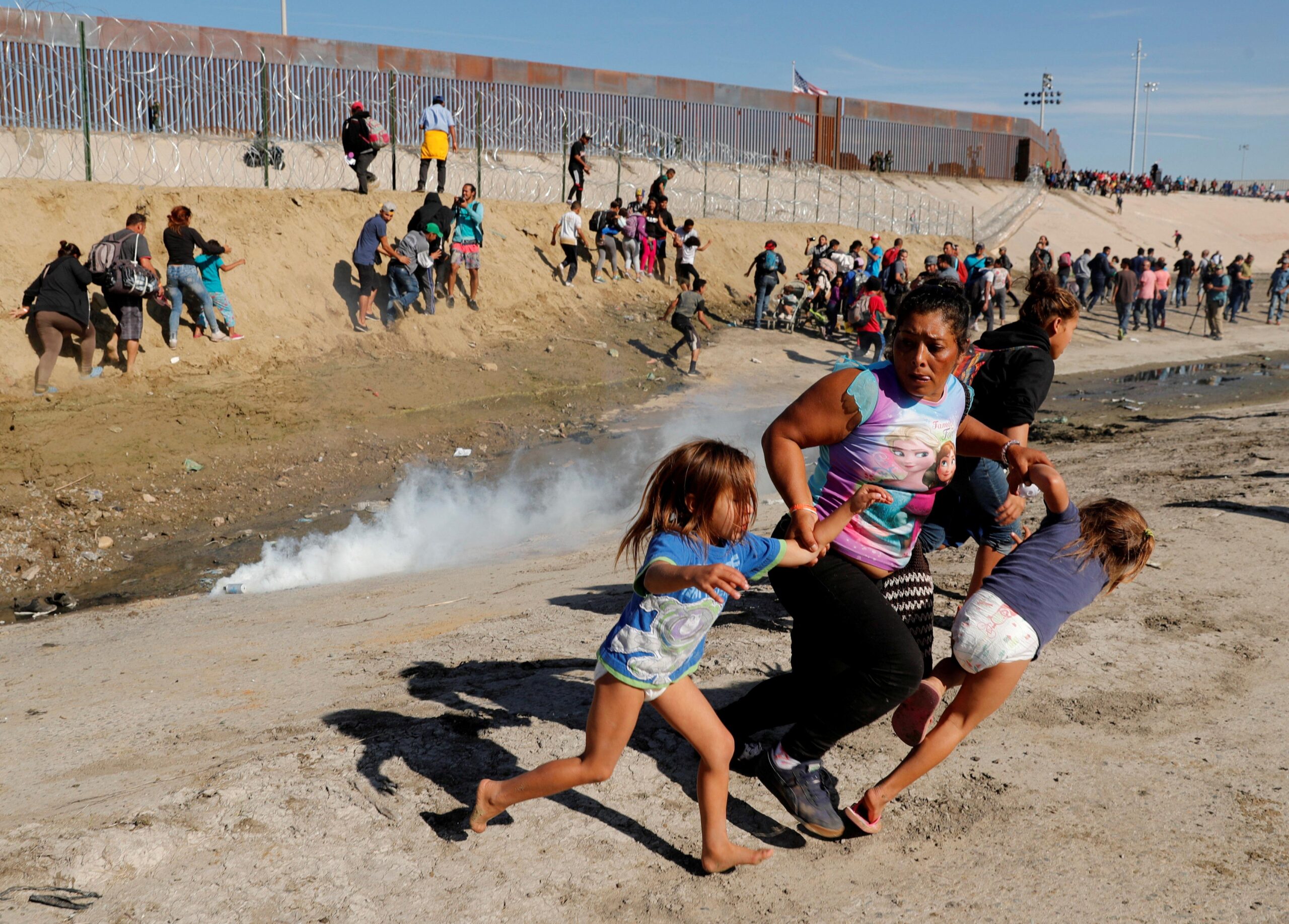
Since October 2016, more than 720,000 unaccompanied minors and parents traveling with children have turned themselves in to Border Patrol agents along the U.S.-Mexico line. An additional 110,000 have gone to ports of entry to seek refuge. About 40% are from Guatemala, the largest single group.

It’s not clear how many will end up seeking asylum, but in fiscal 2018 nearly 20 percent of migrants from all countries claimed to a border officer they feared returning to their home country.

For families in Bulej and Yalambojoch — indigenous towns near Guatemala’s border with Mexico — leaving for the United States is seen as a last choice, propelled by a cycle of debt that only fuels more migration. And while it’s too soon to predict the long-term impact of family migration, some of these villages are losing their future as the younger generation heads north.

Many of those who stay behind face a heavier workload — they need to care for younger siblings and tend house while their mothers work in the fields or fetch wood, tasks that typically belonged to their husbands.

Every week, residents estimate, at least 10 parents, each with a child or two, leave the small villages.

President Trump has called the current numbers a crisis and a national emergency. He has threatened to shut down the U.S.-Mexico border and shifted hundreds of customs officers from the legal ports of entry where migrants present themselves to helping Border Patrol agents process families crossing illegally.

But the numbers keep rising. In March alone, agents made a total of 92,600 apprehensions — the highest in a decade. Nearly 63,000 were family groups and unaccompanied minors.

In Yalambojoch, not even the death of 8-year-old Felipe Gomez Alonzo, who died in Border Patrol custody on Christmas Eve, deters others from following. His uncle and cousin left a week after Felipe’s funeral. It was his fate, the townspeople reason. It won’t happen to them.

In the end, the stories of those who make it and the need to leave are more powerful. As some in the villages say, children have become their passports to the American Dream.

Debt-Driven Migration

Some Sundays in Yalambojoch, an enganchador comes to town from neighboring Bulej to hawk his services. His job: to help people get to the United States.

It will be easy and affordable, he promises in the villagers’ native Chuj language, amplified through a loudspeaker attached to a pole. Residents pay a few cents to make announcements over the speaker, usually about clothes or phones for sale, brought from the U.S.

The enganchador calls out his cellphone number and waits. He doesn’t announce that he has special deals for parents traveling with children, but residents know that he does. It’s rare to find single men leaving rural villages like this alone; it’s not worth the risk or the cost.

“People migrate for different reasons,” said Elizabeth Oglesby, an associate professor of Latin American Studies at the University of Arizona. “There are certainly large numbers of people who are coming with their children because they feel the children are in danger in Central America.

“It is also true the coyotes have this strategy where they say if you come with a child, you come and turn yourself in to the Border Patrol, you are more likely to be released, not deported and not put in detention.”

That strategy is just the latest reaction to U.S. efforts to crack down on illegal border crossings. First, in the mid-1990s, border enforcement was beefed up along the most populated stretches of the border, pushing migrants to cross treacherous stretches of the desert.

Deaths of border crossers soared and instead of going back and forth between work and family, the men started staying in the United States. Women soon followed, many times to join a husband already here.

In 2014, rumors swept Central America that minors or parents who showed up in the U.S. with children would be allowed to stay — in reality, they were allowed to remain until their immigration hearings.

That was the beginning of family migration.

Then last year, the U.S. government separated more than 2,500 children from their parents at the border in a move the Trump administration hoped would deter families from coming. It didn’t.

“The whole argument that you can … ratchet up punishment against the migrant, force them to cross the desert and that somehow that will deter people from migrating is false,” Oglesby said. “It doesn’t deter people from migrating. It redirects the migration and changes its character.”

As border enforcement has increased, so has the cost to get across, jumping from less than $2,000 in the 1990s to up to $12,000 for a viaje de lujo, a luxury trip that ensures passage to the United States via bus and vehicle, with very limited walking. That doesn’t include interest rates of 5 to 12 percent, compounded monthly.

Migrants often borrow those fees to pay the coyotes, or guides, who lead them across the border, and they depend on their new jobs in the U.S. to pay it back. If they don’t make it across or are deported, many see no choice but to borrow more and try again, creating a cycle of debt that can drag down an entire family.

Image courtesy of Arizona Daily Star. 2019.

Image courtesy of Arizona Daily Star. 2019.

Pascual Alonzo Alonzo, 19, works with his sewing machine at home in Bulej. The lack of jobs drives many people to the U.S. Image by Simone Dalmasso. Guatemala, 2019.

Pascual Alonzo Alonzo, 19, works with his sewing machine at home in Bulej. The lack of jobs drives many people to the U.S. Image by Simone Dalmasso. Guatemala, 2019.

Pascual Alonzo, 19, and his family at one point owed about $20,000 — a debt impossible to repay earning a few dollars a day in Guatemala as carpenters and farmers.

His dad tried to cross three times through the Arizona desert and Texas, only to be sent back. His smuggling fees included $2,000 they had to pay the cartels once they reached the U.S.-Mexico border for permission to cross through their territory.

Then in 2014, when Pascual was 14, he decided to leave for South Carolina.

“I saw my parents suffering a lot. We had no money, we had no way of buying food to feed my siblings,” he said. And work was scarce.

As a minor, he was told, he would be housed in a shelter and all he needed was a sponsor to get him out, enroll him in school and take him to his court appointments. If he did all that, he thought he would get a work permit and be able to stay.

He made it, found work in restaurants and lived with a family that asked for very little in living expenses. But the couple of hundred dollars he sent back each week wasn’t enough to put a real dent in his family’s $20,000 debt. Even worse, Pascual’s sponsor, someone from the neighborhood back home, didn’t do the tasks he had agreed to do. Pascual was deported last August.

He was devastated — for his parents even more than for himself.

“I cried for them,” he said. “I wasn’t able to help them enough and I still had debts to pay. My mother wanted me to study, to learn English so I could get a better job and build her a house.”

“De material,” she chimed in. Of concrete.

Like many families caught in the cycle of debt, his father decided to try again.

This time he had a guarantee: He would travel with his 15-year-old son, Pascual’s younger brother. He heard immigration officials would release him after a few days.

They made it to Tennessee last December. But the cost to get there was almost another $2,000, pushing their debt to about $22,000.

For families like theirs, “Migration is no longer about reaching the U.S. to find a better life. It’s about this obligation that you have to make it because you are looking at great destitution if you can’t pay the money back,” said Richard Johnson, a University of Arizona doctoral candidate who researches this issue in Guatemala.

“Deportation, more than serving as deterrence, generates deeper incentives for other members of the family to migrate,” Johnson said.

People risk losing their land, their house and whatever little they have as they use it as collateral to secure a loan. The pressure can be so great it can lead to suicide.

Nearly a year ago, Magdalena Pérez’s husband killed himself, overcome by the family’s mounting debt. He owed nearly $8,000 he couldn’t repay.

The Pérezes’ daughter had left days earlier with her own child. Upon hearing the news of her father’s death, the young woman cut off the monitoring bracelet immigration officials attached to her ankle while she awaited her hearing. “Who is going to help my mother if I get deported?” she reasoned at the time.

She’s still in Tennessee, trying to live a quiet life and avoid detection — and deportation.

In March, her brother headed north to join her, bringing along the 9-year-old niece he is raising. The little girl’s father had died soon after going to the U.S. himself, and her mother migrated to Mexico in hopes of making money to send home. Because she was not traveling with a parent, the family said the two were separated and the girl was sent to a shelter in El Paso.

She called her aunt from the shelter, crying and afraid.

Her grandmother wants her sent back to Guatemala. And it appears Pérez’s son will be deported, pushing their debt even higher.

“First my husband dies, then my son leaves, my granddaughter leaves, what’s going to become of me?” the 50-year-old asked as she wiped away tears. “What’s going to happen to me?”

This picture of Pascual Alonzo’s grandparents features a typical, idealized “American Dream” background: skyscrapers and green gardens. Image by Simone Dalmasso. Guatemala, 2019.

This picture of Pascual Alonzo’s grandparents features a typical, idealized “American Dream” background: skyscrapers and green gardens. Image by Simone Dalmasso. Guatemala, 2019.

How It All Began

Understanding migration from Guatemala’s indigenous communities means going back to the 1980s. That was the beginning of an internal conflict that claimed more than 200,000 lives — more than conflicts in El Salvador, Nicaragua, Chile and Argentina combined. An additional 1.5 million people were displaced, a quarter of the country’s population.

Entire villages like Yalambojoch and Bulej emptied as soldiers massacred their neighbors.

Adjacent to Yalambojoch is San Francisco, where 350 people were killed in 1982. Reports from that time describe soldiers smashing children’s heads on rocks and poles, raping women and burning them alive, shooting or beheading men.

Many in these villages today are sons or daughters of the people killed in that conflict.

Some families started to return from Mexico in 1996 after peace agreements were signed. But while they had land, they lacked nearly everything else.

The government failed to address the structural conditions that had spurred the conflict — extreme income inequality, corruption, the lack of an effective judiciary. People came home to find an economic crisis and few jobs.

The forced displacement, and a country unprepared for its citizens to return, became a template for future migration, said Ruth Piedrasanta, an anthropologist and researcher at Rafael Landívar University in Guatemala City.

An entire generation had learned to live in another country. They no longer felt tethered to home when times got tough, and suddenly a future in the United States felt like a real possibility.

That wandering spirit crystallized with the arrival of Mexican and U.S. recruiters, who showed up with promises of jobs when Mexican workers started talking about unionizing and quitting dirty, back-breaking jobs in poultry plants in the Southeast and meat-packing plants in the Midwest.

“Central Americans were seen as more stable workers,” Oglesby said.

So Guatemalans started leaving again.

Prudencio Bautista Gómez, 41, in his coffee field. He lived for 12 years in Princeton and Columbia, South Carolina, where some find work in chicken plants. Image by Simone Dalmasso. Guatemala, 2019.

Prudencio Bautista Gómez, 41, in his coffee field. He lived for 12 years in Princeton and Columbia, South Carolina, where some find work in chicken plants. Image by Simone Dalmasso. Guatemala, 2019.

Prudencio Bautista was the first to leave Yalambojoch in 1996. He crossed through Sasabe, Arizona, to work in tobacco farms in North Carolina, and later in poultry plants in Greenville, South Carolina.

“It was tough,” he said as he and a dozen workers he’d hired harvested coffee cherries on his plot of land near Yalambojoch.

“I walked eight nights and eight days. What affects you the most is water. One finishes the water and there’s none. That’s why a lot of people die,” he said, shaking his head.

He went back and forth, each time making a new investment — building his two-story house (at a cost of nearly $20,000 at today’s exchange rate), buying a pickup, a tractor-trailer, a plot of land — until he was deported about 10 years ago. By then, the number of Border Patrol agents had quadrupled to 20,000 since he had first crossed. Sensors, helicopters and drones watched over the border.

“I tried to cross a fourth time,” he said, “but la migra caught me in Florence (Arizona). They locked me up for a month, then deported me back to Guatemala.”

He still thinks of life up north. But now he has two grown children there who beg him not to risk it again. They promise to send him money.

Earnings from growing coffee on small plots are minimal due to lower prices and the spread of coffee leaf rust, a disease that can cost a tree its leaves and its ability to produce beans. Scientists attribute the rust to climate change.

Bautista gets about $70 per 100 kilos, or 220 pounds, he said, and each harvest yields about 2,600 pounds. That’s less than $1,000.

“Right now there’s work harvesting coffee, but this ends in 20 or 25 days and one is left without a job again,” Bautista said in early March.

“You buy a pair of pants, that’s 100 or 120 quetzales. You have to work two days just to buy a pair of pants and there are a lot of kids in a family who require clothes and food, and there’s no money.”

In South Carolina he earned $700 in a week hanging chicken, he said as a group of men stopped by.

“They come to work from another village named El Aguacate,” he explained.

“There are no workers, it’s really affecting us here, but as I said, people are not leaving for pleasure, but out of necessity. Teachers are being left without students, but what are we going to do? … The only exit we have, our only alternative, is to go to the United States.”

Catarina Domingo, dressing her son, lives in a house that is one of the few remaining in Yalambojoch that is made of wood and has a tin roof and a dirt floor. Image by Simone Dalmasso. Guatemala, 2019.

Catarina Domingo, dressing her son, lives in a house that is one of the few remaining in Yalambojoch that is made of wood and has a tin roof and a dirt floor. Image by Simone Dalmasso. Guatemala, 2019.

Inequality and Poverty

Income inequality in Guatemala ranks among the highest in the hemisphere, according to USAID, especially when it comes to indigenous communities most affected by the country’s armed conflicts.

While about 60% of the nation’s population lives in poverty, in Huhuetenango it’s nearly three-quarters.

At 46.5%, Guatemala has the worst chronic malnutrition rate in the hemisphere and the sixth-worst in the world — and it soars to 58% for the indigenous population.

Just to reach these villages takes more than 10 hours from the capital. The reason isn’t the distance, but the narrow, winding roads full of potholes.

There are no major hospitals, few schools and limited access to food.

Money comes mostly from the outside. In 2018, Guatemalans received more than $9 billion from relatives living abroad, mostly in the U.S.

Over time, communities became reliant on remittances. They came to believe the only way to achieve a higher standard of living was to send someone north.

“Any person’s dream is to have home, a car, land and to live, perhaps not too comfortable, but to have the basics,” said Mateo Domingo Lucas, a school principal in Bulej.

“And that’s the dream of the youth; the children, too, are starting to say, ‘I’m going to leave.’ They say you live better, eat better. They say you can buy a pair of shoes,’” he said. “Fighting against that dream, to try to convince them to stay, is challenging.”

Some of the departments (Guatemalan states) with the highest poverty or malnutrition rates are also those where a lot of migrants are coming from.

Percentage of population living in poverty in 2014

ince January, Lucas’ school of 600 students has lost more than two dozen of them. The desks continue to empty out, and the void is felt in each classroom.

The pressure increases as each new concrete home rises — some are as expensive as $50,000 — gradually closing in on the few remaining wooden shacks. Every time another goes up, families want one even more.

“The block fever,” co-writes Lizbeth Gramajo Bauer, an anthropologist at Rafael Landívar University, “it’s a symptom, effect and cause of migration.” Migration, she says, leads to more migration.

Catarina Domingo’s husband, Pedro Paez, hadn’t left before because he didn’t want to die in the desert. What would she do with five children and no husband?

“I didn’t want to be apart from my children, but it’s because of the need,” she said in broken Spanish. “Because we have no land, we have no money to build a house.”

Her home is one of the few remaining in Yalambojoch made out of wood with tin roofs and dirt floors.

Paez left recently with their 9-year-old daughter, Olga. He called six days later and Olga sounded happy, Domingo said. They were in Tennessee after spending three cold nights in a Border Patrol station and then at a church, where they were given a warm meal and a shower.

Domingo said Olga wanted to go and was happy when they left. But teachers say a lot of the time children don’t want to leave. Parents lure them with promises of new toys, restaurants and a nice school.

Páez borrowed nearly $3,000 from relatives who are charging him 5% interest. “And I don’t know how much more he has borrowed from his friend once he arrived,” Domingo said.

A relative also lent her about $65 to cover household expenses until Paez starts sending money back.

“He didn’t leave me a penny,” she said. Every two weeks, she spends about $20 on corn and $14 on beans, plus more on soap, eggs and other needs that pop up.

While families seem to know that bringing a child is the most likely way to get to the U.S., misinformation abounds about why that is. Many erroneously believe it’s a special U.S. program under Trump that first allowed unaccompanied minors to stay in the U.S., and that now parents traveling with children can stay. They don’t have to hide anymore, they say. They can go directly to the authorities.

Domingo says it saddens her to hear people say her husband will eventually get deported, but that the government will keep her daughter.

“Maybe it’s true, but one doesn’t know what the government over there is going to say,” she said.

In the meantime, she’ll have to find a way to sustain the family until he finds a job. And she has Candelaria López, her 15-year-old daughter, at home to help.

Candelaria López, 15, at home in Yalambojoch, stays at home to help raise her siblings. She no longer goes to school because her family can’t afford to pay the $60 school fee. Image by Simone Dalmasso / The Arizona Daily Star. Guatemala, 2019.

Candelaria López, 15, at home in Yalambojoch, stays at home to help raise her siblings. She no longer goes to school because her family can’t afford to pay the $60 school fee. Image by Simone Dalmasso / The Arizona Daily Star. Guatemala, 2019.

Those Who Stay Behind

Rural villages like this one are full of contradictions.

Yalambojoch is surrounded by pine-topped hills not that different from the Carolinas, where many local villagers migrate.

A crystalline river runs east of town and the air is fresh and clear. In the mornings, as roosters start crowing and people head outside to wait for pickups that will take them to the fields, the fog slowly lifts and sunlight pours in.

At night, the dark sky teems with bright stars.

Children play in makeshift soccer fields and use sticks for bats. Many don’t go to school because families have to choose which of their six or seven children to send.

Education doesn’t help feed the family — and seeing others finish college only to end up farming or doing construction work deters them further, teachers say.

A greater, more immediate, return on their investment is for their kids to work in the U.S. and send money home.

For some, education seems so unattainable that they stop dreaming of future careers. Others want to be agricultural engineers and doctors, but know they might also have to go to the “USA,” as they say, sounding the three letters in Spanish. They, too, want to build their own homes.

Candelaria, like most children in these rural villages, appears much younger than her 15 years, a consequence of their limited diet of corn tortillas, beans and only sometimes eggs.

She stopped going to school in 2016 after finishing sixth grade, but her responsibilities intensified after Paez left this year.

Like other girls her age, Candelaria rises before 6 a.m. to grind corn to make her family tortillas before the youngsters go off to school and her mother heads to the field. Then she does the cleaning, the cooking and the laundry.

She has big brown eyes, a warm smile and loves to have friends. But she has no time for herself, always having to look after the others.

She’s considered one of the smartest girls the community center has ever had and is known for an impressive recital about the revolution she gave when she was 5 or 6 before dozens of guests.

“My favorite subject is math. I like to memorize things,” she said as she fixed her siblings a breakfast of eggs and coffee.

When asked if she liked school, she is resolute.

“Even if I had liked it,” she responds, “we couldn’t afford it.”

Later, though, she admits that she would have liked to be a teacher, or maybe a doctor.

Parents need at least $30 a month to send their kids to primary school and twice as much for middle school. The money covers supplies and enrollment fees, among other expenses.

Candelaria said she would like to see more farming opportunities in her community so people wouldn’t have to leave. Better education doesn’t make the top of her list, almost as if she prefers to not think about something so implausible.

While migration can leave girls like Candelaria at home or can force them to grow up without a parent, in the long term it can also mean more opportunities and better living conditions for entire communities — things the state does not provide.

But entire communities are losing their children — and their future — to migration. If the trend holds, and without comprehensive immigration reform, experts say the long-term implications could be grim.

“It’s not migration per se that we should see as a problem. It’s the conditions under which people are being forced to migrate,” said Oglesby, the UA professor.

“Why are families being separated? Because, really, it costs $1,000 or less to get on a plane and go visit your relatives in the U.S. and that’s within the range of most people who are migrating. That’s a lot less than paying $12,000 to a coyote.”

The problem: “People are not allowed to get on that plane.”
https://pulitzercenter.org/reporting/passports-american-dream-mounting-debt-few-opportunities-keep-guatemalans-coming


Filed Under: America First, Anti-American, Common Sense Matters, Common Sense Nation, Illegal Immigration Tagged With: And America Is Being Destroyed By Illegal Immigrants, Build The Damn Wall, Central American Is Emptying Out, Common Sense Nation, Guatemala’s border with Mexico, Illegal Immigration

05/21/2019 by The Doctor Of Common Sense

President Trump’s White House Directs It’s Former Lawyer Not To Testify

The Democrats Demons Will Never Stop Going After Trump Until He Starts Having Them Investigated For The Real Crimes They Have Done.
Why don’t we call these 2 idiots in to testify about all the illegal things they have done?

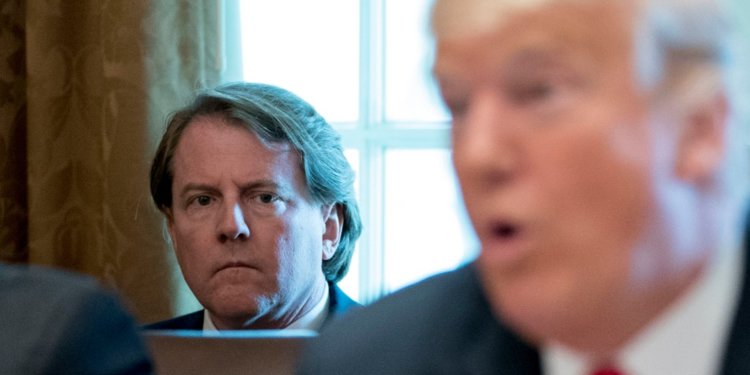
The White House has told a former adviser not to testify about Special Counsel Robert Mueller’s investigation, sparking outrage from Democrats.

Lawyer Donald McGahn previously told the investigation into Russian interference in the 2016 election that he had felt pressured by President Donald Trump to fire Mr Mueller.

Mr McGahn has been ordered to appear on Tuesday.

But the White House has now directed him not to speak to the committee.

A letter to the Democratic-led House Judiciary Committee said lawyer Donald McGahn was “absolutely immune from compelled Congressional testimony”.

There are calls for an impeachment inquiry against President Trump if he does not testify.

Mr McGahn served as White House counsel for nearly two years before his resignation in October 2018.

  • Five looming fights between Congress and Trump
  • US attorney general faces House contempt vote
  • Eight new things in the Mueller report

Both the Department of Justice and White House released statements on Monday arguing that Mr McGahn was under no obligation to give evidence.

Later Mr McGahn’s lawyer said his client would “respect the president’s instruction”.

Mr Mueller’s two-year investigation did not determine that Mr Trump conspired with alleged Russian attempts to sway the 2016 election, but listed 10 instances of possible obstruction of justice by the president.

What is the White House saying?

White House press secretary Sarah Sanders said Democrats did not like the conclusions of the Mueller report and wanted “a wasteful and unnecessary do-over”.

Citing the justice department guidance, her statement added: “The former Counsel to the President cannot be forced to give such testimony, and Mr McGahn has been directed to act accordingly.”

In its memo, the justice department said Mr McGahn did not have to testify.

Assistant Attorney General Steven Engel said: “Congress may not constitutionally compel the president’s senior advisers to testify about their official duties.”

What has the reaction been?

Speaking to CNN, Judiciary Committee chairman Jerrold Nadler said the panel would hold Mr McGahn in contempt of Congress for not testifying.

Earlier, he said the instruction was “just the latest act of obstruction from the White House that includes its blanket refusal to cooperate with this committee”.

“The president acted again and again – perhaps criminally – to protect himself from federal law enforcement. Don McGahn personally witnessed the most egregious of these acts,” he said in a statement.

However, Mr Nadler and House Speaker Nancy Pelosi are coming under growing pressure from their party to launch an impeachment inquiry against the president.

US media reports suggest several member of the Judiciary Committee tried to convince Ms Pelosi to start such an investigation to make the Trump administration comply with subpoenas.

Representative David Cicilline, a committee member, said on Twitter: “If Don McGahn does not testify tomorrow [Tuesday], it will be time to begin an impeachment inquiry of” President Trump.

But Ms Pelosi and Mr Nadler told colleagues their course of action was getting results. Someone in the meeting told NBC News it was a “long and very emotional” debate.

Also on Monday, a federal judge rejected Mr Trump’s efforts to block a subpoena into his accounting firm, Mazars USA LLP.

The subpoena, issued by the House Committee on Oversight and Reform on 15 April, asked that the firm hand over financial records relating to Mr Trump dating back to 2011, years before he announced his candidacy for president.

What is this about?

The subpoena for Mr McGahn’s testimony is part of a wider inquiry by Congressional Democrats into Mr Trump’s alleged obstruction and abuse of power.

In March, the House Judiciary Committee issued document requests related to the investigation to 81 people and groups.

Mr McGahn was interviewed for 30 hours by Mr Mueller’s team of investigators, and was frequently cited in their 448-page report, released in April.

Mr Trump later maintained he had authorised this co-operation with Mr Mueller.

The Mueller report detailed how Mr McGahn felt the president had pressured him to fire Mr Mueller and, later, write a memo saying that Mr Trump had issued no such directive.

US Attorney General William Barr was questioned this month about the matter by Senate Democrats.

He said the president had only suggested that Mr Mueller be “replaced” because of a perceived conflict of interest – and then instructed Mr McGahn to correct inaccurate media reports.

Mr McGahn left the White House in October to return to a Washington law firm, Jones Day, which represents the Trump campaign.

https://www.bbc.com/news/world-us-canada-48344909


Filed Under: Barack Obama, Common Sense Nation, Corruption, Crooked Hillary, Deep State, Democrats, Democrats Are Destroying America, Donald Trump, Drain The Swamp! Tagged With: Common Sense Nation, Judiciary Committee chairman Jerrold Nadler, Lawyer Donald McGahn, President Trump's White House Directs It's Former Lawyer Not To Testify, Special Counsel Robert Mueller's investigation, What About Hillary Clinton?, What About James Comey?, What About Obama?

05/14/2019 by The Doctor Of Common Sense

AG William Barr Appoints US Attorney to Look Into Origins Of FBI Probe: Will They Do Anything?

I will believe something is going to happen to one of these MoFo’s when I see it.

Attorney General William Barr has assigned the United States attorney in Connecticut to look into the origins of the Federal Bureau of Investigation’s probe into the Trump campaign, according to reports.

Barr has appointed John Durham for the assignment, according to the New York Times. Durham has a history of investigating potential wrongdoing among national security officials.

Barr sent shockwaves through Washington after he acknowledged earlier this year during a hearing that he would review the origins of the FBI’s investigation into the Trump campaign, and again when he referred to those activities as “spying.”

Specifically, he has said he wants to review whether the FBI had appropriate predicate for spying on the Trump campaign, for example, when it sought a surveillance warrant against former campaign adviser Carter Page.

Barr’s assignment of Durham may indicate that his review of the origins warrants further investigation and action.

Separately, the DOJ’s inspector general, Michael Horowitz, is due to issue a report on his findings on whether the FBI acted improperly when investigating the Trump campaign and launching an investigation in July 2016.

Former Attorney General Jeff Sessions appointed the U.S. attorney in Utah, John Huber, to review aspects of the Russia investigation, but it is unclear what he has been investigating or has found.

Trump nominated Durham for his current position in 2017, and Durham has conducted special investigations under administrations of both parties, according to the Times.

https://www.breitbart.com/politics/2019/05/13/attorney-general-william-barr-appoints-us-attorney-to-look-into-origins-of-fbi-probe/

Mueller report takeaways: Trump didn’t collude but Obama blew it bigtime on Russia

Donald Trump, use Mueller report as election security roadmap; Democrats, drop impeachment and work on 2020; and Rep. Adam Schiff, you should resign.

The Mueller report will not change political opinions of President Donald Trump. Democrats will continue to hate the president and Republicans will continue to think Trump got a raw deal because two years of his presidency were inhibited by an investigation that turned up no collusion. Special counsel Robert Mueller will get plaudits for uncovering the depths of the Russian meddling but will have to answer questions about why he didn’t move to compel Trump to testify.

Ultimately, most Americans will conclude that the best way to sort this out is through an election. Trump faces the voters in 2020 and they will have all of this information to consider as they make their decision. Whether Democrats impatient for an early end to the Trump presidency force impeachment remains to be seen.

There will be legal analysis ad nauseum about obstruction, but here are five political takeaways that jumped out to me:

1.The extent of the Obama administration’s failure on Russia is breathtaking. TheMueller report flatly states that Russian interference efforts began in 2014, continued in 2015 and blossomed into a full-blown effort to meddle in the 2016 presidential election. The report found no evidence that the Trump campaign coordinated with Russia on election meddling, but substantial confirmation that the previous commander-in-chief failed to stop a hostile foreign power from invading our democracy. Why? Obama’s top priority was getting Russia into the Iranian nuclear deal, which explains why his administration turned a blind eye toward Russian electoral interference. Russian meddling is a mess of Obama’s making, and Trump should order immediate steps to use the Mueller report as a roadmap for stopping them in the future. When you consider that Obama failed to prosecute Julian Assange after his 2010 attack on America, and that he then went on to help Russia meddle in the 2016 election, Obama just looks horrible on this entire ordeal.

Special counsel Robert Mueller's redacted report

2. Democrats have two options — impeach the president or win an election. With their hopes dashed that Mueller would kick in the White House door and frog march the president to jail, Democratic remedies for getting rid of Trump are purely political: impeach the president for obstruction of justice, or work as hard as possible to win the next election. The House Democratic leadership was having trouble tamping down impeachment talk before, and it won’t get any easier now given the relentless focus on the obstruction section of the report. The bloodthirsty among them will grow even thirstier and calls for impeachment are likely to increase. Can Speaker Nancy Pelosi stop them? I have my doubts that she can herd her impeachment cats away from their hyper-partisan impulses.
Further, Democrats must think hard about their future investigatory paths and how it affects their collective credibility in 2020. There will be skepticism among the voting public for any Democratic investigation in the future because their promises of collusion turned out to be false.
3. Mueller must speak. Attorney General William Barr said he had no objection to the special counsel appearing before Congress, and he should do so. It would be a shame, however, if most of his time is focused on Trump and not on helping the federal government prevent Russia election interference in the future. He has done a terrific job uncovering the depth of the interference, including indicting the Russians responsible. Given that they are unlikely to ever see the inside of a U.S. courtroom, Mueller’s legacy should be to create the framework for inoculation against future Russian shenanigans.
4. Congressman Adam Schiff really hurt Democrats by raising the bar on collusion. For two years, Schiff and other Democrats in Congress repeatedly claimed there was evidence of collusion. Time and again, Schiff said he had “direct” evidence of Russian collusion and, since Barr’s initial summary letter, has yet to back down. In fact, Schiff has doubled down on his claims, going even further out on a limb that Mueller sawed off today. Politically, Schiff blew up a balloon for the Democrats that Mueller popped. Loudly.
Keeping quiet or at least making more measured statements would have kept the egg of the collective face of the Democratic Party. Schiff failed as a Democrat and as a leader on the House Intelligence Committee. He should step down as Chairman immediately, as he clearly was more interested in politically damaging Trump than getting to the truth. Democrats would be better served as a party if he resigned from Congress and went away altogether.
5. Bottom line for Trump — no collusion. The report flatly states, just as Barr said it would, that “the evidence we obtained did not establish that the president was involved in an underlying crime related to Russian election interference.” This has been the central question of the Trump presidency, and Mueller has closed the door on what would have been treason. The president is within his rights to attack the Democrats and media who have promised their partisan audiences something that just didn’t happen. I expect little movement in the president’s approval ratings in the aftermath of this report, and unless Democrats move on impeachment this report will be a distant memory come the fall of 2020, when he faces reelection.
https://www.usatoday.com/story/opinion/2019/04/18/mueller-report-collusion-trump-russian-election-interference-democrats-takeaways-column/3505946002/

Filed Under: Anti-American, Anti-God, Anti-Trump Crowd, Anti-Trump dossier, Barack Obama, Bob Mueller, Common Sense Nation Tagged With: AG William Barr Appoints US Attorney to Look Into Origins Of FBI Probe, Investigate Bob Mueller, Lock Of Hillary Clinton, Lock Up Barack Obama, Trump didn't collude but Obama blew it bigtime on Russia, you should resign

05/12/2019 by The Doctor Of Common Sense

Alyssa Milano And Bette Midler Calls for Sex Strike in Protest of Abortion Laws

Her tweet came days after Georgia became the fourth state in the U.S. this year to ban abortions once a fetal heartbeat is detected, which can be as early as six weeks, before many women know they are pregnant.

Actress Alyssa Milano got people riled up on social media with a tweet Friday night, calling for women to join her in a sex strike to protest strict abortion bans passed by Republican-controlled legislatures. 

Actress Alyssa Milano ignited social media with a tweet Friday night calling for women to join her in a sex strike to protest strict abortion bans passed by Republican-controlled legislatures.

The former star of Charmed and Melrose Place urged women in her tweet to stop having sex “until we get bodily autonomy back.” Her tweet came days after Georgia became the fourth state in the U.S. this year to ban abortions once a fetal heartbeat is detected, which can be as early as six weeks, before many women know they are pregnant.

“We need to understand how dire the situation is across the country,” Milano told The Associated Press on Saturday. “It’s reminding people that we have control over our own bodies and how we use them.”

She noted that women have historically withheld sex to protest or advocate for political reform. She cited how Iroquois women refused to have sex in the 1600s as a way to stop unregulated warfare. Most recently, she noted that Liberian women used a sex strike in 2003 to demand an end to a long-running civil war.

Milano received support from fans and fellow actress Bette Midler joined her in also calling for a sex strike with her own tweet. But both liberals and conservatives also lampooned her idea, with conservatives praising her for promoting abstinence and liberals saying she was pushing a false narrative that women only have sex as a favor to men.

Milano said the criticism didn’t bother her and that her tweet was having her desired effect, “which is getting people to talk about the war on women.”

She said she fears one of the laws could eventually be decided by the conservative-leaning U.S. Supreme Court, which Republicans hope will overturn the 1973 Roe v. Wade decision legalizing abortion.

“That is absolutely horrifying to me,” Milano said. “Anyone who is not completely and totally outraged by this and doesn’t see where this is leading, I think is not taking this threat seriously.”

Milano said people have to determine for themselves how long the sex strike should last. For her part, she hasn’t decided yet how long she will forgo sex.

“I mean I don’t know,” she said. “I sent a tweet last night I haven’t really thought much past that this morning.”

Late Saturday afternoon, Milano tweeted her intention to write an op-ed about the sex strike. “Can’t wait for you all to read,” she said. This further ignited social media, with users expressing a wide variance of reactions. 

https://www.hollywoodreporter.com/news/selma-blair-honored-at-race-erase-ms-gala-hosted-by-johnny-galecki-1209883

Left-wing actress and singer Bette Midler called on Georgia’s women to “stop having sex with men” in response to the Peach State’s passage of a “Heartbeat” bill that bans most abortions once a fetal heartbeat can be detected.

“I hope the #womenofGeorgia stop having sex with men until these indignities are overturned,” Bette Midler said.
The law, dubbed the Living Infants Fairness and Equality (LIFE) Act (HB 481), prohibits abortions in the state after a heartbeat is detected, usually at about six weeks of pregnancy. Cases of rape, incest, or if the life of the mother is in danger are exceptions to the law.

Bette Midler✔@BetteMidler

I hope the #womenofGeorgia stop having sex with men until these indignities are overturned.41.1K10:02 AM – May 11, 2019Twitter Ads info and privacy9,012 people are talking about this

Midler echoed fellow actress and political activist Alyssa Milano’s call for women to abstain from sex with men via a “sex strike,” claiming, “Our reproductive rights are being erased.”View image on Twitter

View image on Twitter

Alyssa Milano✔@Alyssa_Milano

Our reproductive rights are being erased.

Until women have legal control over our own bodies we just cannot risk pregnancy.

JOIN ME by not having sex until we get bodily autonomy back.

I’m calling for a #SexStrike. Pass it on.43.3K10:40 PM – May 10, 201959.1K people are talking about thisTwitter Ads info and privacy

In March, assorted Hollywood activists including Ashley Judd and Mark Ruffalo joinedAlyssa Milano’s effort in threatening Georgia with a boycott prior to the “heartbeat” bill being signed into law by Gov. Brian Kemp (D-GA).

View image on Twitter

Alyssa Milano✔@Alyssa_Milano

MORE! Thank you @JasonWGeorge, @SigmanStephanie, @OfficialMolina, @LauraDern, @ZoeKravitz, @EvaLongoria, @LenaWaithe, @TessaThompson_x, @RJonesNews, @LauraBellBundy, @TraceeEllisRoss, @kerrywashington for standing up for women and telling @BrianKempGA that #HB481IsBadForBusiness1,5193:55 PM – Mar 31, 20192,634 people are talking about thisTwitter Ads info and privacy

Midler’s opposition to Georgia’s “heartbeart” law joins other Hollywood-based political reactions, including three film companies pledging to boycott Georgia as long as the law remains on the books. David Simon’s Blown Deadline Productions, Killer Films CEO Christine Vachon, and Mark Duplass have vowed to boycott the state.

In 2018, Midler fantasized about President Donald Trump and his family being hanged “good and high” in a tweet celebrating the Robert Mueller-led operation. “Trump Trump Trump Bob Mueller’s marching, Trump Trump Trump And here is why Trump Trump Trump He’s gonna hang you Hang the fam’ly GOOD AND HIGH!” she wrote.

https://www.breitbart.com/entertainment/2019/05/11/bette-midler-joins-sex-strike-to-protest-georgia-heartbeat-law/

Filed Under: Abortion Issues, Anti-Gun, Common Sense Matters, Common Sense Nation, Liberals are nothing but Nazi scum Tagged With: Abortion is Murder, Alyssa Milano And Bette Midler Calls for Sex Strike in Protest of Abortion Laws, Anti-God, Anti-Gun, Common Sense Matters, Common Sense Nation, Devil Worship, fetal heartbeat, No Sex

05/12/2019 by The Doctor Of Common Sense

Billionaire From Patagonia Who Got Rich From Capitalism Says Capitalist System Is Destroying the Planet

The man who became a billionaire selling sporting equipment and athletic clothing claims that the system that made him rich is “destroying the planet” and that those who deny climate change — including President Donald Trump — are “evil.”

Yvon Chouinard started his business after deciding to make his own equipment for mountain climbing and eventually Patagonia was born.

The high-end company has made him rich, but Chouinard has also always been an environmental activist and now a climate change zealot. 

In an interview with the Guardian, Chouinard, who lives in California, expressed his contempt for capitalism and his disdain for climate change “deniers.”

“In his bridge-club cords and grandpa shoes, 80-year-old Yvon Chouinard doesn’t look the rock-star entrepreneur,” the Guardian reported. “And, when he speaks, he doesn’t sound much like one either. The founder of U.S. outdoor apparel brand Patagonia believes stock market valuations are ‘absurd.’ investing in shares is ‘buying blue sky’ – and modern-day capitalism is destroying the planet.

“I’d like to see an end to public corporations because we’re not going to revolutionize them, we’re not going to change them,” Chouinard said.

And Chouinard remains a hardcore activist, even while some of his contrary moves turned out to make him even wealthier.

His anti-corporate beliefs have kept his company private — he is still the sole owner of Patagonia.

And in an attempt to put a damper on Black Friday shopping, Chouinard started a “Don’t Buy This Shirt” campaign.

“I absolutely don’t believe in doing … focus groups and all that shit,” Chouinard said. “Proctor and Gamble-style, no risk. Just do it.”

“On that occasion, the risk paid off: Patagonia gained 600,000 new customers and year-on-year sales quadrupled,” the Guardian reported.

Chouinard is also no fan of Trump, calling his administration “evil” for its stand on climate change and efforts to return control of some federal lands to the states.

After Trump and the GOP passed tax-cutting legislation, Patagonia announced it would give away any money saved to environmental causes.

Chouinard also plans to put money into “pro-conservation” candidates in upcoming election cycles.

“We simply can’t pussyfoot around anymore,” Chouinard said. “We have to just say, you know, this administration is evil and anybody who is denying climate change is evil.”

Patagonia also joined a lawsuit that is fighting Trump’s reduction of Bears Ears and Grand Staircase-Escalante national monuments to give control of some of the millions of acres back to the state of Utah. And the state is on Trump’s side.

High Country News reported in October 2018:

Earlier this year, Utah tried unsuccessfully to have the pending cases moved from the D.C. court to a district court in the state; now, it wants to join the lawsuits as a defendant. “The State has substantial interests, including sovereign interests, in the management of millions of acres of public land within its borders,” state lawyers say in the filings. They contend that if plaintiffs win their lawsuits and the original monument areas are upheld, that could “deprive the State of revenue and jeopardize the full use of the property rights it holds for the benefit of all Utahns.”

And despite his outspoken stance on capitalism and environmentalism, he has advice for other entrepreneurs:

“Invent your own game and that way you can always be a winner,” Chouinard said.

https://www.breitbart.com/politics/2019/05/12/patagonia-founder-claims-capitalist-system-made-him-wealthy-destroying-planet/

Filed Under: Anti-American, Anti-God, Anti-Trump Crowd, Climate Change, Common Sense Matters, Common Sense Nation, Global Warming Scam Tagged With: Anti-Trump Crowd, Billionaire From Patagonia, Capitalism, climate change, Climate Change Is A Joke, Common Sense Matters, Common Sense Nation, Global Warming Scam, Tree Huggers, Yvon Chouinard

05/12/2019 by The Doctor Of Common Sense

The Kind Of Faith That Moves Jesus Part 1 of 2

LISTEN TO TODAYS MESSAGE BY CLICKING HERE: The Kind Of Faith That Moves Jesus Part 1 of 2

If you want to impress God you will only do it by having faith in Him. No matter what you do in life it will not impress God unless it flies under the banner of Faith in Him. If you have faith in anything but God you will be let down eventually. The Bible says  “and without faith it is impossible to please God, because anyone who comes to him must believe that he exists and that he rewards those who earnestly seek him.” (Hebrews 11: 6) So why is it that people think that God is impressed by their accomplishments, status, or spiritual knowledge? It is because they really don’t know the true God of the Bible. 

Hebrews 11

1 Now faith is confidence in what we hope for and assurance about what we do not see. 2 This is what the ancients were commended for.

Faith is confidence in God because of who He is and what He has already done. Because what we are hoping for, we can be assured even though we can not see what we are hoping for with the physically eye. We are trusting the One that call those things that are not, as though they were, to give it to us based on His perfect Will. 

Place your faith in The Lord Jesus Christ today and you will start to please Him.

Filed Under: Common Sense Nation, Faith In God, Faith Is Jesus Christ, God Is Speaking Tagged With: Faith Is Jesus Christ, If you want to impress God you will only do it by having faith in Him, Pleasing God, The Kind Of Faith That Moves Jesus Part 1 of 2, Trust In The Lord Jesus Christ

  • « Go to Previous Page
  • Go to page 1
  • Interim pages omitted …
  • Go to page 62
  • Go to page 63
  • Go to page 64
  • Go to page 65
  • Go to page 66
  • Interim pages omitted …
  • Go to page 336
  • Go to Next Page »

Primary Sidebar

Recent Articles

  • Dave Chappelle pretends that Republicans Twisted His Trans Jokes
  • Things You Need ID In Order To Do In America And States That Don’t Ask For ID
  • It Is Supposed To Be America First Stop Foreigners From Holding Office
  • What Really Happened To Seth Rich And Is It Connected To Hillary Emails And Fake Russian Collusion?

Donate To Free Speech

Footer


Copyright © 2026 · Workstation Pro on Genesis Framework · WordPress · Log in