• Skip to main content
  • Skip to primary sidebar
  • Skip to footer
  • Home
  • About
  • Store
  • Videos
  • Breaking News
  • Articles
  • Contact

ET Williams

The Doctor of Common Sense

Blog

07/15/2017 by The Doctor Of Common Sense

GOP Operative Who Sought Clinton’s Emails Committed Suicide. Yeah, Right.


What is the body count on Clinton-related murders and suicides? Investigate that POS.

, GOP operative who sought Clinton’s emails from Russian hackers, committed suicide, records show

A Republican donor and operative from Chicago’s North Shore who said he had tried to obtain Hillary Clinton’s missing emails from Russian hackers killed himself in a Minnesota hotel room days after talking to The Wall Street Journal about his efforts, public records show.

In mid-May, in a room at a Rochester hotel used almost exclusively by Mayo Clinic patients and relatives, Peter W. Smith, 81, left a carefully prepared file of documents, including a statement police called a suicide note in which he said he was in ill health and a life insurance policy was expiring.

Days earlier, the financier from suburban Lake Forest gave an interview to the Journal about his quest, and it began publishing stories about his efforts in late June. The Journal also reported it had seen emails written by Smith showing his team considered retired Lt. Gen. Michael Flynn, then a top adviser to Republican Donald Trump’s campaign, an ally. Flynn briefly was President Trump’s national security adviser and resigned after it was determined he had failed to disclose contacts with Russia.

At the time, the newspaper reported Smith’s May 14 death came about 10 days after he granted the interview. Mystery shrouded how and where he had died, but the lead reporter on the stories said on a podcast he had no reason to believe the death was the result of foul play and that Smith likely had died of natural causes.

However, the Chicago Tribune obtained a Minnesota state death record filed in Olmsted County saying Smith committed suicide in a hotel near the Mayo Clinic at 1:17 p.m. on Sunday, May 14. He was found with a bag over his head with a source of helium attached. A medical examiner’s report gives the same account, without specifying the time, and a report from Rochester police further details his suicide.

In the note recovered by police, Smith apologized to authorities and said that “NO FOUL PLAY WHATSOEVER” was involved in his death. He wrote that he was taking his own life because of a “RECENT BAD TURN IN HEALTH SINCE JANUARY, 2017” and timing related “TO LIFE INSURANCE OF $5 MILLION EXPIRING.”

He had been staying at the hotel for several days and had extended his stay at least once but was expected to check out on the day his body was found. “Tomorrow is my last day,” Smith told a hotel worker on May 13 while he worked on a computer in the business center, printing documents, according to the police reports.

One of Smith’s former employees told the Tribune he thought the elderly man had gone to the famed clinic to be treated for a heart condition. Mayo spokeswoman Ginger Plumbo said Thursday she could not confirm Smith had been a patient, citing medical privacy laws. 

The Journal stories said that on Labor Day weekend last year Smith assembled a team to acquire emails the team theorized might have been stolen from the private server Clinton had used while secretary of state. Smith’s focus was the more than 30,000 emails Clinton said she deleted because they related to personal matters. A huge cache of other Clinton emails were made public.

Smith told the Journal he believed the missing emails might have been obtained by Russian hackers. He also said he thought the correspondence related to Clinton’s official duties. He told the Journal he worked independently and was not part of the Trump campaign. He also told the Journal he and his team found five groups of hackers — two of them Russian groups — that claimed to have Clinton’s missing emails.

Smith had a history of doing opposition research, the formal term for unflattering information that political operatives dig up about rival candidates.

For years, former Democratic President Bill Clinton was Smith’s target. The wealthy businessman had a hand in exposing the “Troopergate” allegations about Bill Clinton’s sex life. And he discussed financing a probe of a 1969 trip Bill Clinton took while in college to the Soviet Union, according to Salon magazine.

Investigations into possible links between the Russian government and people associated with Trump’s presidential campaign are underway in Congress and by former FBI chief Robert Mueller. He is acting as a special counsel for the Department of Justice. Mueller spokesman Peter Carr declined to comment on the Journal’s stories on Smith or his death. Washington attorney Robert Kelner, who represents Flynn, had no comment Thursday.

Smith’s death occurred at the Aspen Suites in Rochester, records show. They list the cause of death as “asphyxiation due to displacement of oxygen in confined space with helium.”

Rochester police Chief Roger Peterson on Wednesday called Smith’s manner of death “unusual,” but a funeral home worker said he’d seen it before.

An employee with Rochester Cremation Services, the funeral home that responded to the hotel, said he helped remove Smith’s body from his room and recalled seeing a tank.

The employee, who spoke on condition he not be identified because of the sensitive nature of Smith’s death, described the tank as being similar in size to a propane tank on a gas grill. He did not recall seeing a bag that Smith would have placed over his head. He said the coroner and police were there and that he “didn’t do a lot of looking around.”

“When I got there and saw the tank, I thought, ‘I’ve seen this before,’ and was able to put two and two together,” the employee said.

An autopsy was conducted, according to the death record. The Southern Minnesota Regional Medical Examiner’s Office declined a Tribune request for the autopsy report and released limited information about Smith’s death. A spokeswoman for AXA Equitable Life Insurance Co., listed in documents recovered by police as Smith’s insurance carrier, had no immediate comment.

The Final Exit Network, a Florida-based nonprofit, provides information and support to people who suffer from a terminal illness and want to kill themselves. Fran Schindler, a volunteer with the group, noted that the best-selling book “Final Exit,” written by Derek Humphry in 1991 and revised several times since, explains in detail the helium gas method.

“Many people obtain that information from his book,” Schindler said. “It’s a method that has been around for many years and is well-known.”

According to figures from the Cook County medical examiner’s office, 172 people committed suicide by suffocation from January 2007 to date. Of those deaths from asphyxia, 15 involved the use of a plastic bag over the head.

It could not be determined how many also involved the use of helium, an odorless and tasteless gas that is nontoxic.

“The helium does not have a direct effect. A bag over someone’s head depletes the oxygen for the person and causes death,” said Becky Schlikerman, spokeswoman for the Cook County medical examiner’s office. “The addition of helium may displace the oxygen faster but does not have a direct effect on a person.”

Police found a receipt from a local Walmart time-stamped from the previous day, May 13 at 12:53 p.m. The receipt was for the purchase of “Helium Jumbo” and other items. Police also noted that the two helium tanks in the room were draped with vinyl-covered exercise ankle or wrist weights. The report did not offer an explanation for the weights. Police said that because they did not suspect foul play, they had not viewed any security video from the Walmart store to confirm that Smith bought the tanks himself.

Smith’s remains were cremated in Minnesota, the records said. He was married to Janet L. Smith and had three children and three grandchildren, according to his obituary. Tribune calls to family members were not returned.

His obituary said Smith was involved in public affairs for more than 60 years and it heralded him as a “quietly generous champion of efforts to ensure a more economically and politically secure world.” Smith led private equity firms in corporate acquisitions and venture investments for more than 40 years. Earlier, he worked with DigaComm LLC from 1997 to 2014 and as the president of Peter W. Smith & Co. from 1975 to 1997. Before that, he was a senior officer of Field Enterprises Inc., a firm that then owned the Chicago Sun-Times and was held by the Marshall Field family, his obituary said.

A private family memorial was planned, the obituary said. Friends posted online tributes to Smith after his death. One was from his former employee, Jonathan Safron, 26, who lives in Chicago’s Loop and worked for Smith for about two years.

Safron, in an interview, said he was working for a tutoring firm when Smith became his client. His job entailed teaching Smith how to use a MacBook, Safron said. At the time Smith was living in a condominium atop the Four Seasons Hotel Chicago. Safron said Smith later employed him at Corporate Venture Alliances, a private investment firm that Smith ran, first out of the same condo and later from an office in the Hancock Building.

Safron, who said he had a low-level job with the Illinois Republican Party in 2014, said he had no knowledge of Smith’s bid to find hackers who could locate emails missing from Clinton’s service as secretary of state. In his online tribute to his former employer, he called Smith the “best boss I could ever ask for … a mentor, friend and model human being.”

Safron said he worked part time for Smith, putting in about 15 hours a week, but the two grew close, often having lunch together at a favorite Smith spot: the Oak Tree Restaurant & Bakery Chicago on North Michigan Avenue. He called Smith a serious man who was “upbeat,” “cosmopolitan” and “larger than life.” He was aware Smith was in declining health, saying the older man sometimes had difficulty breathing and told work colleagues he had heart problems. Weeks before he took his life, he had become fatigued walking down about four or five flights of stairs during a Hancock Building fire drill and later emailed Safron saying he was “dizzy,” he said.

Smith’s last will and testament, signed last Feb. 21, is seven pages long and on file in Probate Court in Lake County. The will gives his wife his interest in their residential property and his tangible personal property and says remaining assets should be placed into two trusts.

He was born Feb. 23, 1936, in Portland, Maine, according to the death record.

His late father, Waldo Sterling Smith, was a manufacturer’s representative for women’s apparel firms, representing them in department stores in Maine, New Hampshire and Vermont, according to the father’s 2002 obituary. The elder Smith died at age 92 in St. Augustine, Fla., and his obit noted that he had been active in St. Johns County, Fla., Republican affairs and with a local Methodist church.

Peter Smith wrote two blog posts dated the day before he was found dead. One challenged U.S. intelligence agency findings that Russia interfered with the 2016 election. Another post predicted: “As attention turns to international affairs, as it will shortly, the Russian interference story will die of its own weight.”


http://www.chicagotribune.com/news/local/politics/ct-peter-smith-death-met-0713-20170713-story.html
Filed Under: Bill and Hillary Clinton, Bullshit, Corruption, Hillary Clinton, Hillary Email Scandal Tagged With: Clinton Emails, GOP Operative Who Sought Clinton's Emails Committed Suicide. Yeah, Hillary Clinton, Peter W. Smith, Russian Hackers

07/14/2017 by The Doctor Of Common Sense

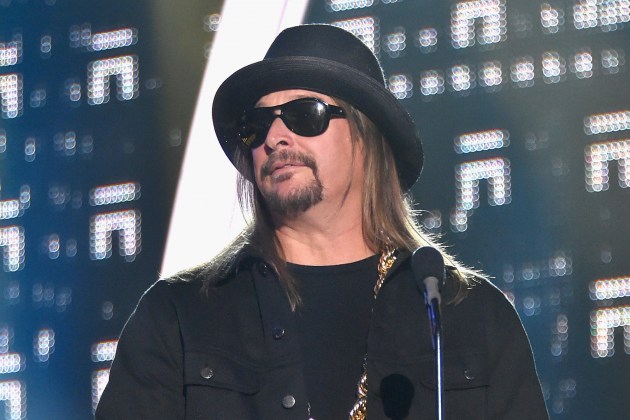
Elizabeth Warren Scared of a Kid Rock Senate Run

My money is on Kid Rock. Run, Kid, run damit!

Liz Warren sounds fundraising alarm over Kid Rock’s potential Senate run

U.S. Sen. Elizabeth Warren is sounding the alarm with her Democratic base, warning a Senate run by Detroit bad boy Kid Rock could be the second coming of Donald Trump.

The “Wasting Time” and “All Summer Long” rap rocker-turned-country singer tweeted on Wednesday that he’s running for U.S. Senate in Michigan. Although it’s been largely dismissed so far as a publicity stunt, Warren isn’t taking any chances with the longshot Republican.

If this asshole can be a senator, anyone can. He’s not good enough. He’s not smart enough. And gosh darn it, no one likes him.

“I know a lot of people are thinking: this is some sort of joke, right?” Warren wrote in an email blast with the subject line “Senator Kid Rock (R-MI).”

“Well,” she said, “maybe this is all a joke — but we all thought Donald Trump was joking when he rode down the escalator at Trump Tower and announced his campaign, too.

“And sure, maybe this is just a marketing gimmick for a new album or tour — but we all thought Donald Trump was just promoting his reality TV show, too,” she added.

The Bay State senior senator then links to a fundraising page where donations are split between Michigan Democratic U.S. Sen. Debbie Stabenow and Warren’s own 2018 re-election campaign.

A Warren campaign spokeswoman did not return repeated inquiries about how much the fundraising appeal has hauled in or the strategy behind it.

But if the effort succeeds, other Democrats are likely to also cash in on a Rock candidacy — remote as it may be — to fill their own campaign coffers, said Larry Sabato, a political science professor at the University of Virginia.

“Political elites and activists who actually give money to campaigns keep up with all this stuff,” he said.

“Plus, the most effective direct mail is often tied to something that just happened — something that can be spun into a threat.”

Republican state Rep. Geoff Diehl, who will officially challenge Warren next month, blasted the email as proof that Warren is more concerned about crafting a bid for the White House.

“She uses any and every issue, whether it’s a celebrity Republican or it’s Hillary Clinton, to try to scare her support base into giving her more money so that she can reach that main goal I believe of running for president … not of focusing on the concerns of her constituents in Massachusetts,” said Diehl.

Rock, 46, whose real name is Robert James Ritchie, insisted in a blog post last night that “it’s not a hoax” and that he plans to be a “voice for tax paying, hardworking AMERICANS and letting politicians like her (Stabenow) know that We the People are sick and tired of their (expletive)!”

Rock has launched a campaign website — kidrockforsenate.com — that mostly sells merchandise, and cycles through campaign slogans, such as “Pimp of the Nation” and in a reference to a “Bawitdaba” lyric, “Get in the Senate and try to help someone.” But he hasn’t filed any paperwork with the Federal Elections Commission.

Still, don’t count him out, said Saul Anuzis, the former chairman of the Michigan Republican Party.

“He’s well-liked,” said Anuzis. “He’s a big proponent of Detroit and somebody who’s put his money where his mouth is investing back home.”


http://www.bostonherald.com/news/us_politics/2017/07/liz_warren_sounds_fundraising_alarm_over_kid_rocks_potential_senate_run

Filed Under: Drain The Swamp!, Entertainers and Celebrities, Hollywood, Politics, Republicans Tagged With: Debbie Stabenow, elizabeth warren, Elizabeth Warren Scared of a Kid Rock Senate Run, Kid Rock, Liz Warren sounds fundraising alarm over Kid Rock's potential Senate run, Michigan, Senate

07/12/2017 by The Doctor Of Common Sense

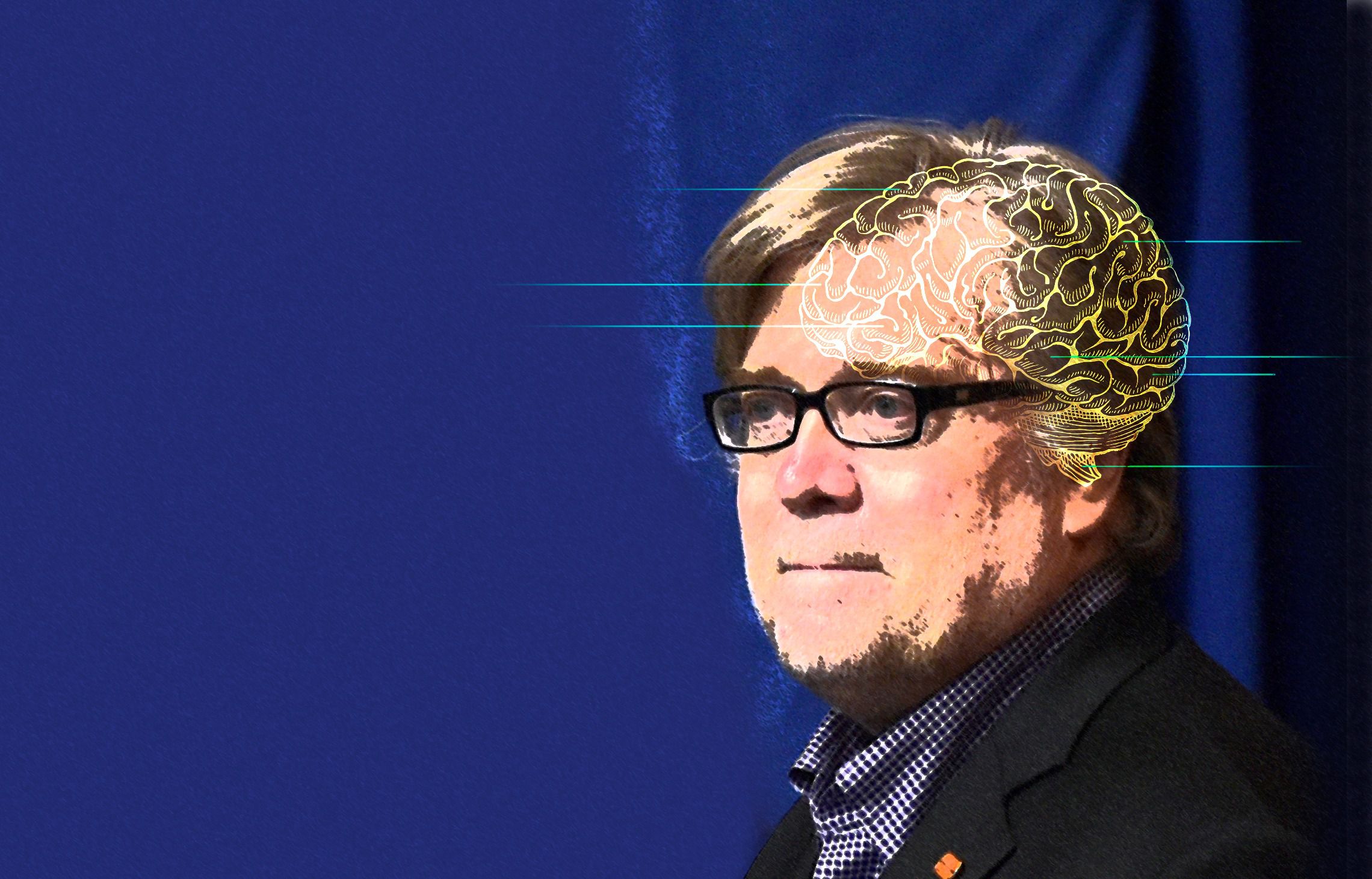
Steve Bannon Has the Balls in the Trump Administration; Will Take Down Mueller

Bannon will clean house.

Attack, Attack, Attack

Why does Trump double-down every time it seems like he should retreat? Because Steve Bannon is back in his boss’s good graces.

On May 22, just as a strange photo of President Trump, Saudi king Salman, and Egyptian president Abdel Fattah el-Sisi touching a glowing orb reached the apex of its memehood, Steve Bannon, who was lurking somewhere beyond the orb’s glow, got on a plane in Riyadh and flew back to his book-stuffed apartment in a glass high-rise in Arlington, Virginia.

For Bannon, the president’s chief strategist, the months leading up to the trip had been difficult ones. When Trump became president, Bannon quickly entered the popular imagination as both the dark mastermind of Trump’s upset victory and an ethno-nationalist ideologue who, with Trump, would lay siege to “the administrative state” and remake American government in Trump’s image. That agenda brought an early flurry of activity followed by a series of embarrassing upsets: Federal courts blocked Trump’s travel ban from seven Muslim countries, his national-security adviser Michael Flynn left under a cloud of suspicion, and the White House quickly descended into knife-fighting disarray.

Worse for Bannon was that his portrayal as Trump’s puppet-master — as #PresidentBannon — on Saturday Night Live and elsewhere infuriated a boss sharply attuned to his media image and allergic to sharing the stage, especially with someone thought to be controlling him. The killer blow was a February 13 Time cover featuring Bannon’s menacing visage above the headline “The Great Manipulator.”

Soon after the Time cover, encouraged by his son-in-law, Jared Kushner, Trump humiliated Bannon by stripping him of his position on the National Security Council, cutting him out of key meetings, and declining to voice his faith in Bannon, who he pointedly told The Wall Street Journal was just “a guy who works for me.” He later added that he was his own strategist. Even Bannon’s old friend Matt Drudge turned on him, fanning stories on the Drudge Report that highlighted his fall from power. “Drudge and Bannon have been close forever,” says one outside Bannon ally. “That was a big stab in the back for Steve.” Meanwhile, rumors spread that Kushner was trying to force Bannon out, a claim longtime Trump confidant Roger Stone amplified on Alex Jones’s radio show. Bannon griped to a White House colleague that Kushner was trying to “shiv him and push him out the door,” according to the Daily Beast.

Even as he was bottoming out, Bannon spied the next upturn. On April 6, the New York Times published a story revealing that Kushner had omitted meetings with Russian ambassador Sergey Kislyak and Sergey Gorkov, the head of Vnesheconombank, the state-owned (and Putin-aligned) Russian development bank, when he applied for top-secret security clearance. Those meetings, Bannon told White House allies at the time, were certain to become a problem. News accounts of White House battles between “nationalists” like Bannon and “globalists” like Kushner began popping up everywhere. When friends from his old life as chairman of Breitbart News warned Bannon about taking on the president’s son-in-law, Bannon scoffed. Watch, he replied, Trump won’t hesitate to sideline Kushner if he has to.

By May, Kushner’s situation had worsened considerably. After months of Trump fuming over the Russia probe, the president was considering firing FBI director James Comey, a move Kushner backed. Kushner and Bannon disagreed about the wisdom of the move. “You can’t fire the FBI,” Bannon told Trump, according to a White House official. Kushner thought you could and argued that Democrats couldn’t criticize the decision, since they’d already attacked Comey for his investigation into Hillary Clinton’s emails. But when Trump went ahead and ousted his FBI director, the move backfired, drawing angry condemnation from Democrats and almost everyone else. Trump looked as if he was trying to shut down a Justice Department investigation — and soon admitted as much to NBC’s Lester Holt — all but compelling Deputy Attorney General Rod Rosenstein to appoint Robert Mueller special counsel for the Russia probe.

By the time he left for Saudi Arabia on May 19, Trump had awakened to the danger the Russia investigation poses to his presidency. So he brought Bannon out of the doghouse and gave him a familiar mission: to organize a defense, go after his enemies, and head off the latest threat to Trump’s political career. Bannon’s first task was to create an outside war room to “put a prophylactic around the Oval Office,” as a White House official put it, one that would shield Trump from the encroaching crisis.

That agenda took on even greater urgency when a Washington Post report on intelligence intercepts of Kislyak’s conversations revealed that Kushner had discussed setting up a secret communications channel with Moscow inside Russian diplomatic facilities. Soon after, the Post reported that Mueller was investigating Kushner’s financial dealings and scrutinizing the meetings he omitted from his security-clearance application.
(Kushner hasn’t been charged with any wrongdoing and his lawyers say he is eager to cooperate with investigators.) According to advisers inside and outside the White House, Trump grew frustrated with his son-in-law, not just over the Russia stories but over reports that members of Kushner’s family, in an effort to entice Chinese investors seeking EB-5 visas to back a New Jersey real-estate project, hinted at their Trump connection. Both issues hastened Bannon’s resurrection.

His former position largely restored, Bannon is now back in his natural element, at the center of the chaos. He modeled Trump’s war room after the one set up by Bill Clinton to handle Ken Starr’s Whitewater probe. Bannon was convinced that Trump needed his own Lanny Davis — Clinton’s pit-bull lawyer and TV surrogate — to go against Mueller, according to a source familiar with his thinking. (Bannon even called Davis to consult him.) Trump’s new rapid-response team is thus heavier on lawyers than flacks, including Trump’s personal attorney, Marc Kasowitz, with whom Bannon worked closely during the campaign to investigate the women who came forward to accuse Trump of inappropriate sexual advances. But following the Clinton model could be hard for the Trump White House because it would require less obfuscation from the podium and a halt to the unhinged attacks on the press. “Bannon is right that Trump needs a team like Clinton had,” says Davis. “But his boss might kill him if he followed my advice: The way you deal with the media is answer all their goddamn questions and get it over with. The model only works if the person who’s being shoveled all the nasty questions has something to say.”

Recruiting talent has also been a challenge. Several top Washington law firms passed, and Bannon’s first choice for the Lanny Davis role, conservative attorney and radio host Laura Ingraham, ultimately rebuffed him after several in-person meetings. “Defending against Russia is the worst duty you can pull in the Trump White House, an impossible job where you can’t make the boss happy,” says GOP strategist Liam Donovan.

Leading the fight while everyone else is frantically lawyering up is exactly the type of loyalty Trump demands, though, and Bannon is especially poised to deliver. Despite his portrayal as Trump’s Rasputin, Bannon’s return was prompted less by his own influence than by the president’s needs. Nobody has ever really had the power to control Trump for long — a fact beleaguered White House officials can agree on. Bannon is less “The Great Manipulator” than Trump’s indispensable henchman, the man he turns to when everything’s going to hell. Bannon is astute enough to discern Trump’s desires and heedless enough to carry it out. “If the whole White House is backed up against the wall facing a firing squad, Steve will stay there,” says Ken Cuccinelli, president of the Senate Conservatives Fund. “Reince [Priebus] and the other guys will run.”

It’s not that Bannon can’t be a shrewd tactician — he often is — but his tactics are usually directed at tearing down his enemies, something he’s done on Trump’s behalf since the earliest days of the president’s political rise. Mueller looms as the greatest threat to Trump’s presidency, and is therefore the object of his chief strategist’s latest machinations. Bannon told an associate that one reason he set up the war room outside the White House, rather than inside, was so that his team would have more freedom to “throw some fucking haymakers.”

Bannon became a vital figure in Trump’s orbit during the early days of his political rise. The two met late in 2010, when David Bossie, the veteran conservative activist, brought Bannon along on a trip to Trump Tower to offer advice about how Trump might prepare for a presidential run. Like Trump, Bannon was a businessman and born deal-maker. With experience on Wall Street and in Hollywood, he was nothing if not high energy, a mile-a-minute talker with a volcanic temper who rarely slept and possessed a media metabolism to rival Trump’s own. And Bannon, too, had a healthy self-regard. On his office wall hung an oil painting of Bannon dressed as Napoleon in his study at the Tuileries, done in the style of Jacques-Louis David’s famous neoclassical painting — a gift from Nigel Farage.

Perhaps because of this background, Trump, whose habit was to surround himself with obsequious lackeys, took Bannon’s counsel more seriously than he did that of other advisers. Steve “was the only alpha male in his universe,” says one Trump associate. Trump was thus highly receptive to Bannon’s nationalist politics, particularly his hostility to illegal immigration, which flowered after Bannon took over Breitbart News in 2012. Long before Trump declared his candidacy, the billionaire was reading Breitbart articles flagged by Bannon and then printed out on paper (Trump’s preferred medium for reading) and delivered to him in manila folders by his staff.

Bannon also shared Trump’s love of spectacle. According to a former Trump adviser, Bannon was behind a needling stunt Trump pulled two weeks before the 2012 election. Having successfully badgered President Obama into releasing his birth certificate the year before, Trump started insinuating that his passport and college transcripts may also have been forged or missing. “I have a deal for the president, a deal that I don’t believe he can refuse,” Trump said in a blurry video he posted to YouTube. “If Barack Obama opens up and gives his college records and applications, and if he gives his passport applications and records, I will give, to a charity of his choice … a check, immediately, for $5 million.” Bannon told an associate he had lined up a donor, the conservative hedge-fund tycoon Robert Mercer, willing to supply half the sum (Trump would supply the rest). The media, chastened by the birther episode, didn’t bite. But the Trump-Bannon connection was cemented.

When Trump began visiting conservative political conferences, such as Bossie’s annual South Carolina Freedom Summit, he’d make a point of seeking out Bannon. “I remember Trump at the Freedom Summit going, ‘Where’s my Steve? Where’s my Steve?’ ” says Sam Nunberg, a former Trump adviser. “He loved the guy.” It was clear the connection was genuine, says Roger Stone, “because Steve is a slob, and Trump hates slobs.”

By the time Trump entered the presidential race in June 2015, Breitbart’s fixation on race, crime, immigration, radical Islam, and the excesses of political correctness — as well as the website’s dark and inflammatory style — had done much to inform Trump’s populist inclinations and his political vocabulary. (A BuzzFeed analysis of Trump’s campaign tweets showed that Breitbart was far and away his primary source of news.)

Trump’s announcement speech was pilloried for his charge that Mexican immigrants were rapists who were bringing drugs into the country. (“Extraordinarily ugly,” Jeb Bush called it; House Speaker Paul Ryan said he was “sickened.”) Bannon helped organize Trump’s response, defending him in Breitbart but also urging him to amplify — rather than apologize for — his anti-immigrant message. This involved another outrageous stunt: arranging for Trump to visit Local 2455, the Border Patrol union in Laredo, Texas, to deliver his message right to Mexico’s face, as it were. (The union’s Laredo spokesman had been a guest on Bannon’s radio show.) Under pressure from the national union, Local 2455 was forced at the last minute to rescind the invitation. But Trump came anyway, trailing a massive press contingent — and was clearly welcomed by the local border agents.

Trump loved the dropped-jaw reaction Bannon’s ideas produced on cable news. “Throughout the campaign — long before Steve actually joined the campaign — he was active through Breitbart, but also by providing very important and unsolicited advice,” says then–campaign manager Corey Lewandowski. “He would call Mr. Trump, or he would call me, and say, ‘Hey, here’s a recommendation.’ We talked to Steve a lot.”

For Trump, Bannon’s distinctive vocabulary was another point of his appeal. Bannon gloried in the slights and scorn directed at Trump supporters, proudly insisting that elitist Clintonites looked down on them as “hobbits,” “Grundoons,” and — co-opting Clinton’s own ill-advised term — “deplorables.” Anyone who thought otherwise was a “mook” or a “schmendrick.” And Clinton herself was the subject of a steady stream of derision, carefully pitched to Trump’s own biases and insecurities and delivered with the passion of a cornerman firing up a boxer for one last grueling round in the ring. Clinton, Bannon would insist, was “a résumé,” “a total phony,” “terrible on the stage,” “a grinder, but not smart,” “a joke who hides behind a complacent media,” “an apple-polisher who couldn’t pass the D.C. bar exam,” “thinks it’s her turn” but “has never accomplished anything in her life” — and, for good measure, was “a fucking bull dyke.”

Although Trump didn’t dwell on policy details, Bannon pitched in there, too. When Trump came under fire because his campaign hadn’t produced a single policy paper, Bannon arranged for Nunberg and Ann Coulter, the conservative pundit, to quickly write a white paper on Trump’s immigration policies. When the campaign released it, Coulter, without disclosing her role, tweeted that it was “the greatest political document since the Magna Carta.”

Bannon and Breitbart also operated as shock troops for Trump’s on-and-off war with Fox News. Trump’s fixation with the cable network was a powerful force throughout the campaign. Although he had appeared regularly on Fox for years and had staunch backers at the network, Sean Hannity chief among them, Fox wasn’t always friendly. And Trump was stung by a humiliation he’d suffered from Rupert Murdoch. He often told intimates how, as he was preparing to launch his campaign, his daughter Ivanka had arranged a lunch with Murdoch to share the news. Soon after the three of them were seated and the waiter brought their soup, Ivanka spoke up: “My father has something to tell you.”

“What’s that?” Murdoch said.

“He’s going to run for president.”

“He’s not running for president,” Murdoch replied without looking up from his soup.

“No, he is!” she insisted.

Murdoch changed the subject.

Trump nursed the slight for months. “He didn’t even look up from his soup!” he’d complain. Nowhere was Trump’s clash with the network more pronounced than in the aftermath of the first GOP debate — sponsored by Fox News and co-moderated by Megyn Kelly — on August 6 in Cleveland. Trump was particularly worried about Kelly, whose show he had backed out of three days earlier, complaining to a friend that she was out to get him. (Bannon had a special loathing for Kelly, just as some Fox hosts did for him. “Bannon is human garbage,” one of them told me.)

When the lights went up in Cleveland, Kelly went right after Trump, confronting him with his history of sexist statements. “You’ve called women you don’t like ‘fat pigs,’ ‘dogs,’ ‘slobs,’ and ‘disgusting animals,’ ” she said. “Does that sound to you like the temperament of a man we should elect as president?”

Within minutes of the debate’s end, even as Trump was still nursing his grievances on live television, reporters started to realize that the revelations of his past behavior, so bluntly excavated by Kelly, had caused an intense reaction among Republican voters — not against Trump but against Fox News. Bannon and the Breitbart editors had the same reaction and immediately turned on Kelly with a fusillade of negative articles slamming her as a backstabbing, self-promoting betrayer of the cause. Breitbart soon became the locus of pro-Trump, anti-Fox conservative anger. Between Thursday night, when the debate took place, and Sunday evening, Breitbart published 25 stories mentioning Kelly, and the site’s editor-in-chief, Alex Marlow, went on CNN to accuse Fox News of “trying to take out Donald Trump” and staging “a gotcha debate.”

The intensity of Republican anger stunned Fox News executives. The debate had drawn a record 24 million viewers. Now many of them were apoplectic at the network’s top talent. In a panic, Ailes called Bannon and begged him to call off the attacks. “Steve, this isn’t fair, and it’s killing us,” Ailes said. “You have to stop it.”

“Fuck that, that was outrageous what she did!” Bannon retorted. “She pulled every trick out of the leftist playbook.”

The call ended without resolution. Bannon and Ailes would not speak again for almost a year. Even after Ailes and Trump patched up their relationship, Bannon refused to relent. In fact, Breitbart’s attacks on Kelly grew uglier. “Flashback: Megyn Kelly Discusses Her Husband’s Penis and Her Breasts on Howard Stern,” read a Breitbart headline a week after the debate. Ailes eventually dispatched his personal lawyer, Peter Johnson Jr., to the Breitbart embassy in D.C. to deliver a message to Bannon to end the war on Kelly. When he arrived, Johnson got straight to the point: If Bannon didn’t stop immediately, he would never again appear on Fox News. Bannon was incensed at the threat.

“She’s pure evil,” he told Johnson. “And she will turn on [Ailes] one day. We’re going full-bore. We’re not going to stop. I’m gonna unchain the dogs.” The conversation was brief and unpleasant, and it ended with a cinematic flourish. “I want you to go back to New York and quote me to Roger,” Bannon said. “ ‘Go fuck yourself.’ ”

Bannon remained a loyal outsider for most of the campaign. Then in August 2016, as Trump looked to be spiraling toward a blowout loss, Rebekah Mercer, whose family put millions of dollars into both Breitbart and Trump’s presidential run, helped arrange for Bannon to take over. One weakness of Trump’s campaign was that it was guided almost entirely by the candidate’s impulses. Bannon kept Trump focused on a clear target at which to direct his ample talent for invective: “Crooked Hillary.” And he brought an encyclopedic knowledge of damaging material with which to attack her, gleaned from having masterminded Peter Schweizer’s best-selling 2015 book, Clinton Cash: The Untold Story of How and Why Foreign Governments and Businesses Helped Make Bill and Hillary Rich (another Mercer-backed effort). The book gave Trump an overarching theme in which to fit his attacks, one that the media, thanks partly to Schweizer’s and Bannon’s efforts, was already predisposed to accept: that Clinton was corrupt. And because Bannon’s convulsive extremism was now setting the tone, no one would hold him back. “It’s not going to be a traditional campaign,” he said shortly after his hiring.

It wasn’t. The great test arrived on October 7, when David Fahrenthold, a reporter at the Washington Post, was leaked outtake footage from a 2005 Trump appearance on the NBC show Access Hollywood. “When you’re a star, they let you do it,” Trump told host Billy Bush. “You can do anything. Grab them by the pussy.”

It looked like Trump had finally said something that even he couldn’t rebound from, and Republican officials quickly began abandoning the campaign. “I am not going to defend Donald Trump — not now, not in the future,” Paul Ryan told his House colleagues in a private call. As New York reported, Reince Priebus urged Trump to quit or “go down with a worse election loss than Barry Goldwater’s.” Bannon stood firm, although even he feared Trump might be finished. Still, he told an associate, it wouldn’t be a total loss. “Our backup strategy,” he said of Clinton, “is to fuck her up so bad that she can’t govern. If she gets 43 percent of the vote, she can’t claim a mandate.” Psyching himself up, he added, “My goal is that by November 8, when you hear her name, you’re gonna throw up.”

Trump, who never apologized for any offense, took the unprecedented step of expressing remorse about the comments on the Access Hollywood tape in a hastily produced web video. “I said it, I was wrong, and I apologize,” he said to the camera. But at Bannon’s urging, his apology quickly morphed into an attack on the Clintons that made it clear he would not be dropping out. “I’ve said some foolish things,” he said, but “Bill Clinton has actually abused women, and Hillary has bullied, attacked, shamed, and intimidated his victims. We will discuss this more in the coming days. See you at the debate on Sunday.” With Bannon by his side, Trump would navigate the greatest crisis of his campaign by putting his foot on the gas. When I reached Bannon to ask about the strategy for the upcoming debate, he didn’t miss a beat: “Attack, attack, attack, attack.”

Bannon had long believed that Bill Clinton’s sexual history and Hillary’s alleged complicity in covering it up was something that “has to be concentrated and brought up,” as he’d once put it. His original thought was that relitigating the scandals would demoralize a younger generation of feminist women unfamiliar with the tawdry details. But with the Access Hollywood tape, Bannon saw that injecting Clinton’s accusers into the race would force the media to devote attention to more than just Trump’s damaging tape. The trick was to do it in a way that couldn’t be ignored. Watching Bill Cosby’s public evisceration by his accusers the year before, Bannon had noticed that their on-camera testimony was especially powerful because most of the victims had been assaulted decades earlier and were now elderly women and thus inherently sympathetic. Bannon thought a similar dynamic would apply to the Clinton accusers.

On Sunday afternoon, 90 minutes before the start of the debate at Washington University in St. Louis, word spread in the press corps that Trump was about to hold an event. As reporters squeezed into a conference room, Trump was seated at the center of a makeshift dais flanked by four women well known to veteran political reporters: Kathleen Willey, Juanita Broaddrick, Kathy Shelton, and Paula Jones. Willey, Broaddrick, and Jones had all accused Bill Clinton of sexual assault or harassment; in 1975, a judge had appointed Hillary Clinton, then a young lawyer, to defend a man accused of raping Shelton, who was then 12 years old.

After brief remarks from Trump, the women took turns defending him and assailing the Clintons. The shock of what was unfolding prompted frenzied live coverage on cable news. As cameras panned the room, they captured Bannon standing in the back, grinning wickedly. The brazenness of Bannon’s gambit, and the visual of Trump seated among Clinton’s accusers, ensured that the primary imagery on TV would cease to be the Access Hollywood footage.

A plan to seat the women at the front of the debate audience to rattle Clinton and assure them a steady presence in the camera shot had to be scuttled. In the end, it didn’t matter. Bannon had always believed that Trump was his own greatest weapon. As 67 million people tuned in to the debate, Trump waited for the inevitable Access Hollywood question and sprung his counterattack. “If you look at Bill Clinton, far worse,” he said. “Mine are words, and his was action. His was — what he’s done to women, there’s never been anybody in the history of politics in this nation that’s been so abusive to women … Hillary Clinton attacked those same women and attacked them viciously. Four of them are here tonight.”

Outside the campaign, the Clinton-accuser gambit was seen as a transparently cynical ploy to change the subject. But Trump’s brain trust was seeing numbers that said attacking Clinton was succeeding. A smattering of public polls indicated the same thing: More respondents improved their opinion of Trump than of Clinton after watching the debate.

Then, within days of the debate, multiple women came forward to accuse Trump of having groped or kissed them without their consent. The wave of new accusers put the campaign on a war footing. The distinction they needed to draw, Bannon told staffers, was between Trump’s “locker room” behavior and what he alleged was Bill Clinton’s sexually violent behavior. “This has nothing to do with consensual sexual affairs and infidelities,” Bannon said in a strategy meeting that week. “We’re going to turn him into Bill Cosby. He’s a violent sexual predator who physically abuses women who he assaults. And she takes the lead on the intimidation of the victims.”

Trump seemed to relish the prospect of ramping up his attacks on Hillary. And then, with just over a week to go until Election Day, he got an unexpected boost when FBI director James Comey announced he was reopening the investigation into Clinton’s private email server. Trump’s internal polls, which showed him already ascending before the Comey letter, now had him turning sharply upward in every battleground state. Out on the stump, he ratcheted up his criticism of Clinton. In speeches and ads, he channeled Bannon’s conspiratorial worldview, accusing Clinton of plotting “the destruction of U.S. sovereignty in order to enrich these global financial powers, her special-interest friends.” When Trump won the election, the lesson the 45th president took away from the campaign seemed to be that if he fought hard enough, he could survive anything.

Just six months into his presidency, Trump’s faith in that proposition is being tested. His brief tenure has been shot through with turmoil, his legislative agenda is teetering on the cusp of collapse, and Robert Mueller’s special-counsel investigation is an ever-present source of frustration. The Associated Press revealed that Trump’s anger has reached a point where he is yelling at television sets in the White House, upset by the tenor of his coverage.

For Bannon, though, things are looking up. Trump’s decision to withdraw from the Paris climate accord was a sign that nationalism still holds sway, as was his July speech in Poland warning of the decline of the West. The Supreme Court’s decision in late June to allow the administration’s travel ban to take partial effect was another victory for Bannon, its principal architect. The House just passed two immigration bills, and, White House officials say privately, Congress will soon act on four more. Bannon’s feud with Kushner has quieted down. And so far, while at least ten White House officials and former aides, including Kushner, have retained lawyers in the special counsel’s probe, distancing themselves from Trump, Bannon is not among them.

Instead, he’s back in the bunker alongside a boss who is often angry, always under fire, and, on the matter of Russia, increasingly isolated from all but a handful of advisers and family members. Early on, Bannon’s war room displayed characteristic aggression, with Kasowitz holding a press conference to slam Comey in response to the former FBI director’s June 8 testimony before the Senate Intelligence Committee. “[It] is overwhelmingly clear that there have been and continue to be those in government who are actively attempting to undermine this administration with selective and illegal leaks of classified information and privileged communications,” Kasowitz said. “Mr. Comey has now admitted that he is one of these leakers.”

Many of Trump’s current and former aides cheered this lunge for the jugular. “Kasowitz is a junkyard dog, exactly the guy Trump needs in his corner right now,” says Barry Bennett, a former campaign adviser. In TV appearances, war-room attorney Jay Sekulow — Trump’s Lanny Davis — suggested that Mueller is biased, a charge Trump amplified on Twitter by calling the investigation a “witch hunt” and telling Fox News that he finds Mueller’s long-standing relationship with Comey “bothersome.”

But those personal attacks diminished in late June, after John Dowd, a prominent Washington attorney and veteran of the Justice Department, joined Trump’s defense. References to a “war room” have also been dropped for the more tempered “president’s outside legal team.” And on June 28, Trump’s lawyers decided to postpone filing a Justice Department complaint against Comey for having helped leak memos about his conversations with Trump to reporters — a move Bloomberg News attributed to a new attitude of “professional courtesy” toward Mueller. “It could become an adversarial relationship, but at present the legal team decided it was best to hold off and not file those complaints,” says Mark Corallo, the spokesman for the legal team. Which is not to say that Bannon’s bare-knuckled instincts have vanished, but rather that he’s come to understand that going after Mueller personally isn’t the best move — at least right now.

Davis himself says this was a necessary course correction. “There is huge danger in attacking Mueller directly,” says Davis. “[White House counsel] Don McGahn, Bannon, and the political side of the White House ought to be listening.” For now, they seem to be. And at least for the time being, Trump, too, has shifted his target from Mueller and Comey to Mika Brzezinski and CNN.

One critical element of the Lanny Davis model, says Davis, is having a president who has a firm enough grasp of the legal and political stakes that he’s willing to focus on his day job and let his lawyers do the talking for him. But even some of Trump’s defenders admit that not only is the president unlikely to show such deference, he is never more than a bad news cycle away from firing Mueller.

“Bannon’s a smart guy — he knows the difference between success and political suicide,” says Davis. “But could he even stop him?” When it came to Comey, the answer was no. As Mueller expands his team of investigators, the question now is how long Trump’s advisers will be able to dissuade him from going after the special counsel. “One thing that’s always dangerous is telling Donald Trump that he can’t do something,” says Roger Stone. “Because then he wants to do it.”

If Trump were to fire Mueller, numerous Republicans say privately that they would break with the president. “It would be a repeat of the ‘Saturday Night Massacre’ when Nixon fired Archibald Cox,” the Watergate special prosecutor, says Davis.

There’s no question, though, who would lead the attack on Trump’s critics if such a scenario were to unfold. “At the end of the day,” says Sam Nunberg, “the question is, are we going to stand with Trump when he fires Mueller? Steve will do it.”

http://nymag.com/daily/intelligencer/2017/07/steve-bannon-is-out-of-trump-doghouse-leading-charge-against-robert-mueller.html?utm_source=fb&utm_medium=s3&utm_campaign=sharebutton-b

Filed Under: Corruption, Donald Trump, Drain The Swamp!, Fake News, FBI, FBI Corruption, Politics, President Trump, Republicans, Russia, Russian Investigation, The President Tagged With: Bob Mueller, fbi, Kushner, Steve Bannon, Steve Bannon Has the Balls in the Trump Administration; Will Take Down Mueller, witch hunt

07/12/2017 by The Doctor Of Common Sense

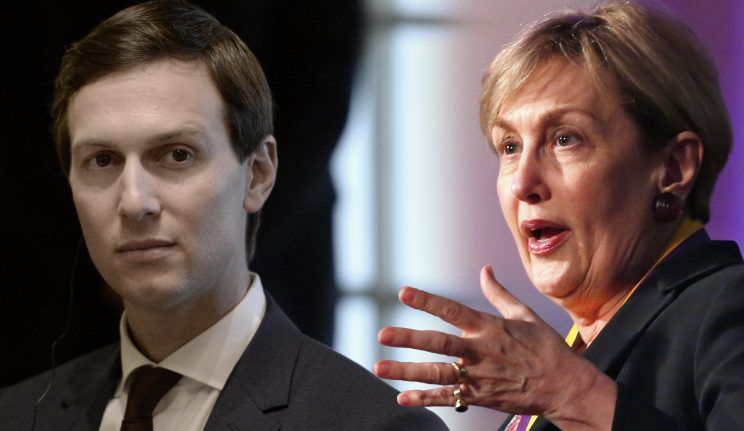
Kushner’s Bull Dyke Lawyer in Russia Witch Hunt is the Leak

A house divided falls. Drain the swamp, Trump, and start with Kushner.

More than a few of my Washington allies noticed a seemingly unremarkable bit of news in a Monday Washington Post article that they thought I ought to see. The article concerned Jared Kushner’s appointment as adviser to his father-in-law Donald Trump.

The appointment did not trouble my friends. What troubled them was the Post’s casual mention that Kushner’s attorney was none other than Jamie Gorelick, deputy attorney general under President Bill Clinton. Observed the Post, Gorelick “is confident that the anti-nepotism statute does not cover Trump’s appointment of Kushner.”

Nepotism was the thrust of the article. The Post made no allusion to the concerns my friends and I have about this relationship. I assured them that Kushner probably does not know Gorelick’s history. I write this to make him aware of why bloggers have taken to calling Gorelick, “The Mistress of Disaster.”

Some recent highlights. In 2014, it was revealed that the George Soros-funded Urban Institute had an officially sanctioned role in the vetting of non-profits that seek tax-exempt status through the IRS. Gorelick was the vice-chairman of the Urban Institute board.

In 2011, she represented Duke University in its attempt to squash a suit by lacrosse team members whose lives had been turned upside down by false rape accusations that the university aided and abetted. In 2010, Gorelick represented BP in the Deepwater Horizon oil mess. It gets worse, much worse.

In 1993, as deputy attorney general under President Clinton, Gorelick served as “field commander” for the horrific government assault on a religious community in Waco, Texas, that left more than eighty dead, twenty of them children.

In 1995, she went on to pen the infamous “wall” memo that prevented the FBI and CIA from sharing information in the run-up to September 11. At the time, a dismayed FBI investigator wrote a memo to headquarters which included the sentence, “Someday someone will die — and wall or not — the public will not understand why we were not more effective.”

In 1996, Gorelick stepped up her game, taking a lead role in the investigation of the TWA Flight 800 disaster. This was the 747 that inexplicably blew up off the coast of Long Island in July 1996 killing 230 people.

As deputy attorney general serving under a feckless Janet Reno, Gorelick’s assignment was to rein in the FBI. Five weeks into the investigation, she summoned FBI honcho Jim Kallstrom to Washington and served up a dose of political reality. To be sure, no account of the Aug. 22 meeting provides any more than routine detail, but behaviors began to change immediately afterwards.

The FBI had already leaked to the New York Times information that would result in a headline on Aug. 23, top right: “Prime Evidence Found That Device Exploded in Cabin of Flight 800.” This article stole the thunder from Clinton’s election-driven approval of welfare reform in that same day’s paper and threatened to undermine the peace and prosperity message of the next week’s Democratic National Convention.

What followed in the next several weeks was the most ambitious and successful cover-up in American peacetime history. At its center was Gorelick. With the help of a complicit media and the active involvement of the CIA, she and her cronies transformed a transparent missile strike into a mechanical failure of unknown origin.

Given her role, the months after the crash had to have been emotionally harrowing. In May 1997, the Clintons appear to have rewarded Gorelick for her steely performance with a job that would pay her $877,573 in that first half-year alone.

According to a Lexis search, not one reporter even questioned why a middling bureaucrat with no financial or housing experience would be handed the vice chairmanship of Fannie Mae, a sinecure that the Washington Monthly called “the equivalent of winning the lottery.”

Six years and an incredible $25.6 million later, having done her share to wreck the American economy, Gorelick responded to the call of duty once more and took just one of five Democratic seats on the 9/11 Commission.

During the 2004 Commission hearings, CIA Director George Tenet first addressed the “wall that was in place between the criminal side and the intelligence side.” Tenet made that barrier sound impenetrable.

“What’s in a criminal case doesn’t cross over that line. Ironclad regulations,” he insisted. “So that even people in the Criminal Division and the Intelligence Divisions of the FBI couldn’t talk to each other, let alone talk to us or us talk to them.”

In her response to Tenet, Gorelick acknowledged the wall and claimed to have used “brute force” in her attempt to penetrate it, but she took no responsibility for its creation. The task of assigning credit was left to Attorney General John Ashcroft.

“The single greatest structural cause for Sept. 11 was the wall,” said Ashcroft. “Full disclosure compels me to inform you that its author is a member of the commission.” That author, of course, was Gorelick, the same official who oversaw the cooperation of the FBI and the CIA in the corruption of the TWA 800 investigation.

As the nation learned in the aftermath of 9/11, the “wall” that was breached all too easily to protect the secrets of TWA 800 held much too firmly when it came to the secrets of our enemies.

Jared, don’t trust her! If need be, I would be happy to sit in a room with Ms. Gorelick and hash this out.

http://www.americanthinker.com/articles/2017/01/jared_kushner_beware_of_jamie_gorelick.html#.WWbmzjRfxbA.facebook


Filed Under: Conspiracy or Not, Donald Trump, Drain The Swamp!, Fake News, Federal Government, Russia, Russian Investigation, The President, Trump Administration Tagged With: George Soros, Jamie Gorelick, Jared Kushner, Kushner's Bull Dyke Lawyer in Russia Witch Hunt is the Leak, Kushner's Lawyer in Russia Witch Hunt is a Leftist Wack, Kushner's Lawyer in Russia Witch Hunt is the Leak, Nepotism, Russian Collusion

07/12/2017 by The Doctor Of Common Sense

Lesbian Sexually Abused Teenager on Airplane Sentenced to House Arrest

What the hell is wrong with people?


An Oregon woman who molested another passenger aboard an Alaska Airlines flight last year was sentenced Monday to eight months of home detention and three years of probation.

Heidi McKinney, 27, of Banks didn’t speak in federal court during her sentencing but wrote a letter of apology to the young woman who she verbally and physically abused.

The encounter occurred on May 8, 2016, when a 19-year-old woman boarded a flight in Las Vegas to return to her home in Portland. She said a “rowdy” woman later identified as McKinney tried to take a seat in her row and inappropriately placed her hands on her chest.

McKinney, who was traveling with her sister-in-law, insisted on taking multiple photos of the 19-year-old woman despite her protestations. After the plane took off, McKinney tried to lure the 19-year-old into drinking alcohol that she had smuggled onto the plane. When the 19-year-old refused, McKinney threw the bottle onto the victim’s lap, according to prosecutors.

McKinney subjected the 19-year-old to lewd and demeaning taunts and physical touching, including licking the 19-year-old’s ear, placing her hand on the victim’s crotch several times and attempting to force the 19-year-old to touch McKinney’s breasts, Assistant U.S. Attorney Ravi Sinha wrote in a sentencing memo.

At one point, McKinney climbed on top of the victim and said she wanted to have sex, Sinha’s memo said.

As the 19-year-old pushed her off, McKinney cursed at her and called her “poor.” The victim alerted a flight crew member, who moved her away from McKinney, according to the prosecutor.

McKinney was initially charged with abusive sexual conduct. As part of a plea agreement, she pleaded guilty to assault with intent to commit a felony.

Her defense lawyer, Lisa Ludwig, suggested that McKinney has been struggling with alcohol abuse since she was a teenager and that it coincided with her own sexual abuse.

The victim sat in the front row of the courtroom gallery but was too emotional to read her prepared statements in court. As the prosecutor said it was her turn to come up and speak, she remained in her seat, shaking her head back and forth.

Instead, her grandmother walked up to the defense table on her behalf and read her remarks.

“I personally don’t feel you know how much damage you have caused me,” the victim wrote. “That day you messed with my head and took something from me that I will never get back.”

The victim wrote that she blamed herself for being too friendly to McKinney when she first boarded the plane and has suffered sleepless nights as a result of the abuse.

“What you did was not OK in any shape or form,” she wrote.  But she added that she forgave McKinney, largely because she felt she needed to do so to move on with her own life, and hoped McKinney would get the help she needed.

The prosecutor and defense lawyer jointly recommended a sentence of three years of probation, with a restitution payment of $3,000. But U.S. District Judge Anna J. Brown said sentencing guidelines call for home detention and varying from that would be “quite out of line.”

“She needs to be held accountable for her crimes first,” the judge said.

McKinney’s lawyer asked that her client be allowed to leave her home to attend school, church and Alcoholics Anonymous meetings and to look for employment.

McKinney completed an inpatient alcohol treatment program in June and is completing courses to obtain an associate’s degree in August, Ludwig told the court. She’s working to develop more “appropriate sober relationships with same-age peers,” Ludwig said.

McKinney has two prior convictions for driving under the influence of intoxicants in 2007 and 2015.

As conditions of her probation, McKinney can’t have guns in her home and she can’t have “anything to do with” her husband’s marijuana business, including any bookkeeping or contact with money from the business, the judge ordered.

She also can’t consume any alcohol.

“Absolute abstention from alcohol is the requirement for you,” Brown told McKinney. “You simply cannot drink.”

McKinney planned to pay the restitution in full Monday, her lawyer said.

http://www.oregonlive.com/pacific-northwest-news/index.ssf/2017/07/woman_who_abused_19-year-old_a.html

Filed Under: Crazy Stories, Crime, Gay Mafia, Insane Tagged With: Alaska Airlines, Heidi McKinney, Lesbian Sexually Abused Teenager on Airplane Sentenced to House Arrest, Lesbian Sexually Abuses 19-Year-Old Girl on Airplane, Woman who abused 19-year-old on an Alaska Airlines flight sentenced

07/12/2017 by The Doctor Of Common Sense

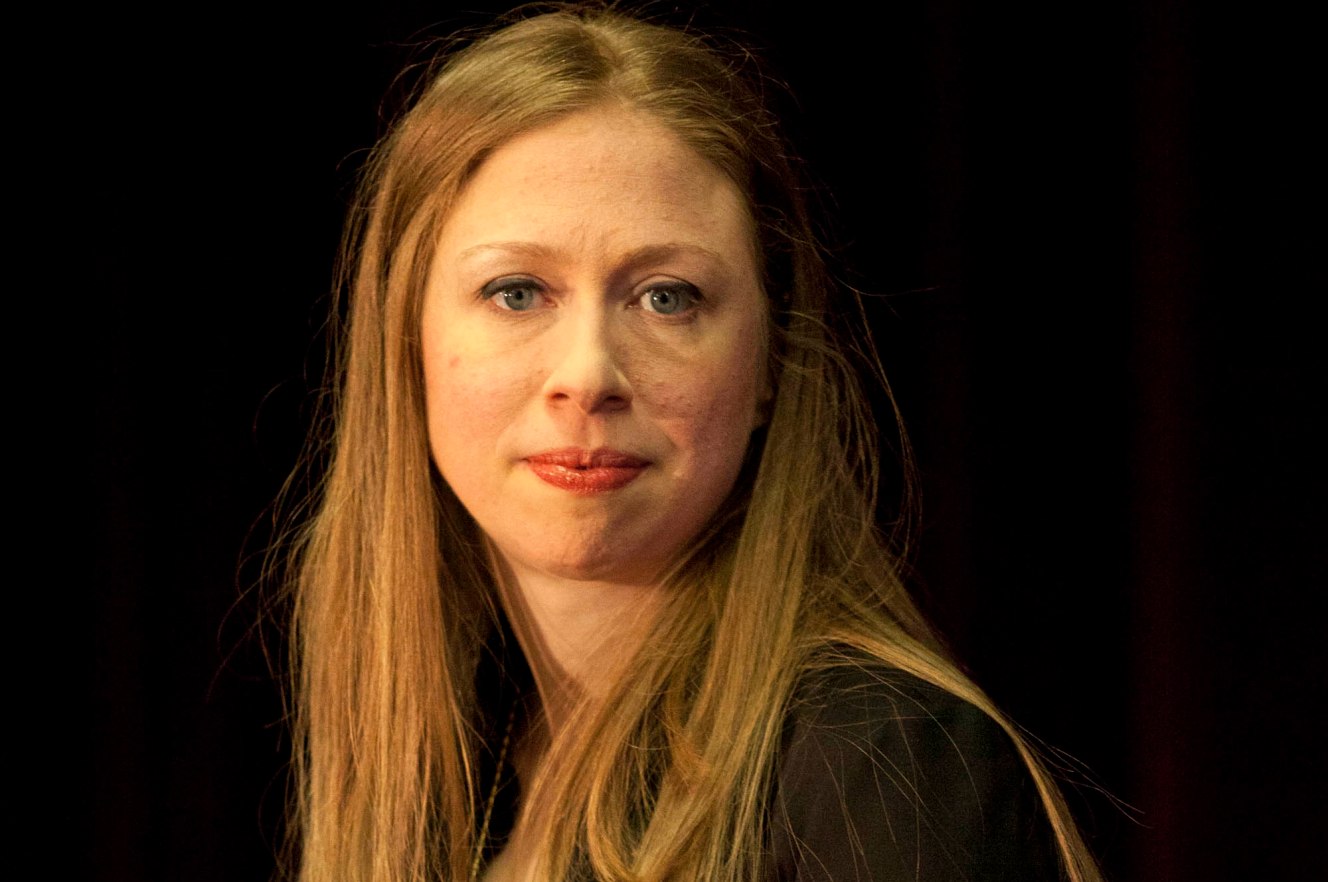
Writer Sues Chelsea & Claims She Stole His Book Idea

Takes after her mom: a liar and a thief

Writer claims Chelsea Clinton stole book idea

Chelsea Clinton ripped off an upstate author when she published her best-selling feminist kids book, “She Persisted,” a federal lawsuit claims.

Christopher Janes Kimberley, 56, of Albany, is suing the former first daughter and Penguin Random House for copyright infringement, seeking up to $150,000, according to the lawsuit, filed Thursday in Southern District of New York court.

“I did months of painstaking research on my book. Her version looks like a ninth-grade homework assignment,” he vented to The Post. “I am in disbelief.”

The little-known writer claims he sent a pitch for his illustrated kids book, “A Heart is the Part That Makes Boys And Girls Smart,” to the president of Penguin Young Readers US, Jennifer Loja, in May 2013, according to the lawsuit.

Instead of publishing it, she passed the idea off to Clinton, who cashed in on his hard work, he claims in court papers.

“She Persisted,” published May 30, features at least three of the same quotes from inspiring historical women — including Helen Keller, Harriet Tubman and Nellie Bly — that appear in Kimberley’s book, along with similar images, the writer claims.

Clinton’s book centers on “13 American Women Who Changed the World” and is an “unauthorized reproduction of [Kimberly’s] work,” court papers state.

“The appearance of impropriety is striking,” he says in the lawsuit.

The writer filed a cease and desist order in April to stop Clinton from publishing the book.

Clinton’s book is a now a New York Times best seller.

The title, “She Persisted,” is a nod to a feminist meme adopted earlier this year after Senator Elizabeth Warren objected to the confirmation of Senator Jeff Sessions as U.S. Attorney General.

Reps for Clinton and Penguin Random House didn’t return calls Tuesday.

http://nypost.com/2017/07/11/writer-claims-chelsea-clinton-stole-his-book-idea/


Filed Under: Hypocrisy, Hypocrites, Lawsuits, Liberals are nothing but Nazi scum, Liberals Are Stupid Tagged With: “A Heart is the Part That Makes Boys And Girls Smart, ”, 13 American Women Who Changed the World, books, CHELSEA CLINTON, lawsuits, She Persisted, Writer claims Chelsea Clinton stole book idea, Writer Sues Chelsea & Claims She Stole His Book Idea

  • « Go to Previous Page
  • Go to page 1
  • Interim pages omitted …
  • Go to page 211
  • Go to page 212
  • Go to page 213
  • Go to page 214
  • Go to page 215
  • Interim pages omitted …
  • Go to page 336
  • Go to Next Page »

Primary Sidebar

Recent Articles

  • Dave Chappelle pretends that Republicans Twisted His Trans Jokes
  • Things You Need ID In Order To Do In America And States That Don’t Ask For ID
  • It Is Supposed To Be America First Stop Foreigners From Holding Office
  • What Really Happened To Seth Rich And Is It Connected To Hillary Emails And Fake Russian Collusion?

Donate To Free Speech

Footer


Copyright © 2026 · Workstation Pro on Genesis Framework · WordPress · Log in